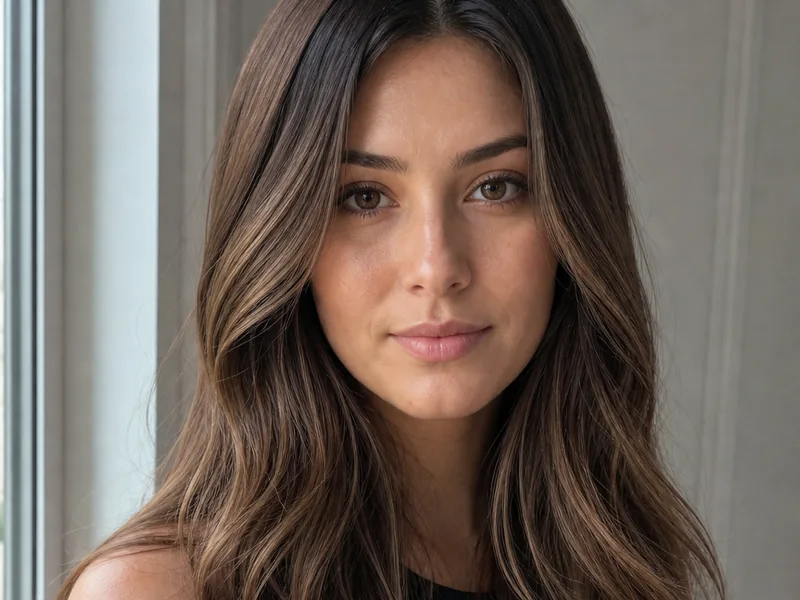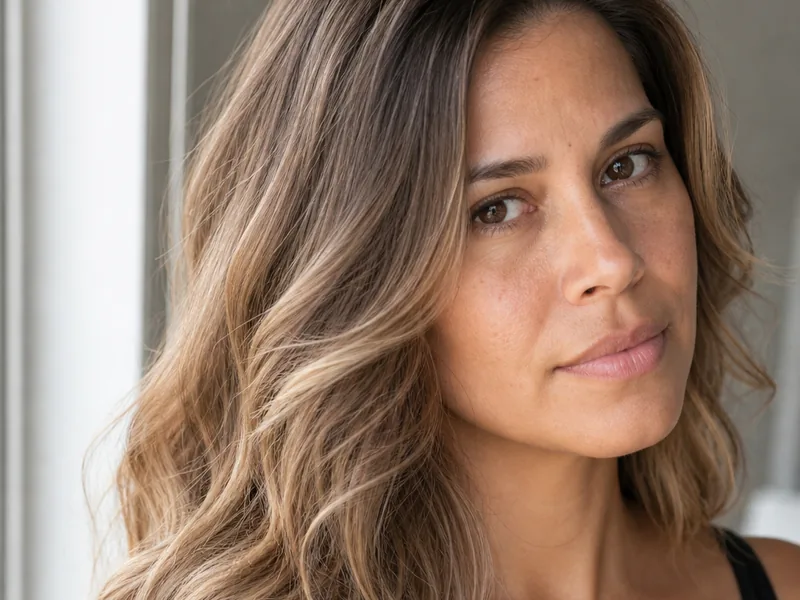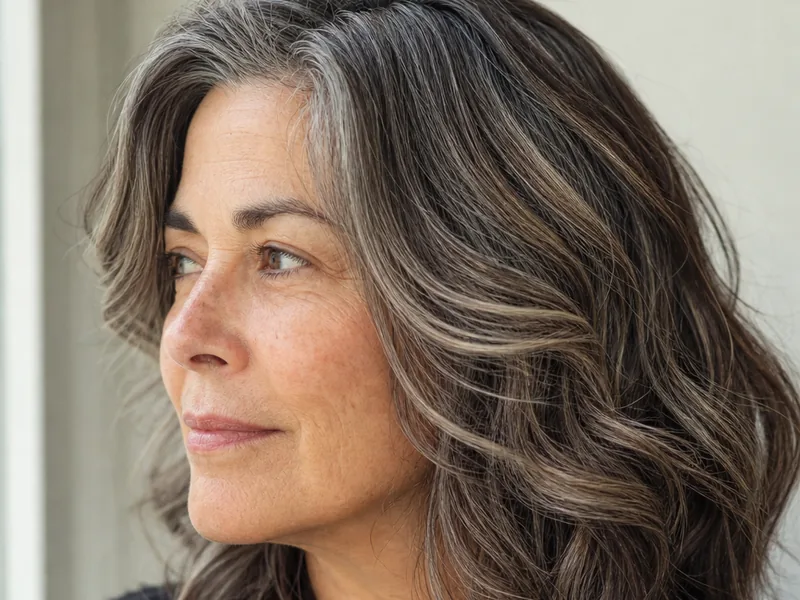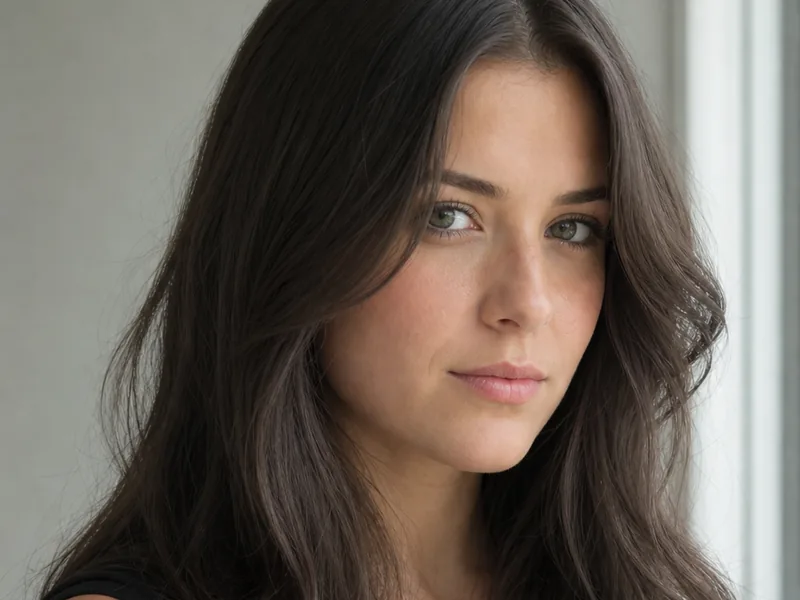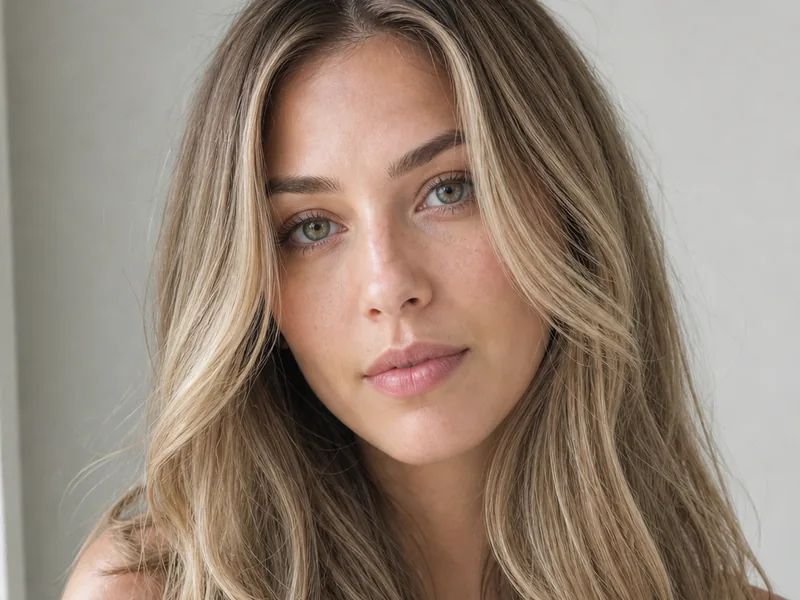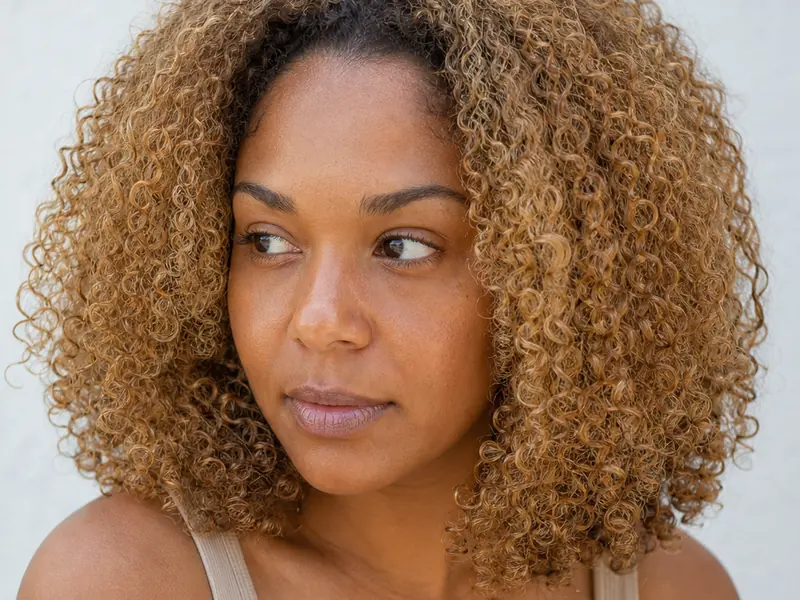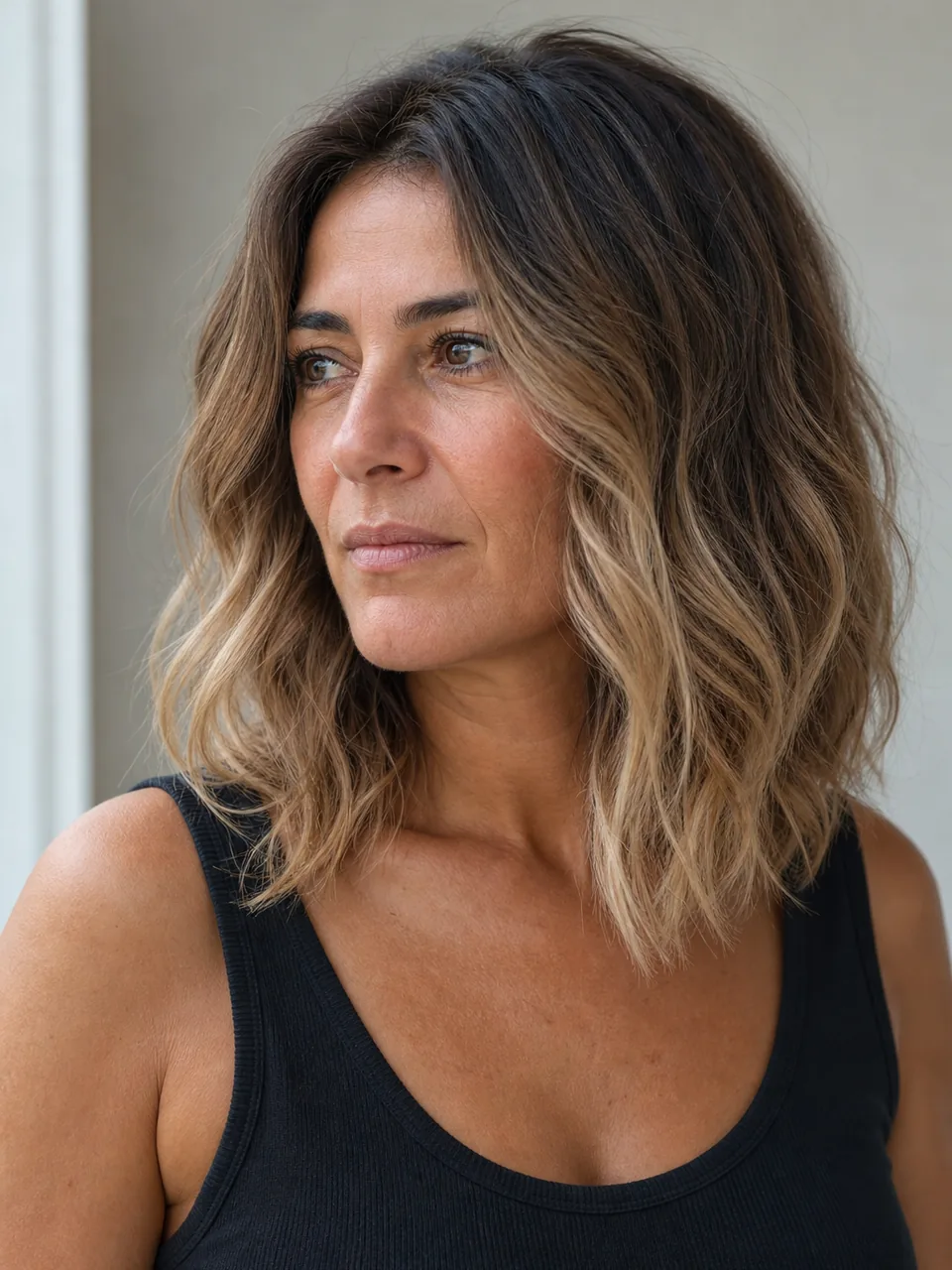
Short version: Balayage hair color is lightener or color painted by hand onto the surface of each section, soft at the root and heavier toward the ends, so it grows out without a hard regrowth line. It suits shoulder-length and longer hair on almost any base, but a level 1-3 base usually gets caramel or bronze in one session and needs two or three for blonde. Touch-ups run every 3-4 months, often longer, with a toner or gloss every 4-8 weeks. The 32 looks below are sorted by shade family, then by starting level.
What Is Balayage Hair Color
Balayage is a placement method, not a shade: the colorist sweeps lightener onto the outside of a section with a brush or a gloved hand, saturating the mid-lengths and ends and feathering it out before it reaches the scalp. The name is French for sweeping. Because the lightened strands start an inch or more below the root, new growth arrives gradually instead of as a band.
Foils work the other way. Foil highlights that start at the scalp lighten an even strip from root to tip: brighter and more precise, with regrowth showing within 6-10 weeks. Balayage trades brightness at the part for a softer grow-out, and many colorists combine the two, with painted lengths and a few fine foils at the hairline.
Open-air balayage leaves painted hair exposed, which keeps the blend soft but limits lift as the lightener dries. Foilayage wraps painted sections in foil to hold moisture and warmth for more lift, the usual route on dark brown and black hair.
Who Balayage Suits, and Who Should Think Twice
Balayage suits women who want lighter ends and longer gaps between appointments more than they want bright blonde from the part. It shows best past the chin, where there is length for the gradient, and waves and curls hide the transition further.
Starting level decides most of the result. Natural blondes and light browns (level 5-8) get a clear contrast in one visit; level 3-4 browns reach caramel and honey; level 1-2 black hair lifts through red and orange, so one session lands on bronze, cinnamon or caramel. Undertone steers the tone: cool and pink skin tends to look clearer in beige, ash and pearl, warm and olive skin in gold, honey and copper, because the shade either repeats or fights the warmth in the face.
Think twice if you want every gray covered, wear a pixie, or need the part itself to read blonde; those goals point toward all-over color or foils. Box-dyed and henna-treated hair needs a strand test first.
Balayage Sessions and Upkeep by Base Level
The darker the natural root, the warmer the first session lands and the sooner the contrast shows as it grows, so sessions and touch-ups both scale with starting level. Find your natural level on the color chart before reading the table, and read it on dry roots in daylight.
| Natural base | Realistic first session | Sessions to level 8-9 ends | Toner or gloss | When the grow-out shows | Typical touch-up |
|---|---|---|---|---|---|
| Level 8-9 natural blonde | Level 10 painted ends | 1 | Every 6-8 weeks | Barely, for 6 months or more | Every 4-6 months |
| Level 6-7 dark or dirty blonde | Level 9 beige or golden | 1 | Every 6-8 weeks | Around month 4-5 | Every 4-5 months |
| Level 5 light brown | Level 8 warm or neutral | 1 (2 for ash) | Every 6-8 weeks | Around month 3-4 | Every 3-4 months |
| Level 3-4 brown | Level 6-7 caramel or honey | 1-2, usually foilayage | Every 4-6 weeks | Around month 3 | Every 3-4 months |
| Level 1-2 black or darkest brown | Level 5-6 bronze or caramel | 2-3, foilayage | Every 4-6 weeks | Around month 2-3 | Every 3 months |
| Box-dyed or henna-treated | Decided by a strand test | 2 or more, if at all | Every 4-6 weeks | Varies | Varies |
Painted ends brass as the toner leaves, faster on darker bases with more orange underneath. A gloss between touch-ups resets the tone without new lightener, and toner choice for each lifted level decides whether the next six weeks look clean or orange.
Peroxide bleaching oxidizes protein in the cuticle and cortex even when it is painted, and the loss rises with stronger lightening, so a staged plan from black hair is gentler than one long session at high developer.
Salon note: A refresh rarely repaints the ends. Most colorists lighten only the new growth and the band just above it, then gloss the lengths, so the ends are not lifted a second and third time. Ask for that split when you book, because a full repaint every visit is how balayage ends turn porous and gummy.
Blonde Balayage, From Natural Blonde to Brown Bases
Blonde balayage is the most requested version and the most toner-dependent, since every painted strand passes yellow on the way. Looks on blonde bases need one visit; the brown-base version sits on its own page with more blonde balayage looks by base.
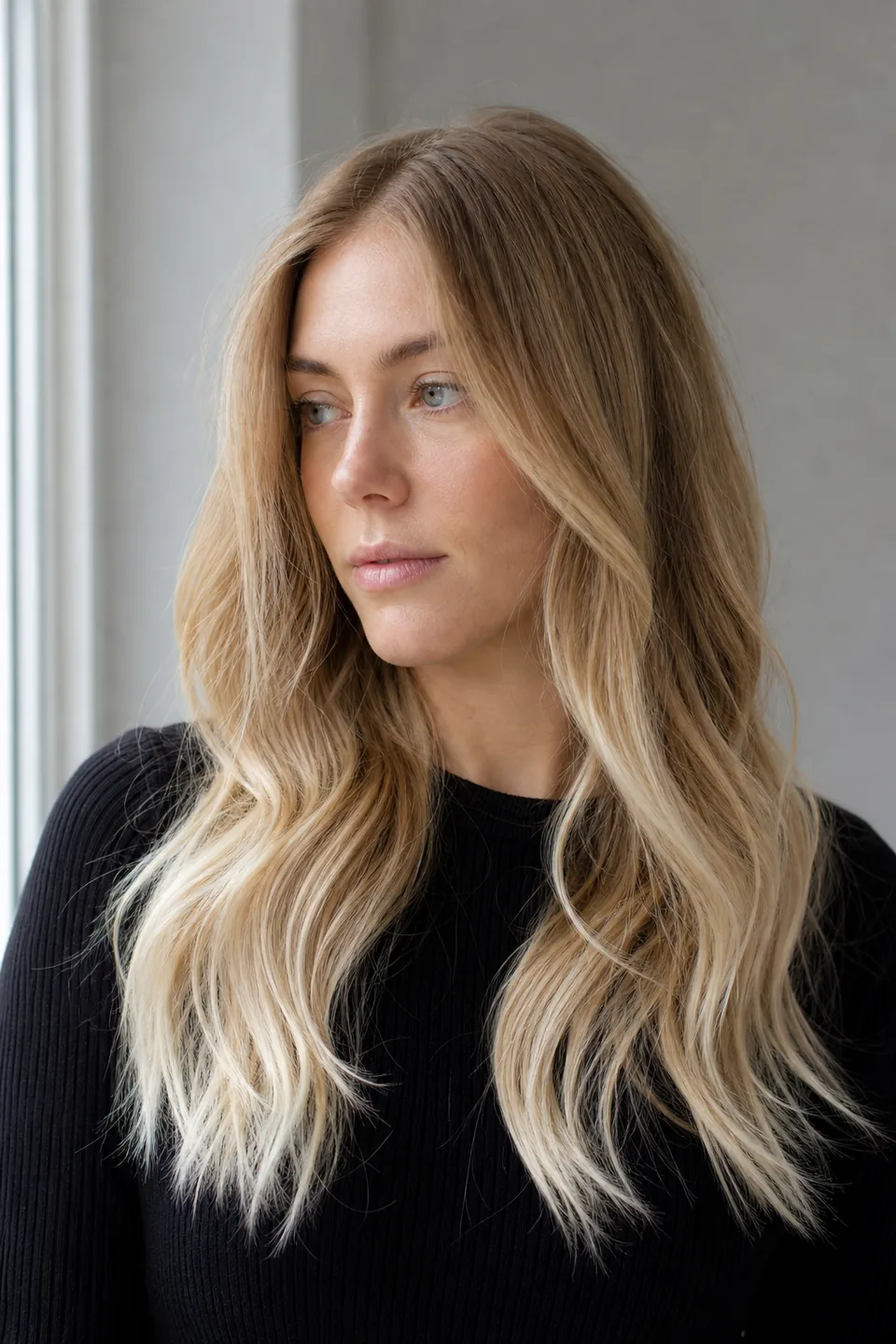
1. Level 10 Pale Beige Balayage on a Level 8 Natural Blonde
- Base level
- 8, virgin
- Target
- Level 10 pale beige
- Technique
- Open-air balayage + beige toner
- Undertone
- Neutral, cool
- Sessions
- 1
- Touch-up
- Every 5-6 months, toner every 6-8 weeks
Only two levels separate root and ends, so regrowth barely registers and many natural blondes wear this for half a year.
Ask for: "Open-air balayage on my natural level 8, ends to a clean 10, toned pale beige."
2. Level 9 Golden Balayage on a Level 6-7 Dirty Blonde
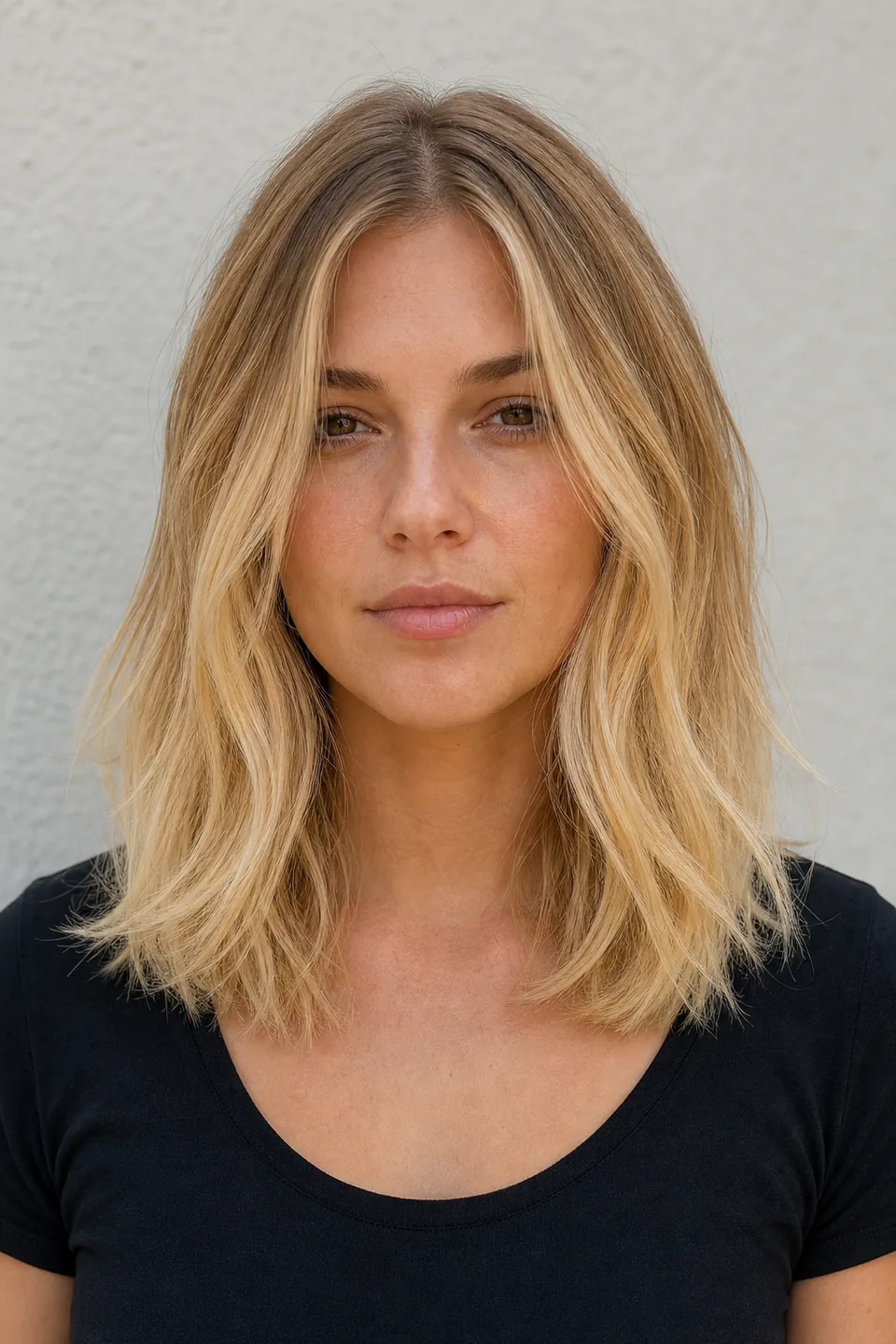
- Base level
- 6-7
- Target
- Level 9 golden blonde
- Technique
- Open-air balayage + gold gloss
- Undertone
- Warm, neutral
- Sessions
- 1
- Touch-up
- Every 4-5 months
Gold is the tone that forgives a skipped gloss: when it fades, it drifts toward a warmer gold rather than toward the yellow-orange that a faded ash shows.
Ask for: "Balayage from my level 6-7, lifted to 9 and glossed golden. Keep it warm, not ash."
3. Level 9 Beige Balayage on a Level 5 Light Brown
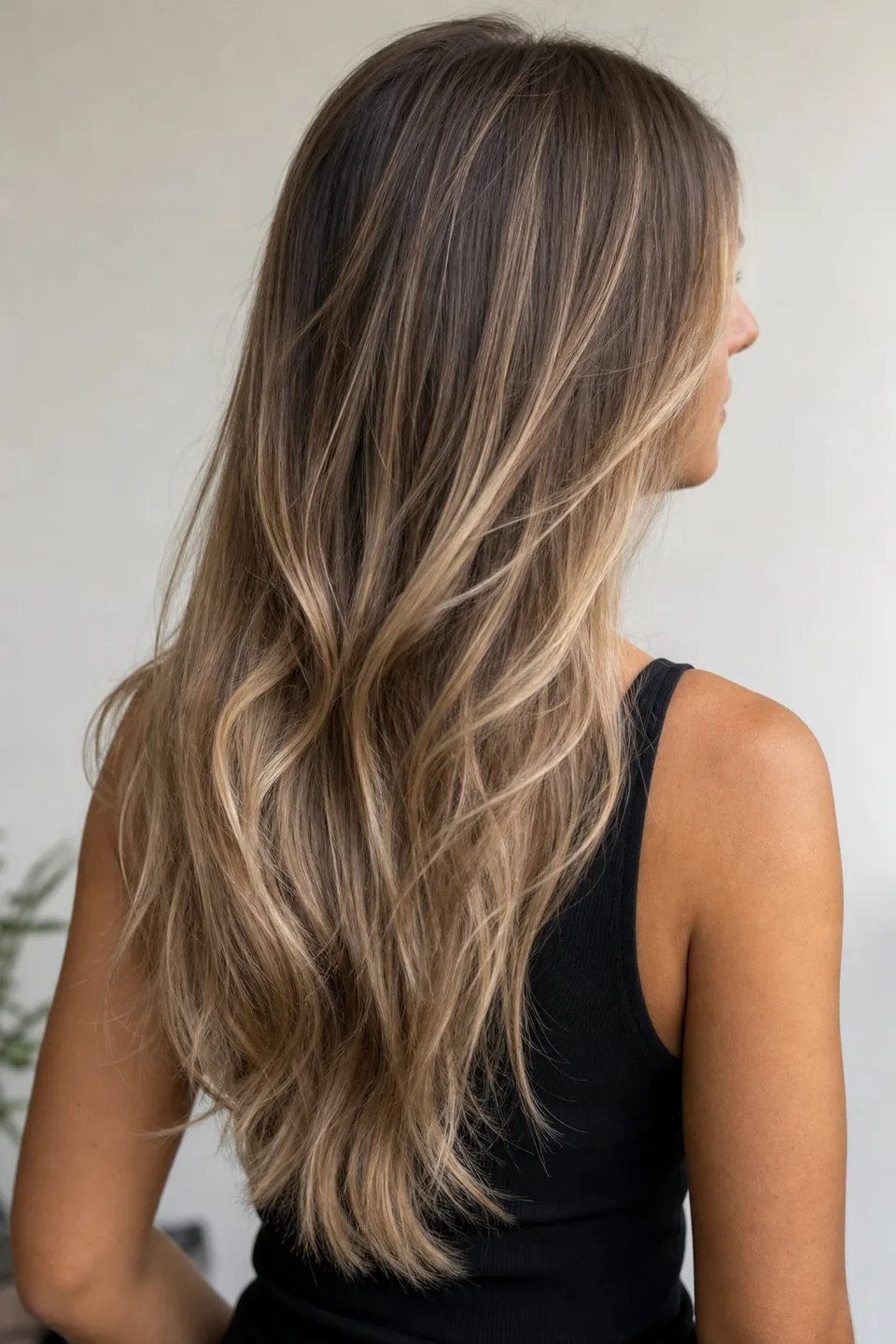
- Base level
- 5
- Target
- Level 9 beige blonde
- Technique
- Balayage, foilayage at the crown + beige toner
- Undertone
- Neutral, olive
- Sessions
- 1-2
- Touch-up
- Every 3-4 months, toner every 6 weeks
Four levels of contrast is where the blend starts to depend on the colorist's hand: the painted strands need to thin out well above the ends or the line shows. A crown section in foil helps the lift match the sides.
Ask for: "Blonde balayage to level 9 beige on my level 5, foilayage where you need it, blended high so there's no line."
4. Level 7-8 Bronde Balayage on a Level 6 Base
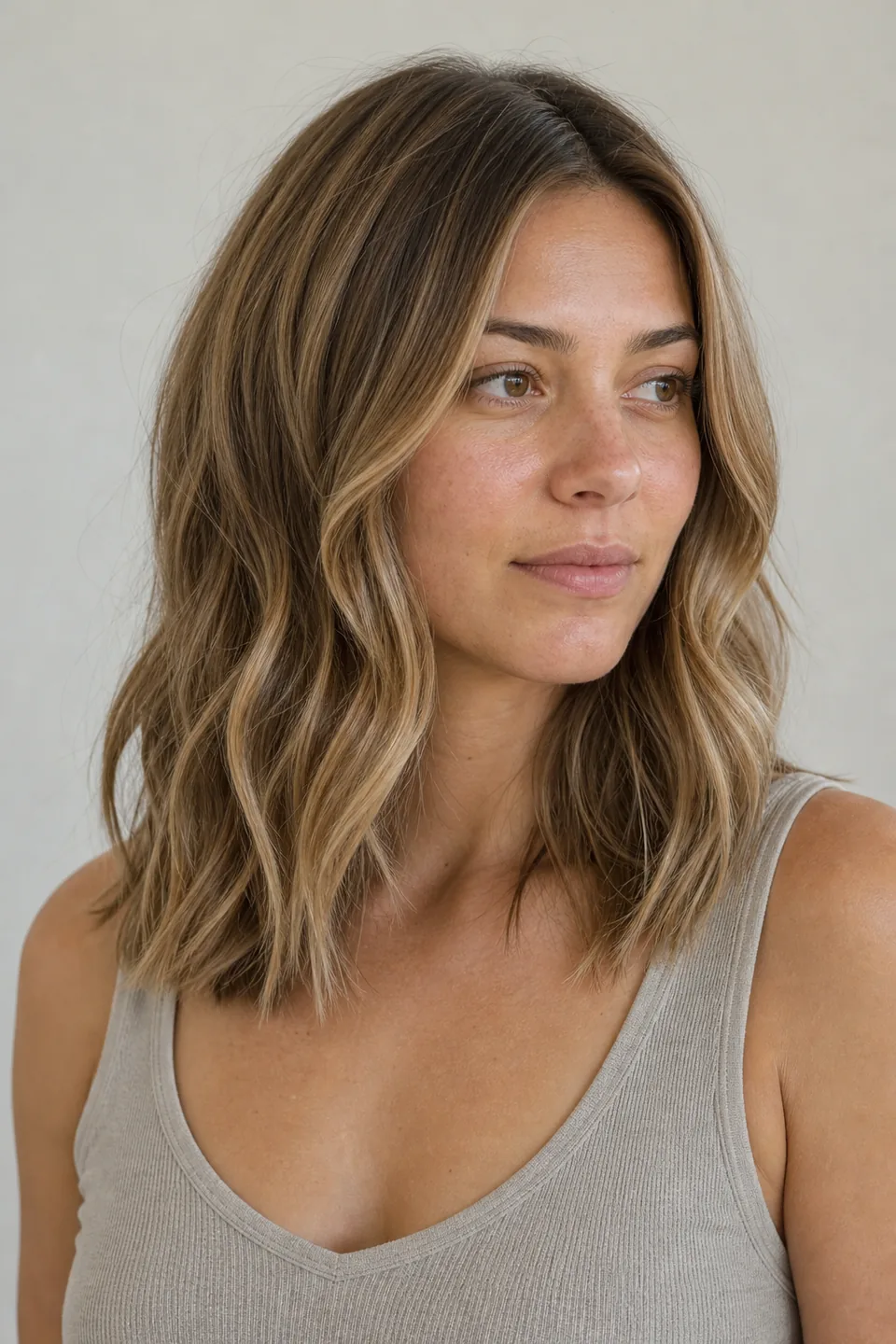
- Base level
- 6
- Target
- Level 7-8 neutral bronde
- Technique
- Fine painted pieces + neutral gloss
- Undertone
- Neutral, warm, olive
- Sessions
- 1
- Touch-up
- Every 4-6 months
Bronde is the low-contrast answer for someone who cannot decide between brown and blonde: one or two levels of lift on fine pieces, with plenty of the natural 6 left showing.
Ask for: "Bronde balayage, fine pieces only one to two levels lighter than my level 6, neutral gloss."
5. Level 10 Icy Balayage With a Level 7 Root Smudge
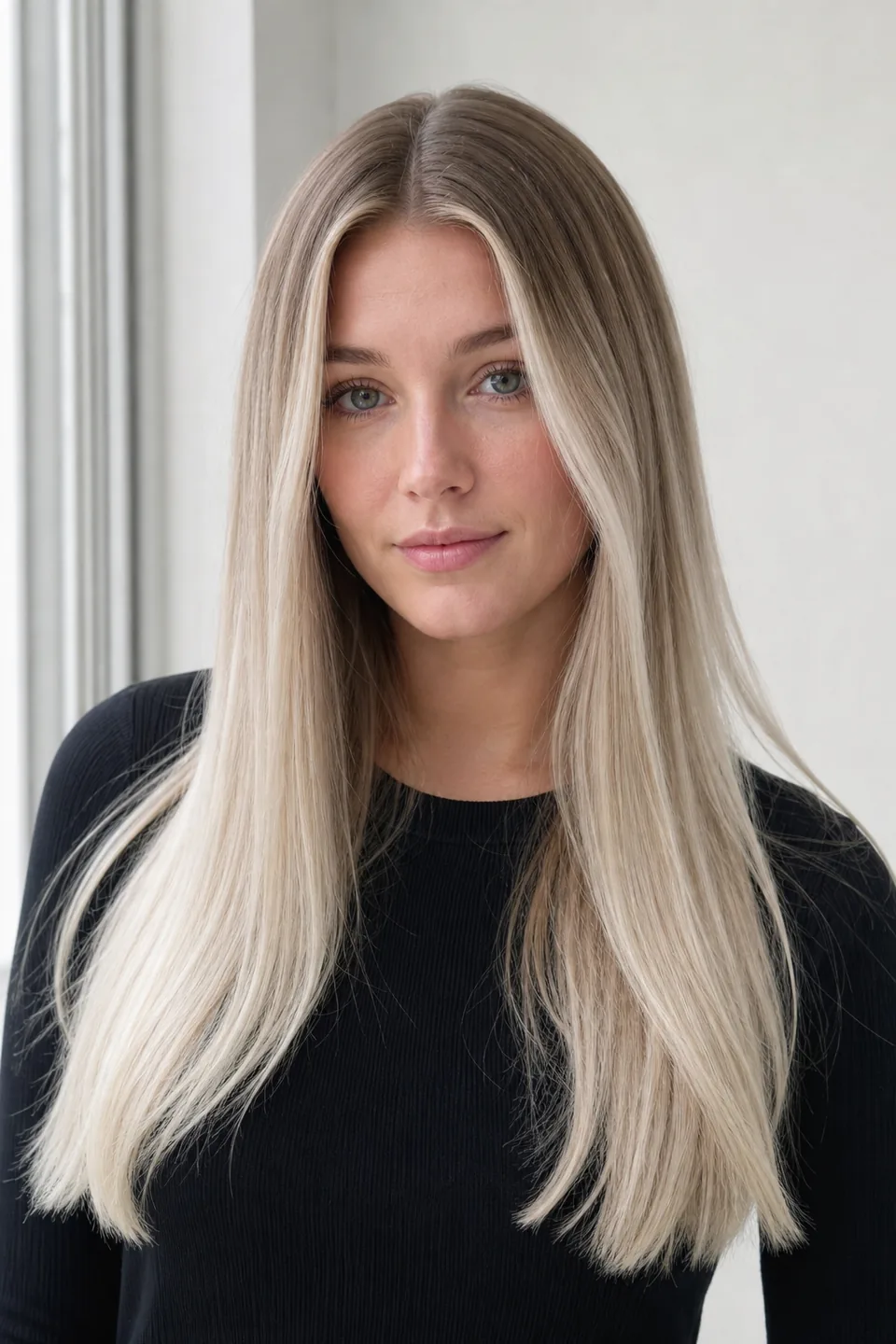
- Base level
- 7
- Target
- Level 10 icy blonde
- Technique
- Heavy balayage + violet toner + demi root smudge
- Undertone
- Cool
- Sessions
- 1-2
- Touch-up
- Every 3-4 months, toner every 4-6 weeks
Icy is the hardest blonde to hold on painted hair, because open-air lightener struggles to reach a clean 10 and anything short of it turns yellow as the toner fades. The demi root smudge buys a few extra weeks.
Ask for: "Heavy balayage lifted to a clean 10, toned icy, with a level 7 root smudge. Bond builder in."
Brown and Brunette Balayage
Brown balayage keeps the painted shade within two or three levels of the root, which is what makes it the easiest version to grow out. Mushroom, chestnut and toffee tones each need a different toner, and the full set of brunette balayage looks sorts them by depth.
6. Level 6 Mushroom Brown Balayage on a Level 4 Base
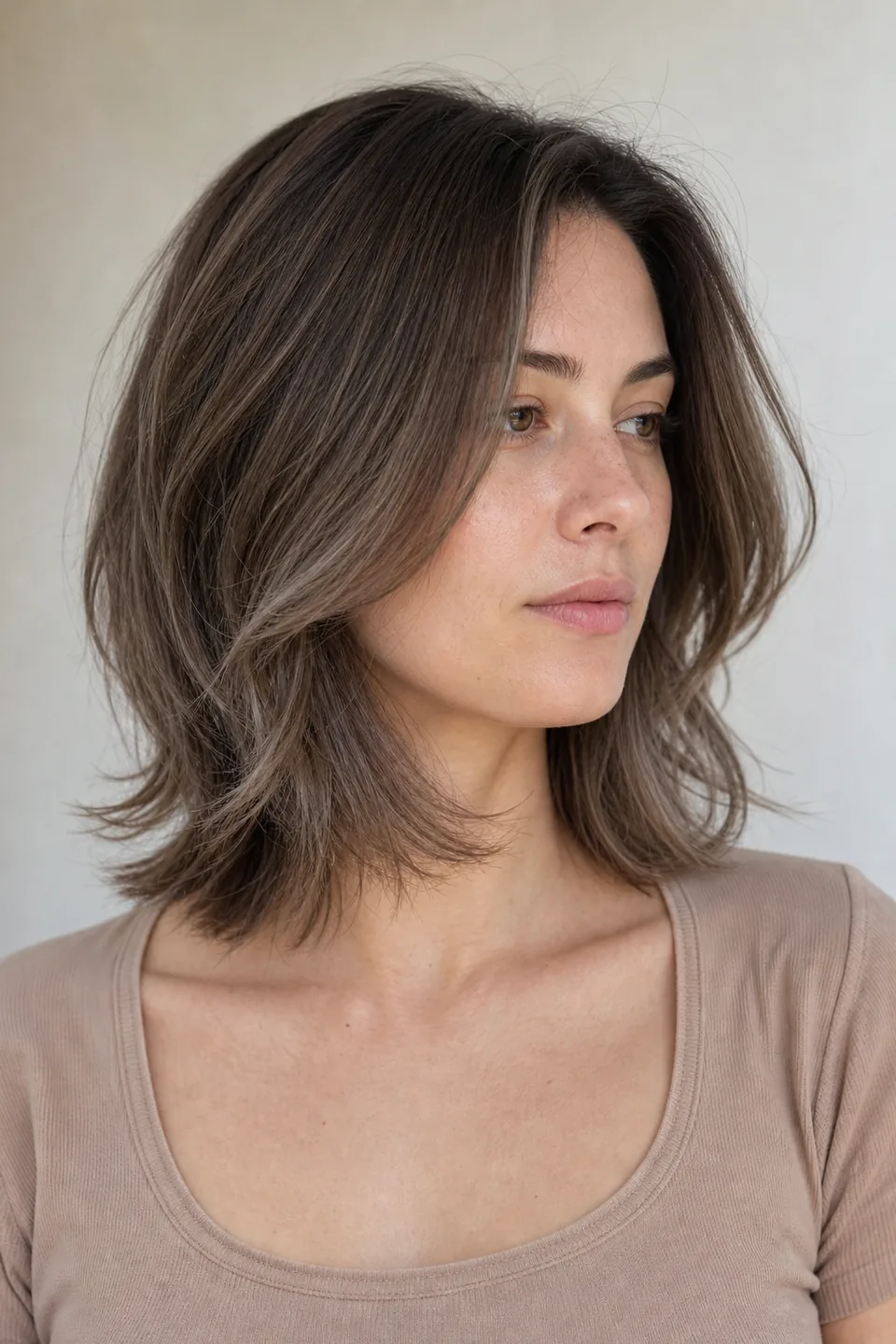
- Base level
- 4
- Target
- Level 6 mushroom brown
- Technique
- Balayage + blue-violet ash toner
- Undertone
- Cool, neutral
- Sessions
- 1
- Touch-up
- Every 3-4 months, toner every 4-6 weeks
Lifted level 4 hair shows orange at level 6, so mushroom is really a correction the toner performs every visit. Expect it to warm toward light brown by week five if you skip the gloss.
Ask for: "Balayage from my level 4 to 6, toned mushroom with enough blue to cancel the orange."
7. Level 6 Light Brown Balayage on Level 3 Dark Brown
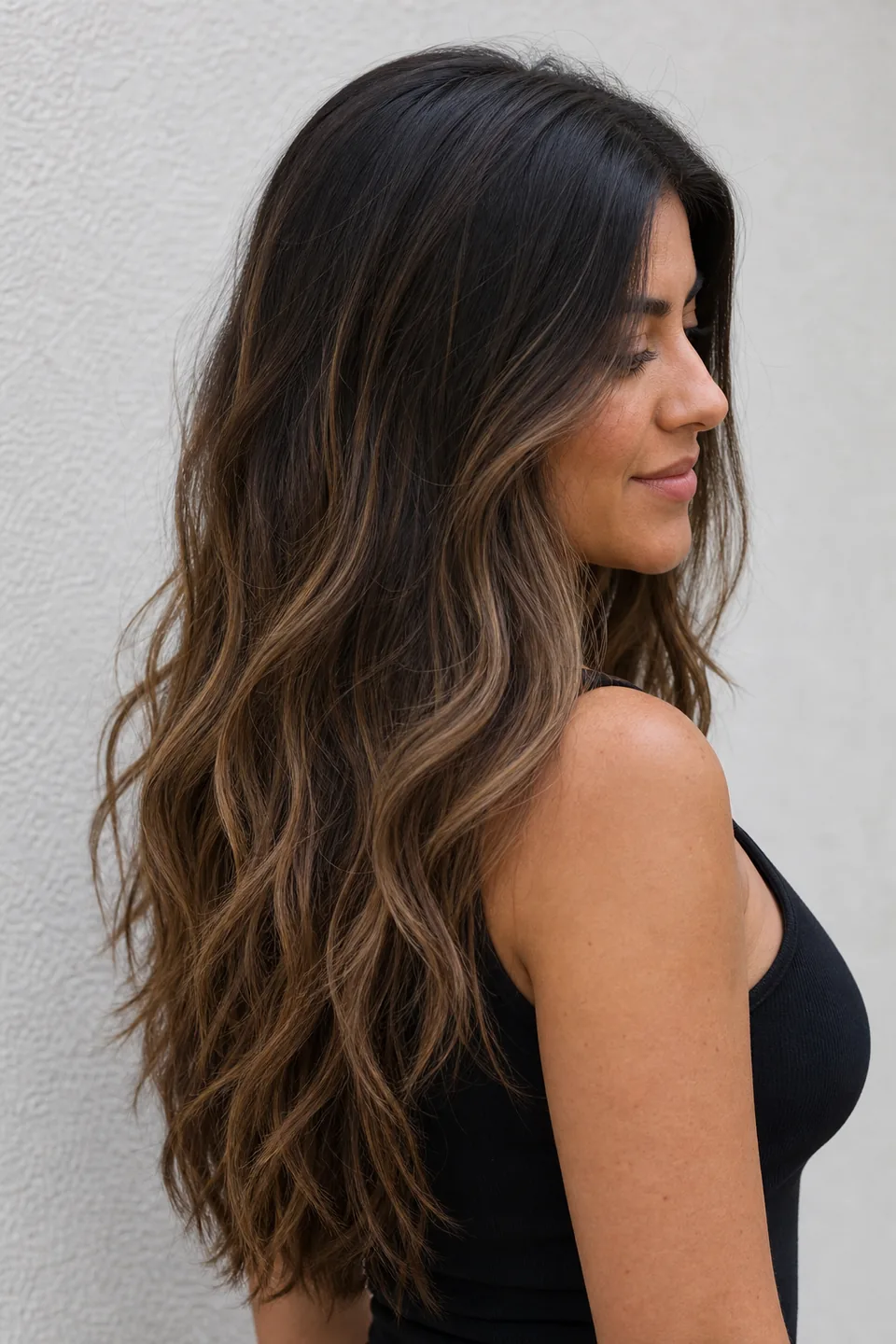
- Base level
- 3
- Target
- Level 6 neutral light brown
- Technique
- Open-air balayage + neutral gloss
- Undertone
- Olive, neutral
- Sessions
- 1
- Touch-up
- Every 4 months
For a first balayage on dark hair, this is the cautious choice: three levels of lift, no foil, and a result that still looks like your own hair in a brighter light.
Ask for: "Soft balayage, lifted about three levels from my level 3, glossed neutral."
8. Level 5 Toffee-Brown Balayage on a Level 3 Dark Chocolate Base
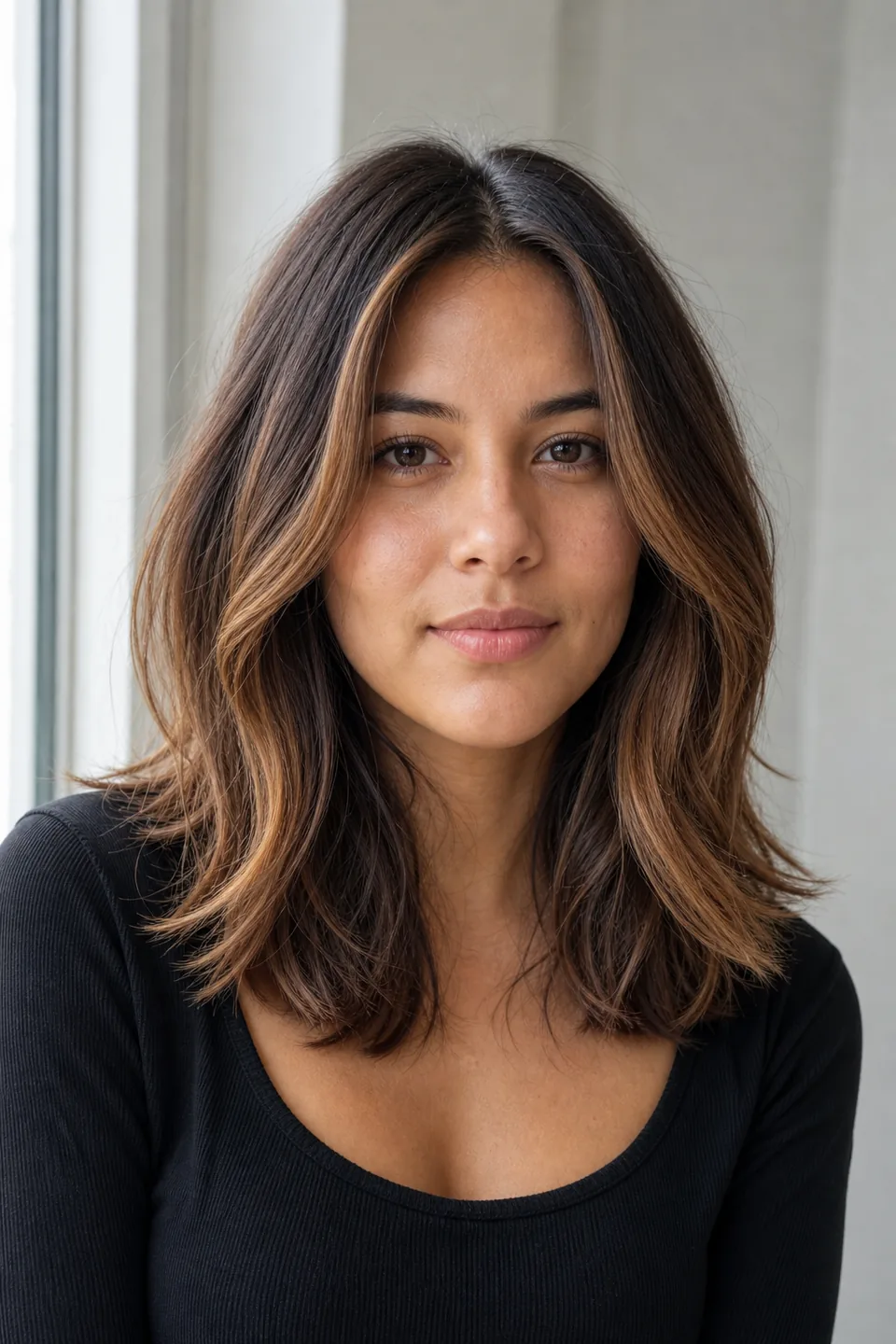
- Base level
- 3, natural or chocolate-dyed
- Target
- Level 5 toffee brown
- Technique
- Balayage + warm gloss
- Undertone
- Warm
- Sessions
- 1
- Touch-up
- Every 4 months, gloss every 6-8 weeks
Toffee works with the red-orange that level 3 hair shows at level 5 instead of toning it out, which is why it holds up so well between visits. On a dyed chocolate base, strand-test first.
Ask for: "Two levels of balayage from my level 3, warm toffee gloss, heavier around my face. My base is dyed chocolate."
9. Level 6 Chestnut Balayage on Level 4 Medium Brown Curls
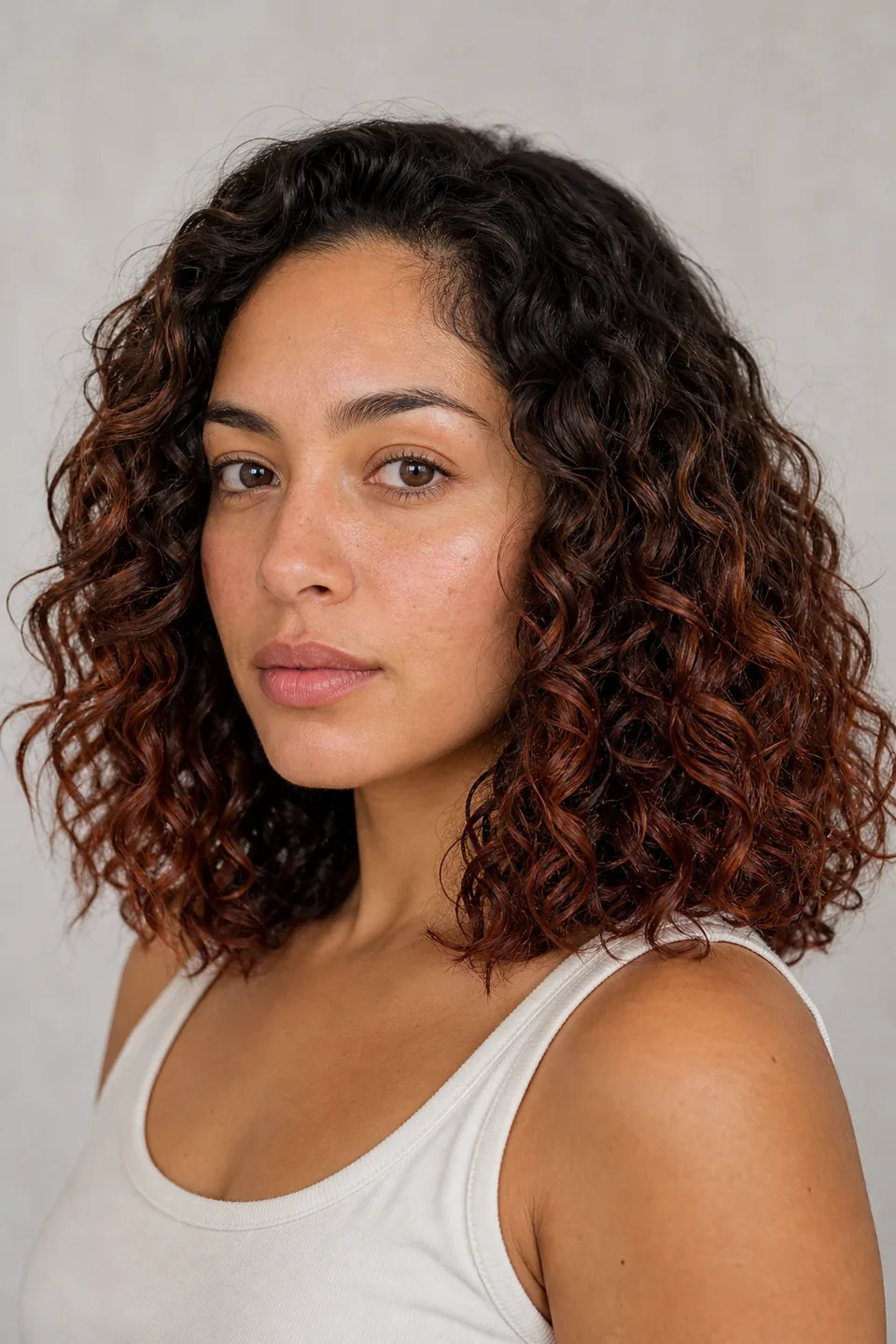
- Base level
- 4
- Target
- Level 6 chestnut
- Technique
- Painted on dry curls + red-gold gloss
- Undertone
- Warm
- Sessions
- 1
- Touch-up
- Every 4 months, gloss every 6 weeks
Painting curls dry, in their natural pattern, puts the lighter shade where the light actually lands. Chestnut's red side fades first, so a red-gold gloss every six weeks keeps it from going plain orange-brown.
Ask for: "Chestnut balayage on my level 4 curls, painted dry where they fall, glossed red-gold."
Caramel and Honey Balayage
Caramel (level 6-7, gold-copper with brown) and honey (level 7-8, gold with a touch of copper) are the warm shades dark hair reaches most easily, because they sit near the orange and yellow-orange stages lightened brown hair passes through. Caramel balayage on every brown base has its own page.
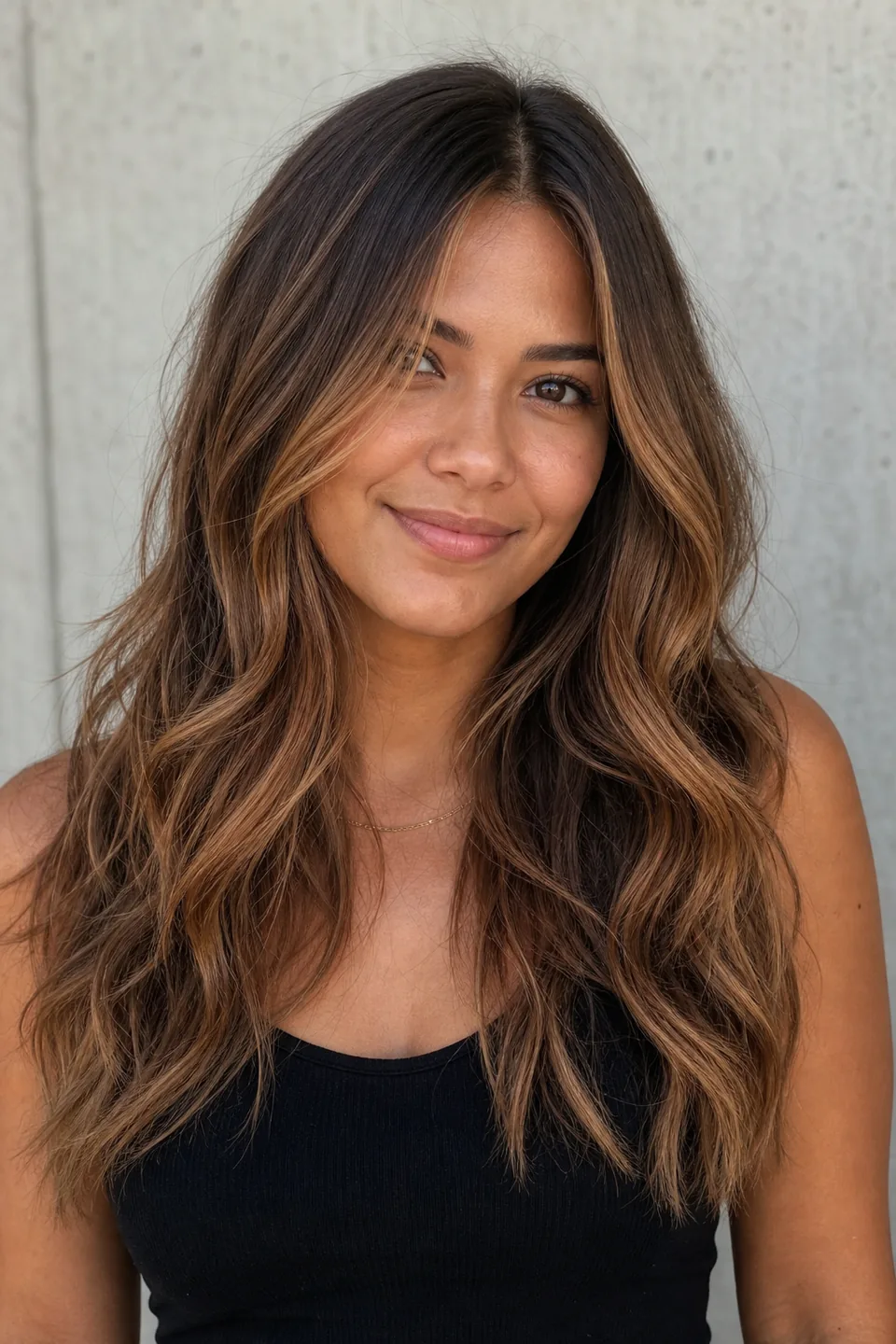
10. Level 7 Caramel Balayage on Level 4 Brown
- Base level
- 4
- Target
- Level 7 caramel
- Technique
- Balayage + gold-copper gloss
- Undertone
- Warm, olive
- Sessions
- 1
- Touch-up
- Every 3-4 months
Here balayage works with dark hair's chemistry rather than against it: lifted level 4 hair at level 7 is already gold-orange, so the gloss refines a warmth that is there anyway.
Ask for: "Caramel balayage to level 7 from my level 4, gold-copper gloss, a little brighter at the front."
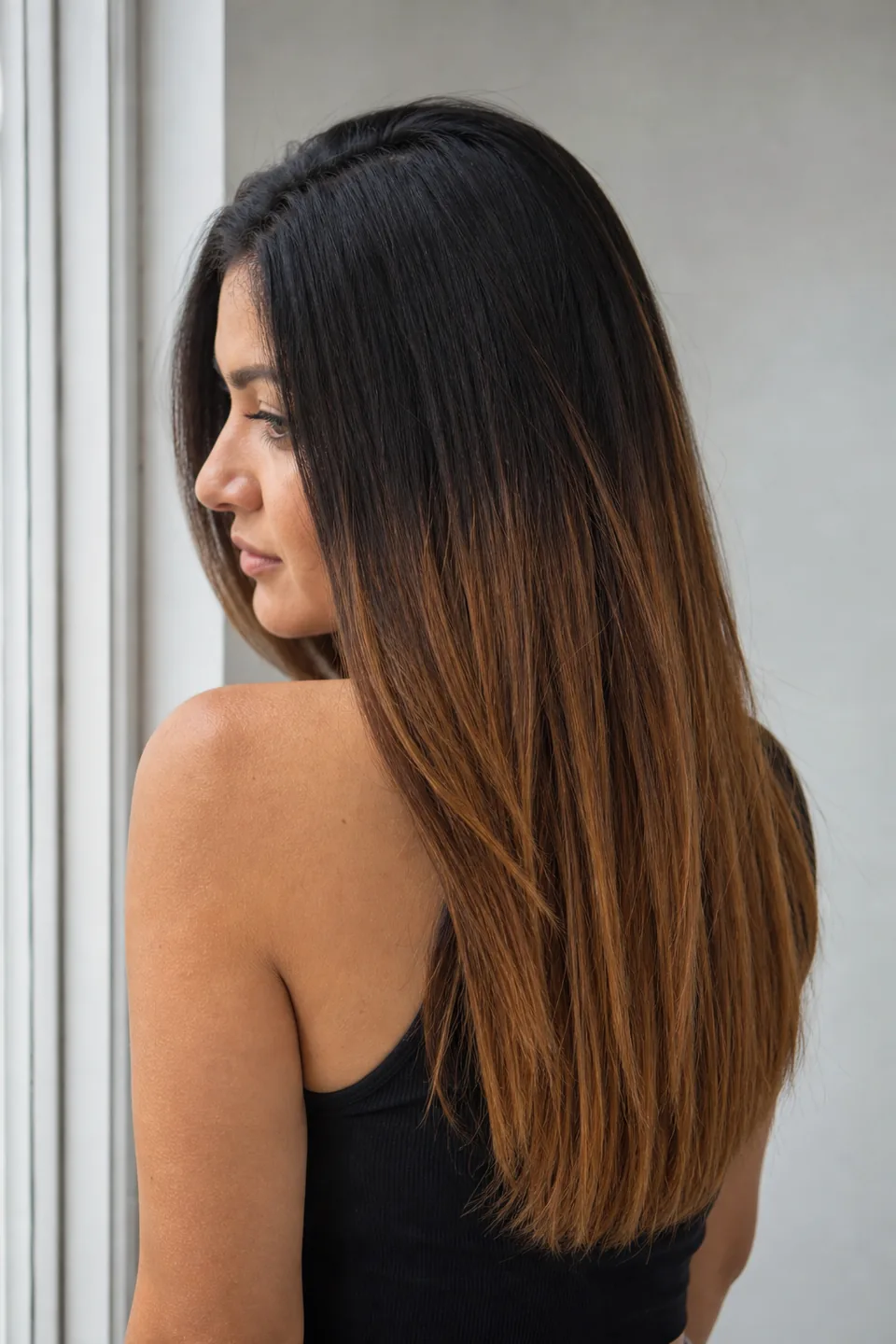
11. Level 6 Dark Caramel Foilayage on Level 2-3 Hair
- Base level
- 2-3
- Target
- Level 6 dark caramel
- Technique
- Foilayage + warm gloss
- Undertone
- Warm, olive
- Sessions
- 1
- Touch-up
- Every 3 months
Open-air painting on level 2 hair tends to stall at a red-brown, so the foil is what makes caramel reachable in one visit. The contrast is high enough that regrowth starts to read around month three.
Ask for: "Foilayage from my level 2-3 to a level 6 caramel, warm gloss, blended up toward the root."
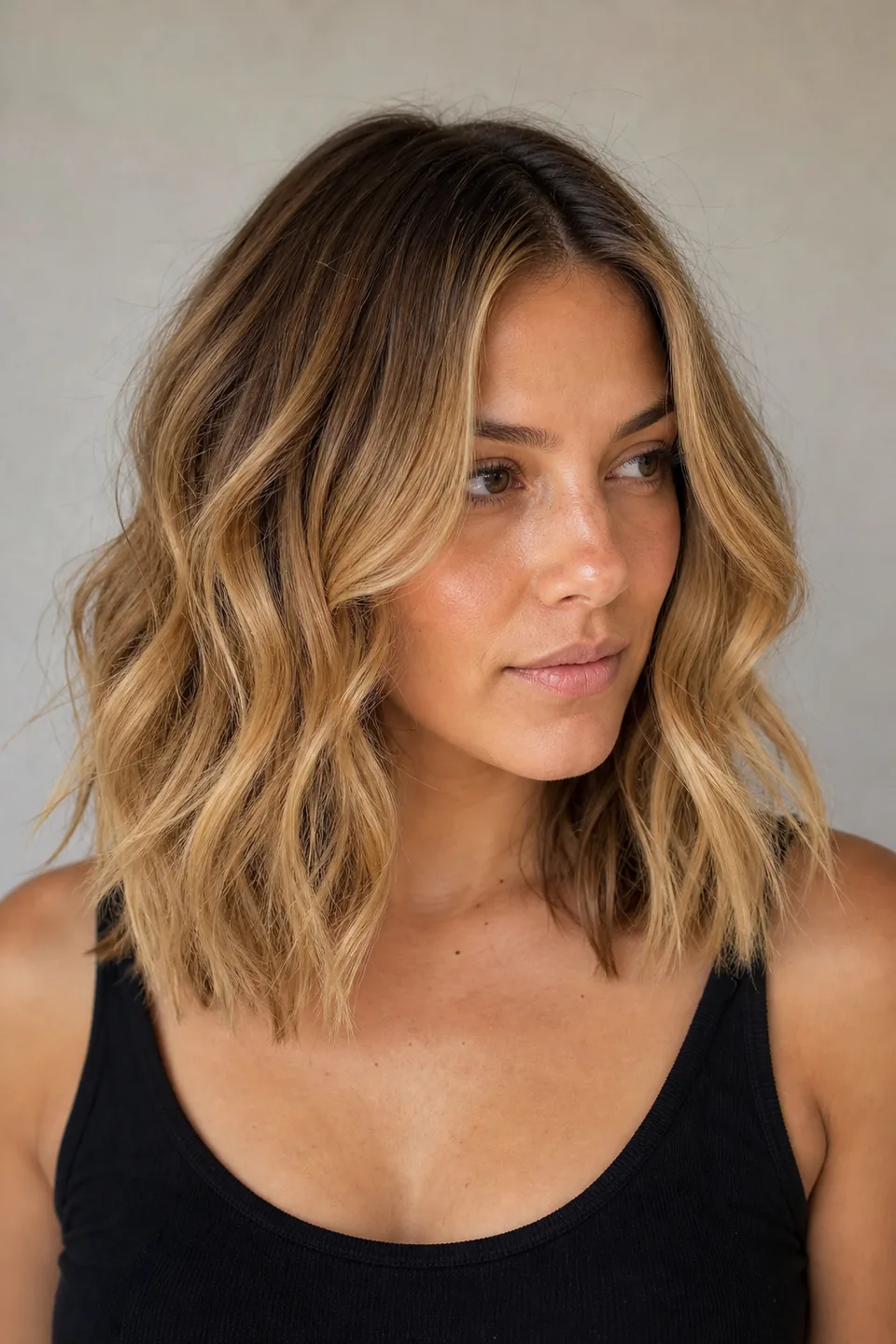
12. Level 8 Honey Balayage on a Level 6 Base
- Base level
- 6
- Target
- Level 8 honey blonde
- Technique
- Balayage + honey gloss
- Undertone
- Warm
- Sessions
- 1
- Touch-up
- Every 4 months
Purple shampoo is the wrong tool here; it mutes the copper that makes honey read as honey. A honey gloss at the halfway point does more than any weekly product.
Ask for: "Honey balayage to level 8 from my level 6, warm gloss, no ash."
Red, Copper and Auburn Balayage
Red and copper balayage fade faster than any other painted shade, so they need a gloss every 4-6 weeks whatever the base. They suit warm and olive undertones, and freckles, best. Copper on dark hair usually needs pre-lightening to show, covered in depth in copper by starting level.
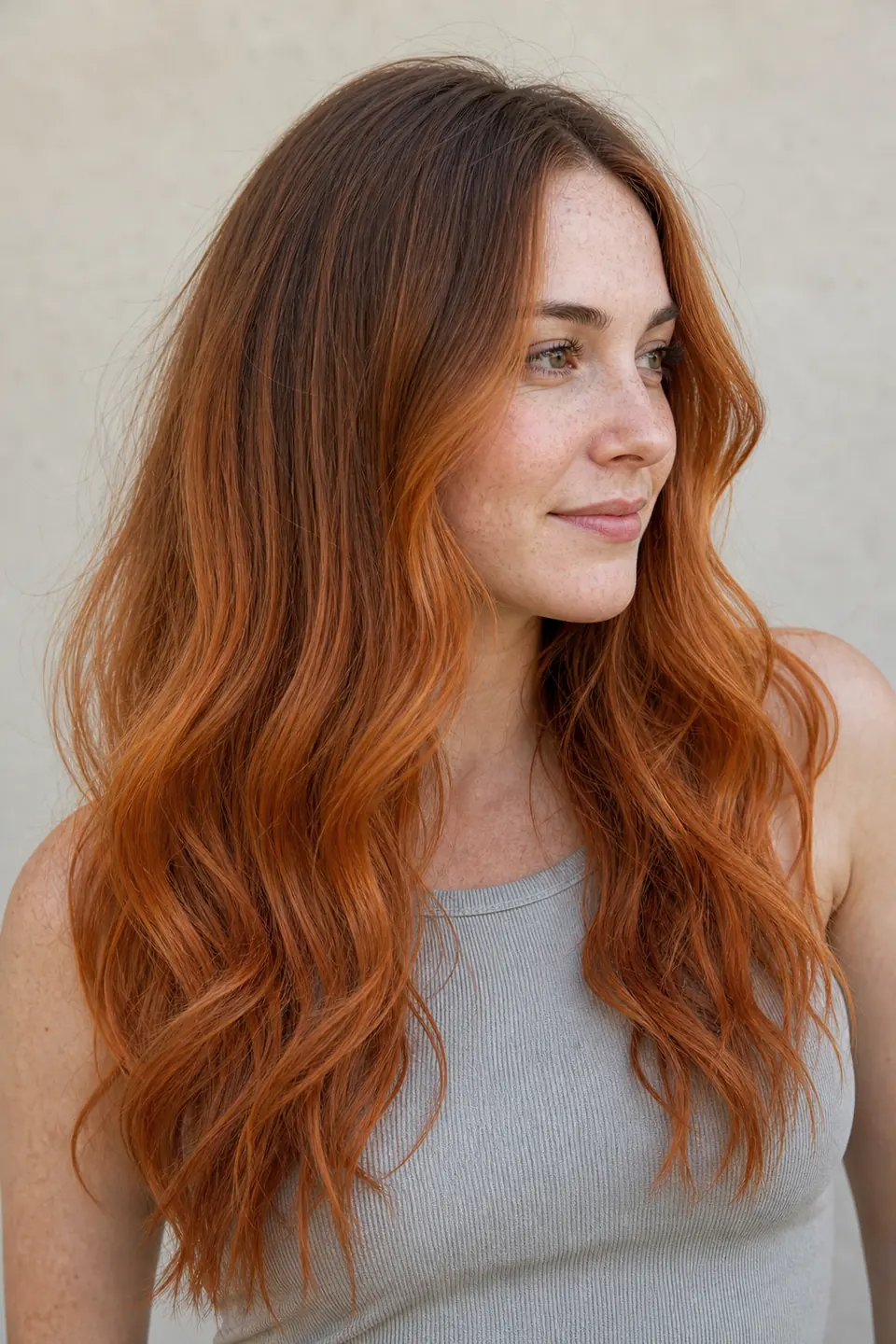
13. Level 7 Copper Balayage on a Level 5 Brown
- Base level
- 5
- Target
- Level 7 copper
- Technique
- Light balayage + copper demi gloss
- Undertone
- Warm
- Sessions
- 1
- Touch-up
- Every 3-4 months, gloss every 4-6 weeks
Copper only needs the hair lifted to the orange stage, two levels, so it is one of the gentler painted looks. Skipping glosses shows quickly, as the copper drifts toward gold-brass on the lightened ends.
Ask for: "Light balayage to level 7, glossed copper, gloss every five weeks."
14. Level 8 Strawberry Blonde Balayage on a Level 7 Base
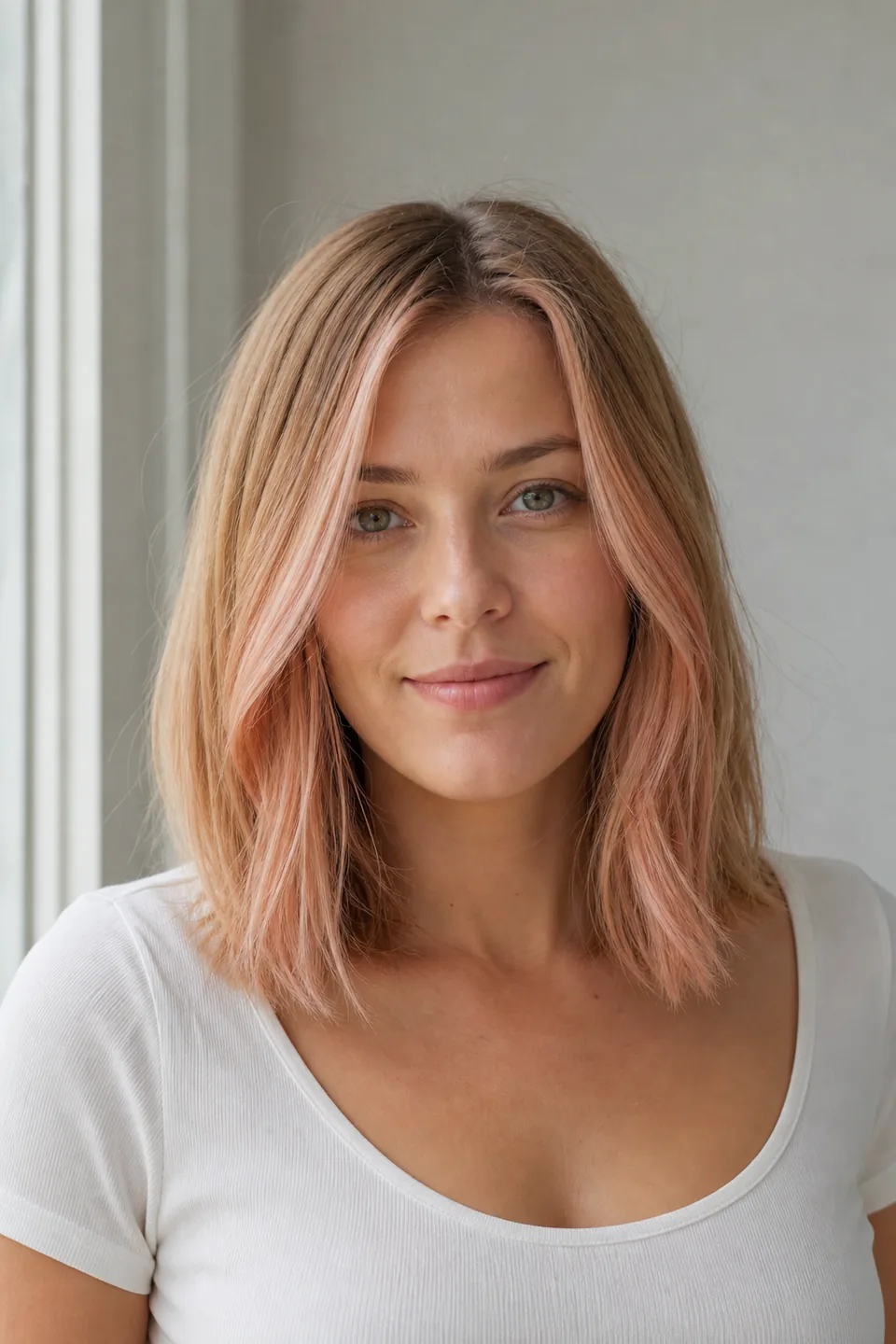
- Base level
- 7
- Target
- Level 8 strawberry blonde
- Technique
- Balayage + gold-copper gloss
- Undertone
- Neutral, warm
- Sessions
- 1
- Touch-up
- Every 4 months, gloss every 4-6 weeks
Strawberry sits on a narrow line between pink and brassy, and painting only the ends keeps the risk to a small area.
Ask for: "Strawberry blonde balayage, level 8 ends from my level 7, gold with a little copper, not pink."
15. Level 5 Red-Violet Balayage on a Level 3 Dark Brown
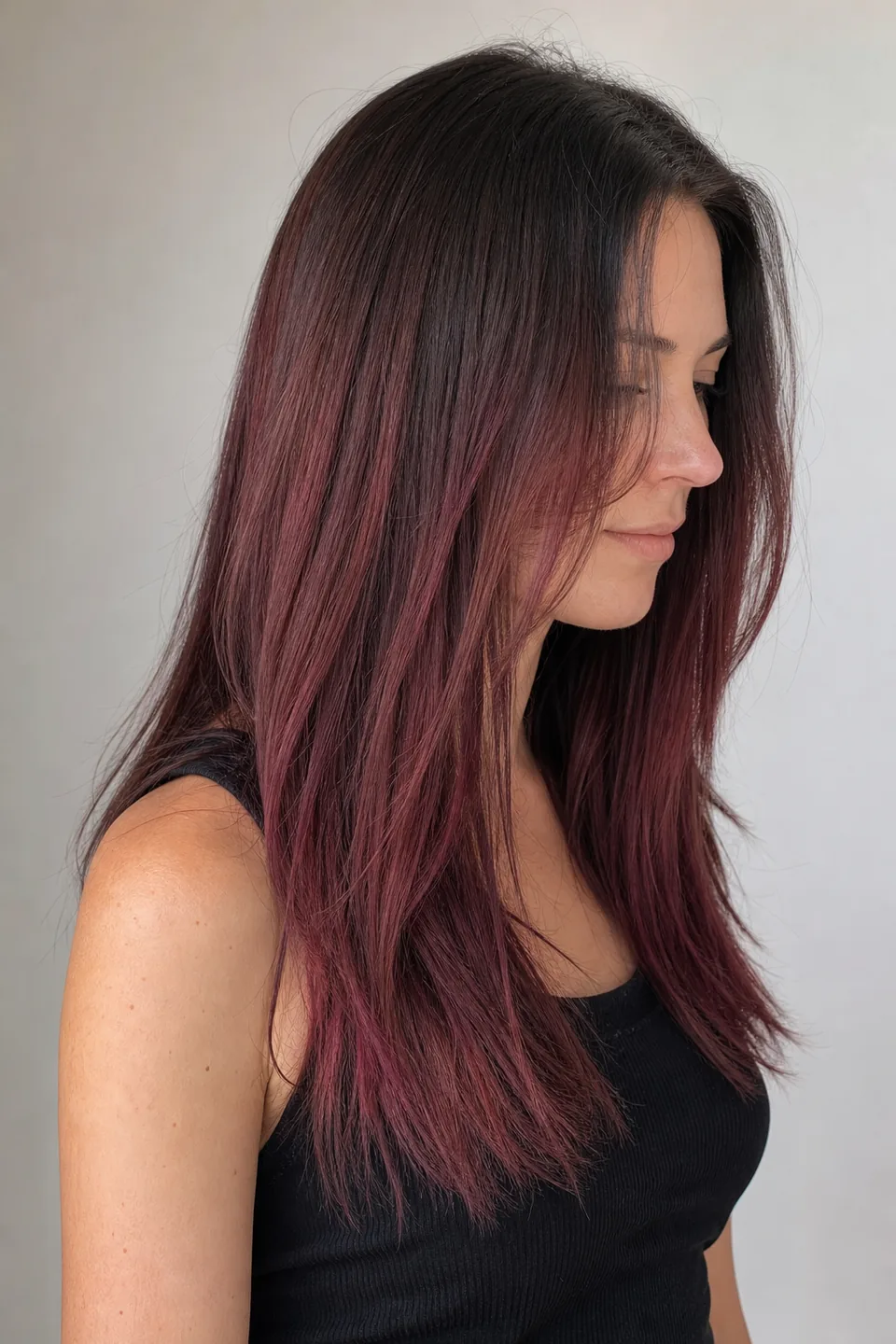
- Base level
- 3
- Target
- Level 5 red-violet
- Technique
- Low-lift balayage + red-violet demi
- Undertone
- Cool, pink
- Sessions
- 1
- Touch-up
- Every 3-4 months, gloss every 4-6 weeks
Here is the red balayage for cool skin: the violet side keeps it from reading orange next to pink undertones. Under office lighting it looks like a deep brown with a berry cast.
Ask for: "Two levels of lift painted through my level 3, glossed red-violet, kept cool rather than copper."
16. Level 8 Copper-Gold Balayage on Natural Level 7 Red Hair
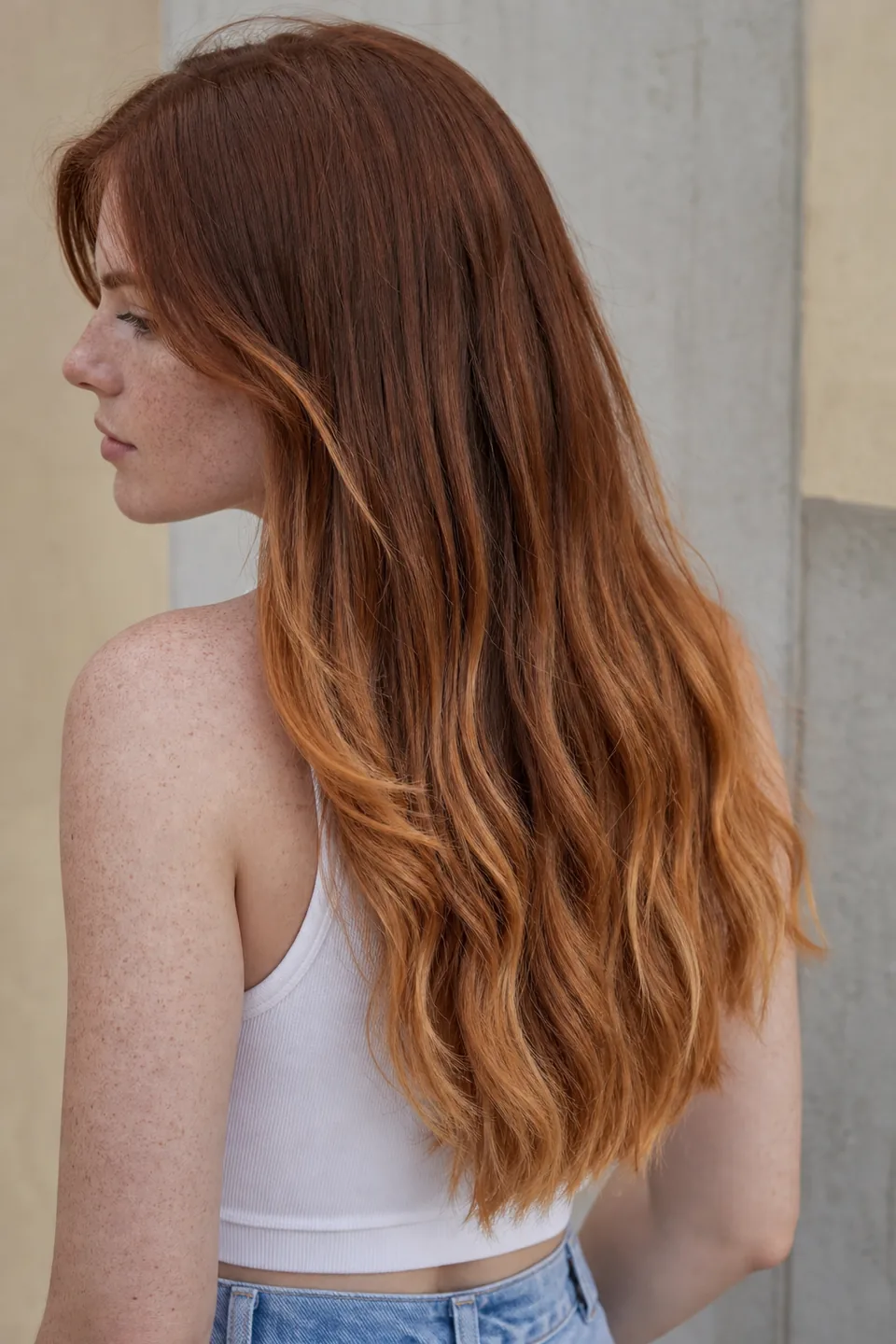
- Base level
- 7, natural red
- Target
- Level 8 copper-gold
- Technique
- Fine balayage + gold gloss
- Undertone
- Warm
- Sessions
- 1
- Touch-up
- Every 5-6 months
Natural redheads rarely need more than one level of lift to brighten, and anything more risks losing the red they started with.
Ask for: "Very fine balayage, one level of lift on my natural red, gold gloss on the pieces only."
17. Level 6 Cowboy Copper Balayage on Level 4 Brown
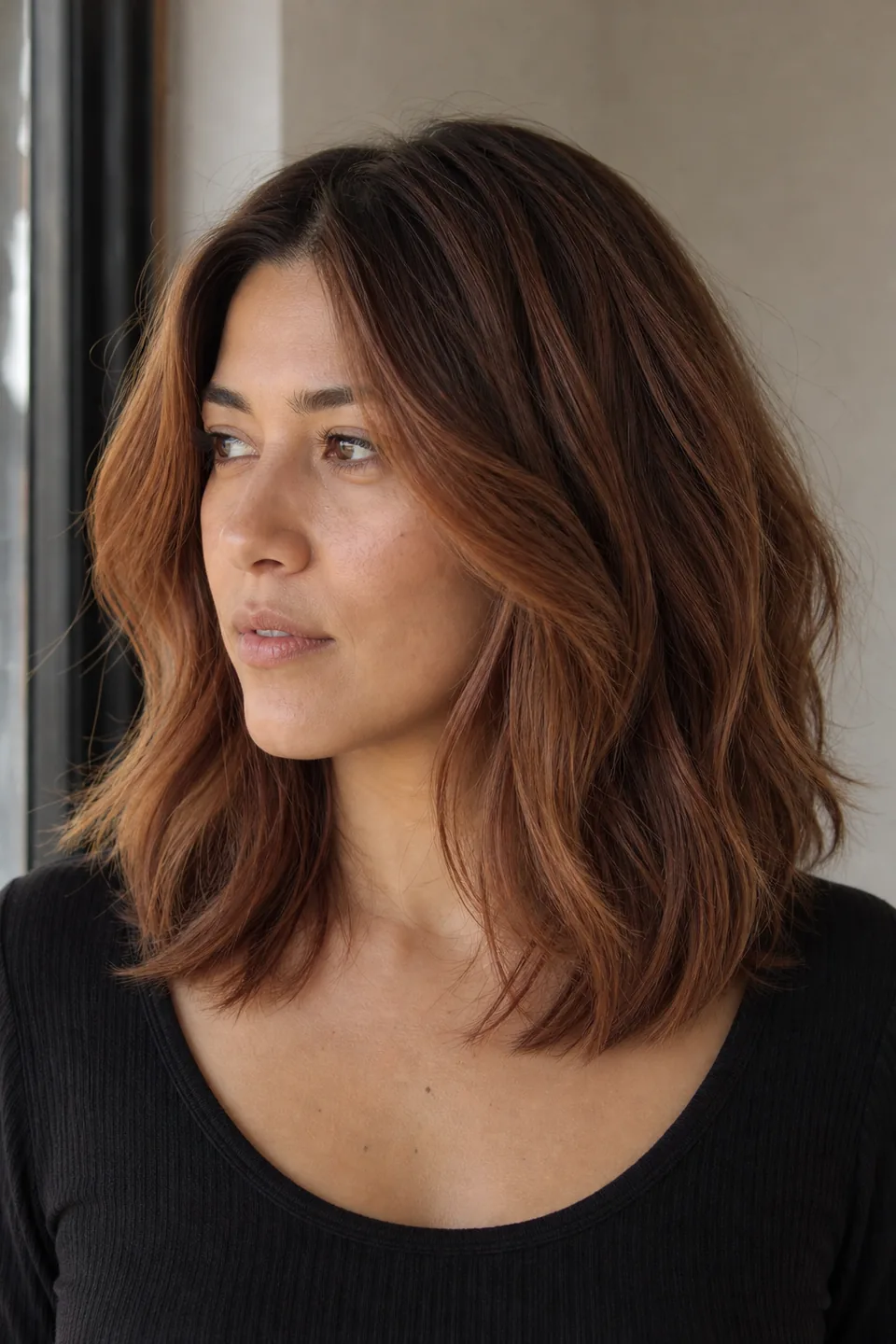
- Base level
- 4
- Target
- Level 6 cowboy copper
- Technique
- Balayage + copper-brown gloss
- Undertone
- Warm, olive
- Sessions
- 1
- Touch-up
- Every 3-4 months, gloss every 4-6 weeks
Cowboy copper is copper with brown mixed back in, a good test before full red. It fades toward a warm light brown rather than toward brass.
Ask for: "Balayage two levels up from my level 4, glossed a muted brown-copper, not bright orange."
Balayage on Black and Very Dark Hair
On level 1-2 hair, one balayage session lands on bronze, cinnamon or caramel, not blonde, because the hair has to pass through red and orange first. Foilayage and a two- or three-visit plan are the honest route to anything lighter, and a box-dyed black base needs a strand test before any of it.
18. Level 4 Neutral Mocha Balayage on Level 1-2 Black Hair
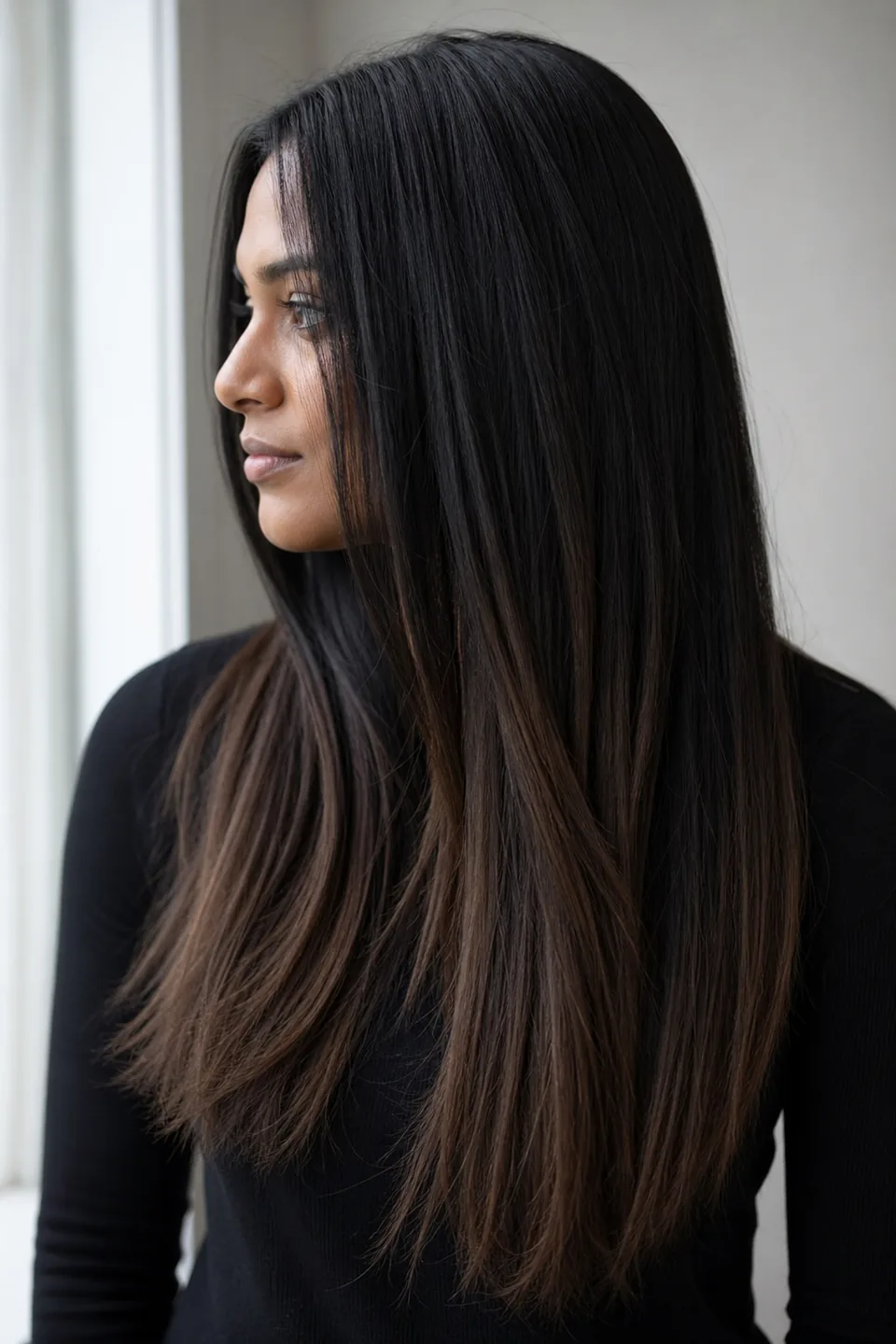
- Base level
- 1-2
- Target
- Level 4 neutral mocha
- Technique
- Low-lift balayage + neutral-ash gloss
- Undertone
- Neutral, cool
- Sessions
- 1
- Touch-up
- Every 4 months
Two levels of lift is the gentlest painted change black hair can wear, and it reads mostly in sunlight. Without a neutral-ash gloss, the lifted ends show as red-brown.
Ask for: "Subtle balayage on my level 1-2 black hair, just to a level 4, glossed neutral to keep the red down."
19. Level 6 Golden Bronze Foilayage on Level 2 Coily Hair
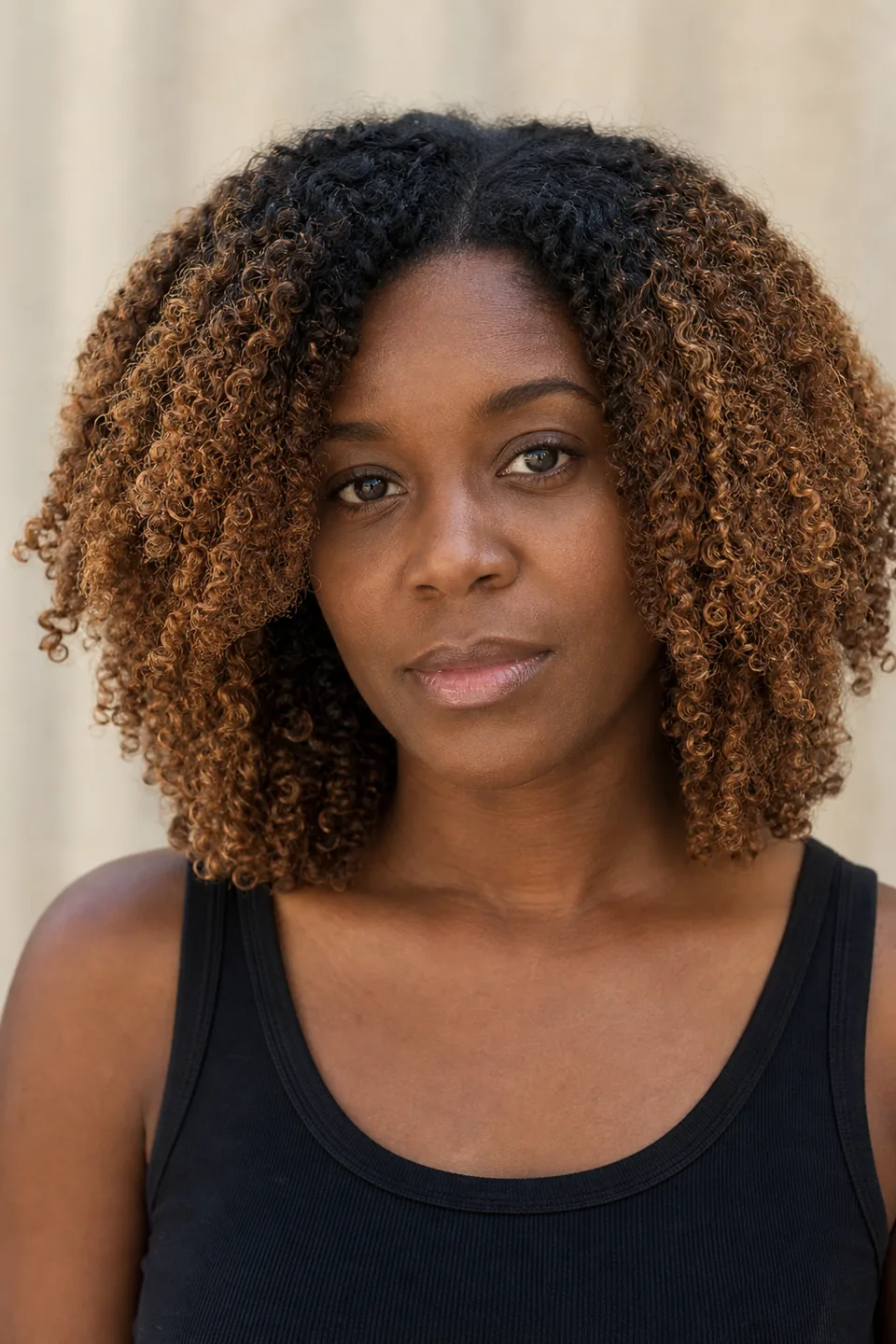
- Base level
- 2
- Target
- Level 6 golden bronze
- Technique
- Foilayage + bond builder + gold gloss
- Undertone
- Warm
- Sessions
- 1
- Touch-up
- Every 3-4 months
Coily hair is often fragile at the bends, so colorists usually keep lift on coils modest and use a bond-building additive.
Ask for: "Foilayage to a level 6 golden bronze on my level 2 coils, bond builder in, nothing lighter this time."
20. Level 5 Cinnamon Balayage on Level 2 Black-Brown Hair
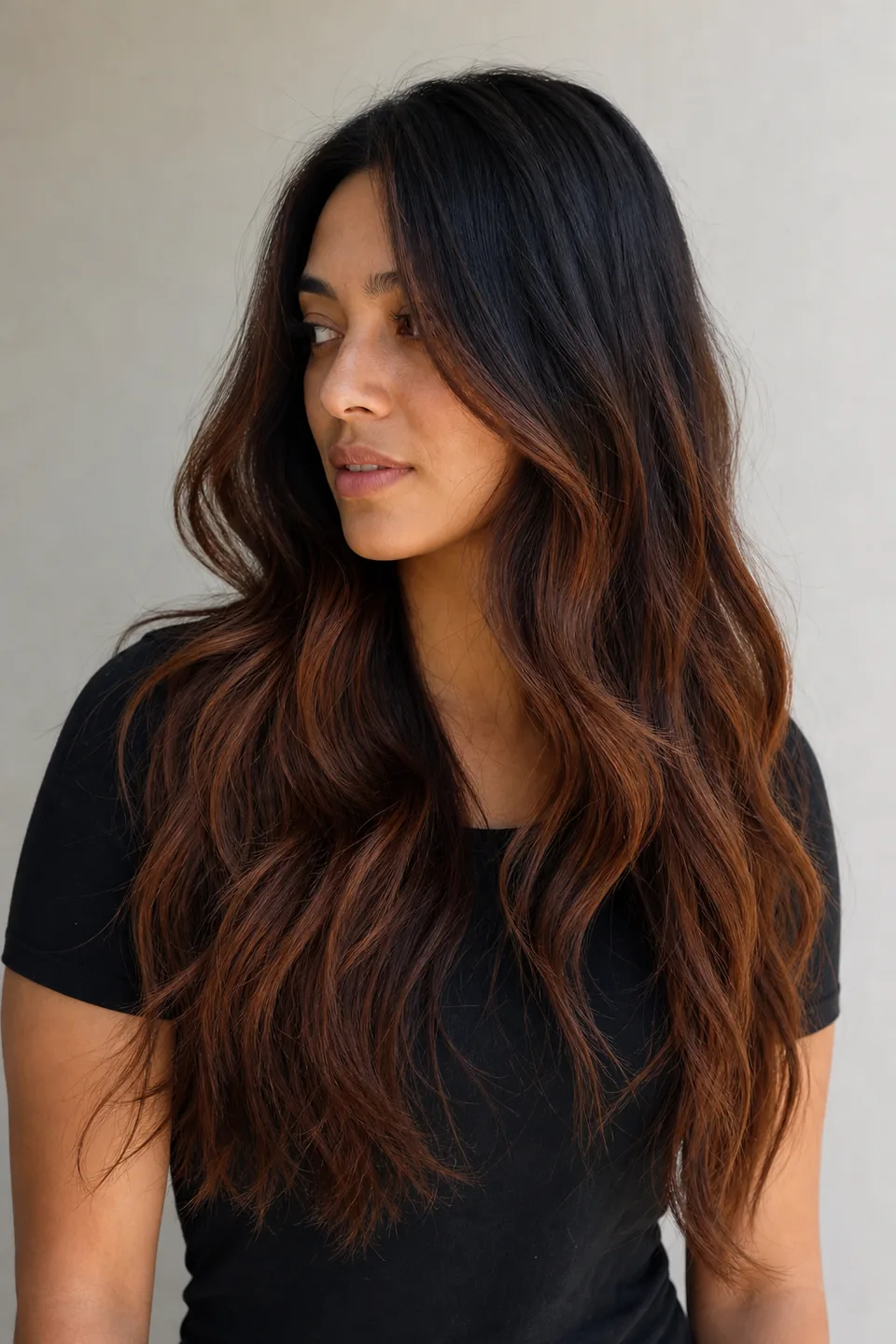
- Base level
- 2
- Target
- Level 5 cinnamon
- Technique
- Balayage + red-copper gloss
- Undertone
- Warm, olive
- Sessions
- 1
- Touch-up
- Every 3 months, gloss every 4-6 weeks
Cinnamon embraces the red stage instead of fighting it, which makes it the most reliable one-visit painted color on black-brown hair. The trade-off is red-family fading, so the gloss carries the look.
Ask for: "Balayage from my level 2 to a level 5, glossed cinnamon, warm red-copper. I'm fine with warmth."
21. Level 8 Blonde Balayage on Level 1-2 Black Hair, Second Session
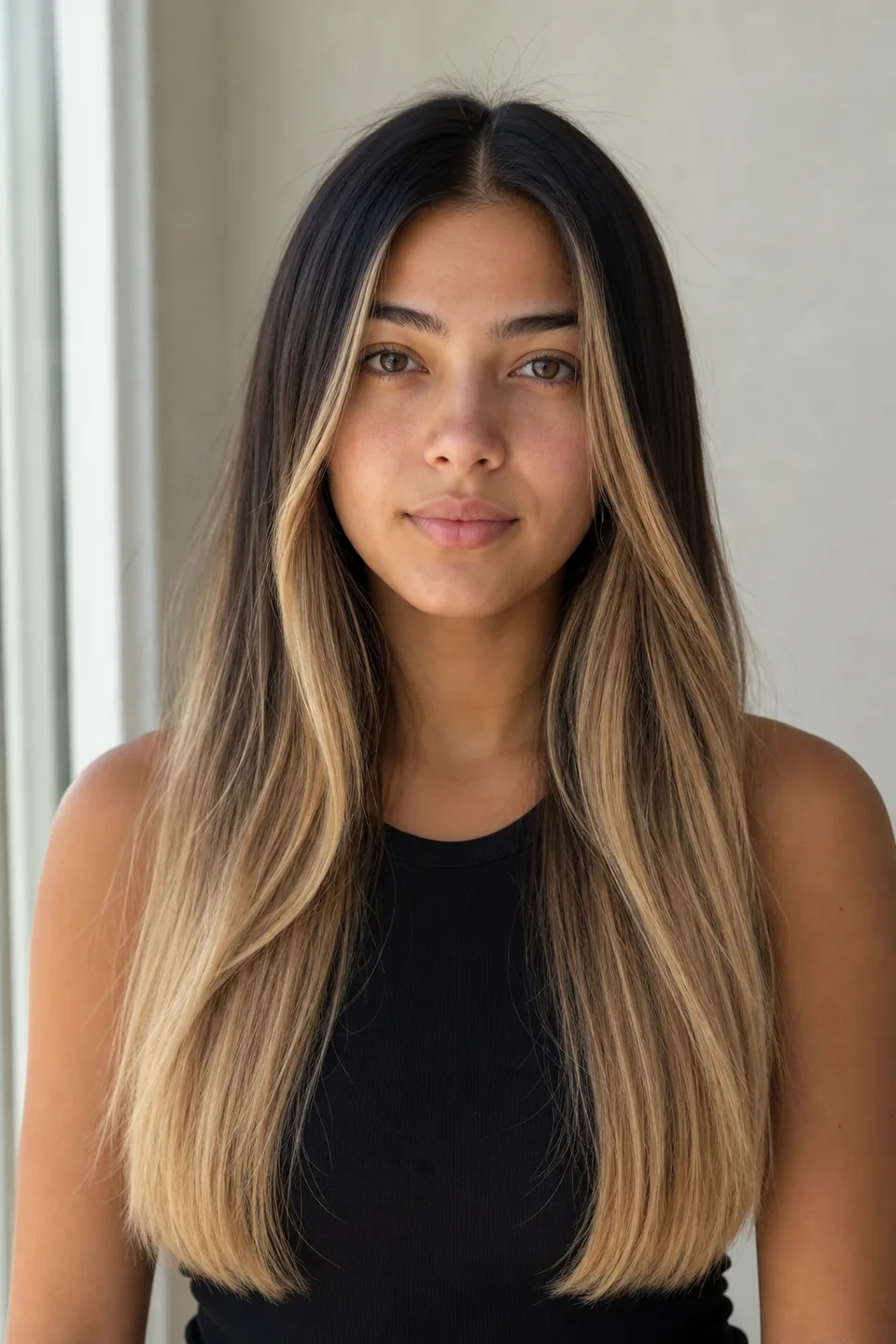
- Base level
- 1-2
- Target
- Level 8 golden-beige
- Technique
- Foilayage in 2-3 sessions + toner
- Undertone
- Olive, neutral, warm
- Sessions
- 2-3, 6-8 weeks apart
- Touch-up
- Every 3 months, toner every 4-6 weeks
Splitting the lift across visits six to eight weeks apart protects the ends: the first gets to caramel, the second to a level 8 the toner can clean up. Six levels of contrast means regrowth shows by month three.
Ask for: "A two-session plan to level 8 golden-beige balayage on my level 1-2. Caramel is fine after the first visit."
Cool, Ash and Smoky Balayage
Cool balayage needs lift past the warm stage before a toner can cool it, so it takes more lightener and more frequent toning than warm shades on the same base. On darker bases, ash brown and how it fades explains why it slides warm so fast.
22. Level 7 Smoky Ash Balayage on a Level 5 Base
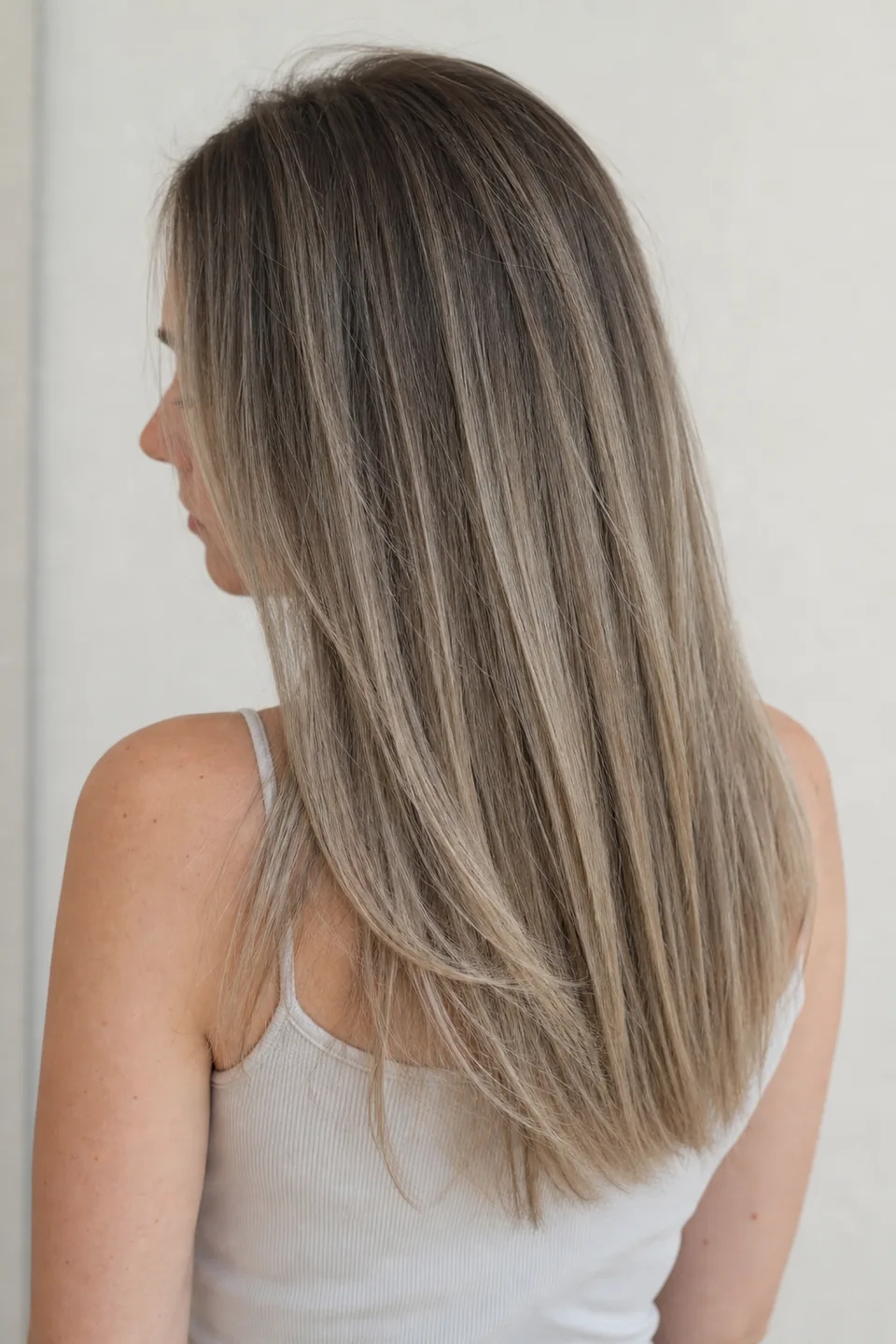
- Base level
- 5
- Target
- Level 7 smoky ash
- Technique
- Balayage lifted to 8 + ash toner at 7
- Undertone
- Cool
- Sessions
- 1-2
- Touch-up
- Every 3-4 months, toner every 4-6 weeks
The usual move is to lift past the target, to a clean 8, then tone back down to a smoky 7, since toning orange level 7 hair ash tends to look muddy.
Ask for: "Balayage lifted to a clean 8, toned back to a smoky ash 7. No gold left in it."
23. Level 8 Pearl Ash Balayage on a Level 6 Cool Base
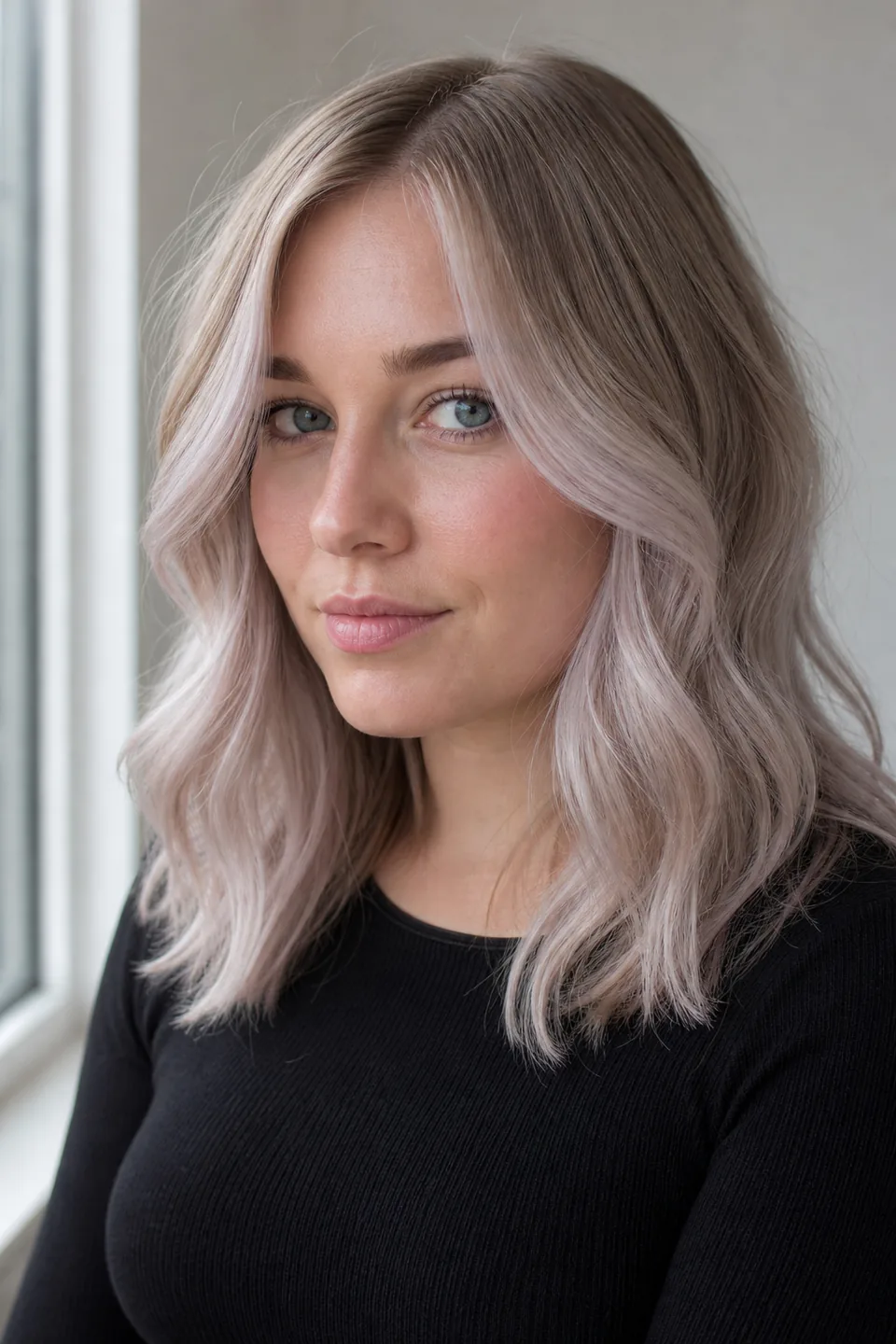
- Base level
- 6
- Target
- Level 8 pearl ash
- Technique
- Balayage + violet-ash toner
- Undertone
- Cool, pink
- Sessions
- 1
- Touch-up
- Every 4 months, toner every 6 weeks
Pearl tones carry a little violet, which keeps level 8 from looking yellow under indoor light. On olive skin, beige is safer.
Ask for: "Balayage to level 8, toned pearl ash with a little violet, softer around my face."
24. Level 6 Ash Balayage on Level 3 Dark Brown, Over Two Visits
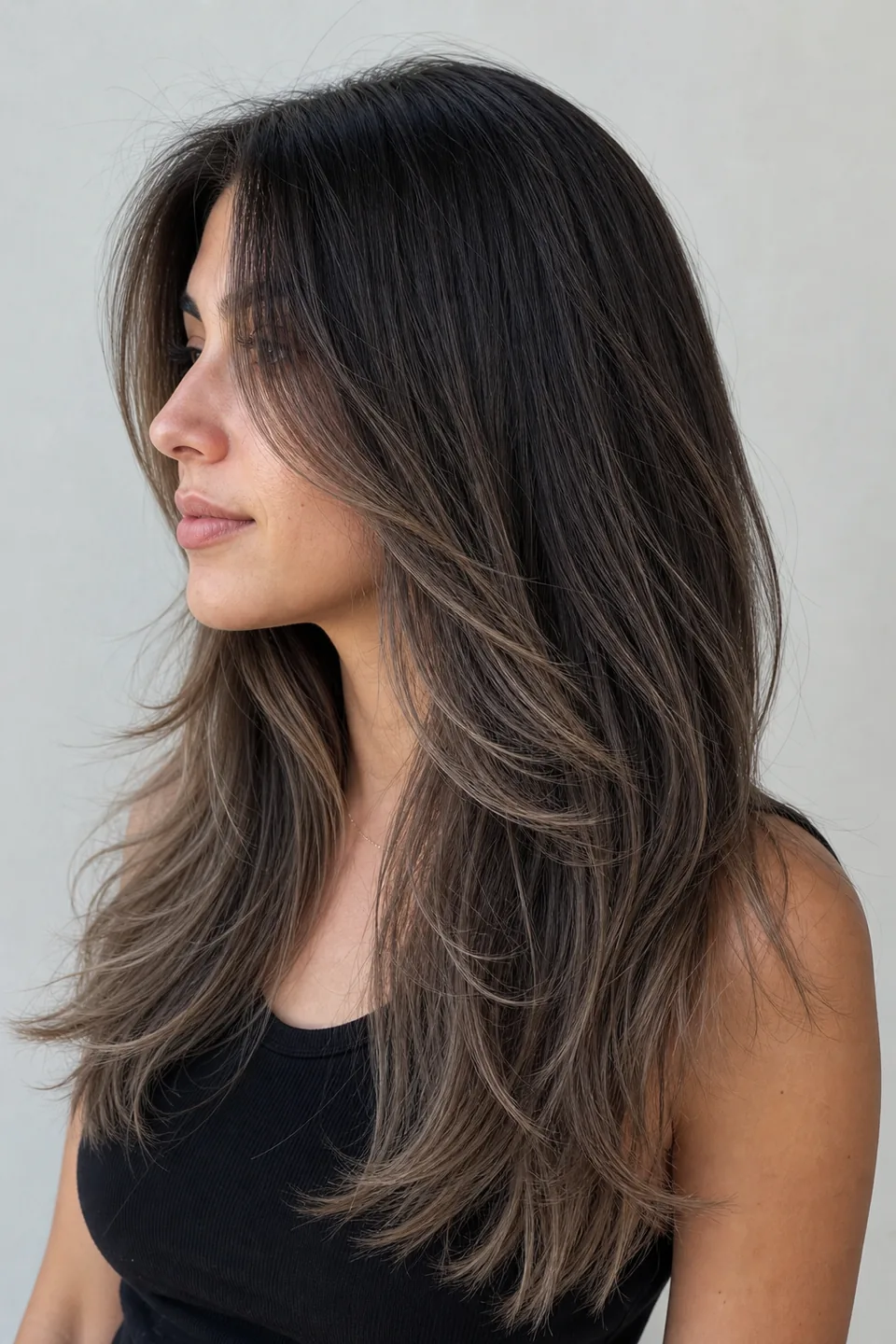
- Base level
- 3
- Target
- Level 6 ash brown
- Technique
- Foilayage to 7 + blue-based toner at 6
- Undertone
- Cool
- Sessions
- 2
- Touch-up
- Every 3 months, toner every 4 weeks
The lightening is the easy part on a level 3; keeping it ash is the ongoing job. Expect orange to show through at week three or four, which a blue-based toner, not a violet one, cancels.
Ask for: "Two-visit plan for ash balayage on my level 3: lift to a clean 7, tone to an ash 6 with blue."
Balayage on Gray and Silver Hair
Balayage blends gray rather than covering it, because the painted strands start below the root where new gray grows. It works best when lightened pieces sit near the gray in level, so the regrowth reads as part of the pattern. Percentages and methods are laid out in gray blending by how much gray.
25. Level 9 Silver Balayage on a Level 6 Base With 40 Percent Gray
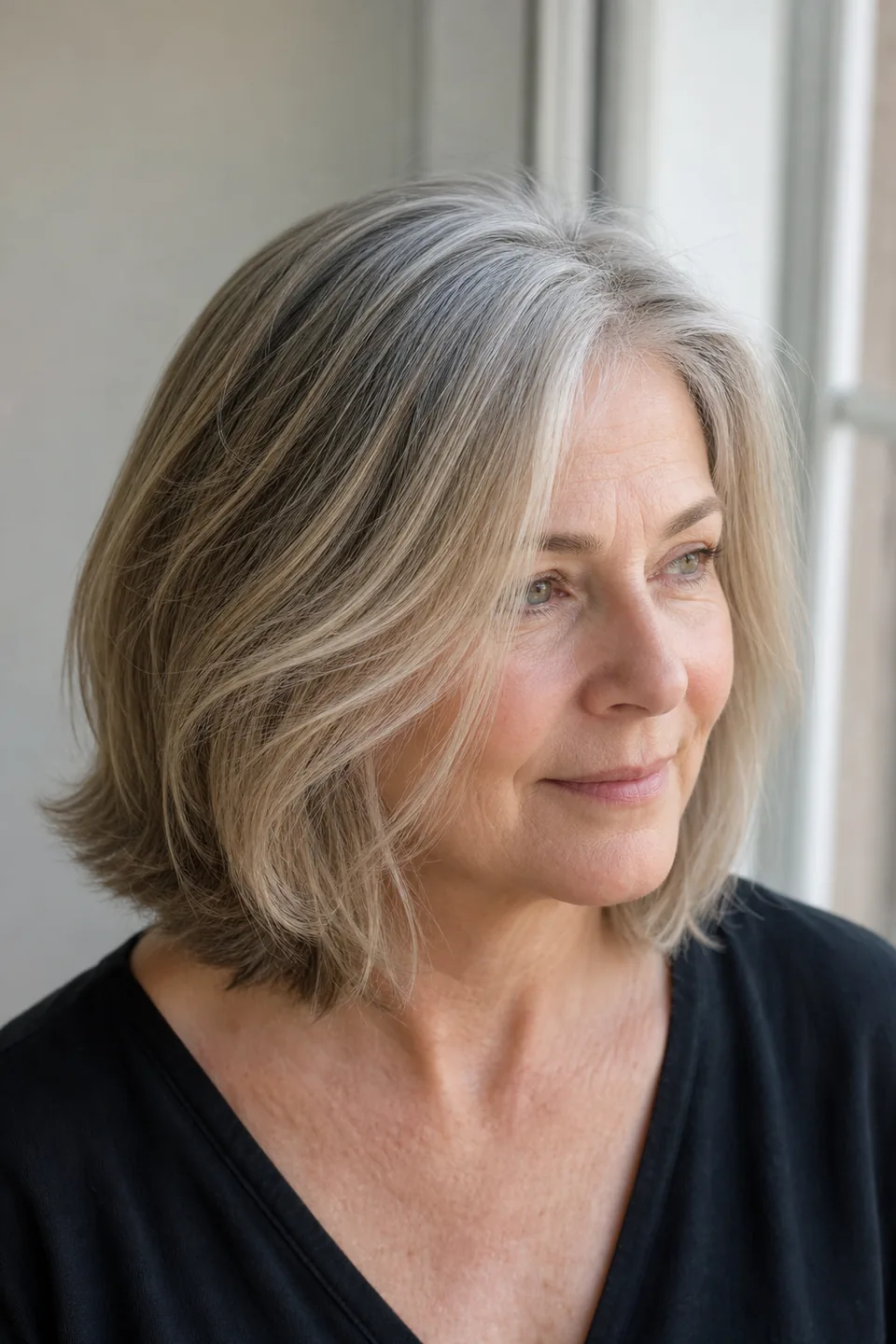
- Base level
- 6 with about 40% gray
- Target
- Level 9 silver
- Technique
- Balayage + silver toner
- Undertone
- Cool, neutral
- Sessions
- 1
- Touch-up
- Every 4-5 months, toner every 6-8 weeks
Painted silver and natural white are close in level and tone, so the first inch of new growth hardly changes the picture. A warm toner would set the white off as yellowish instead.
Ask for: "Balayage to level 9, toned silver, placed to blend my gray, not cover it. I'm about 40 percent gray."
26. Level 7 Soft Beige Balayage on a Level 5 Base With 20 Percent Gray
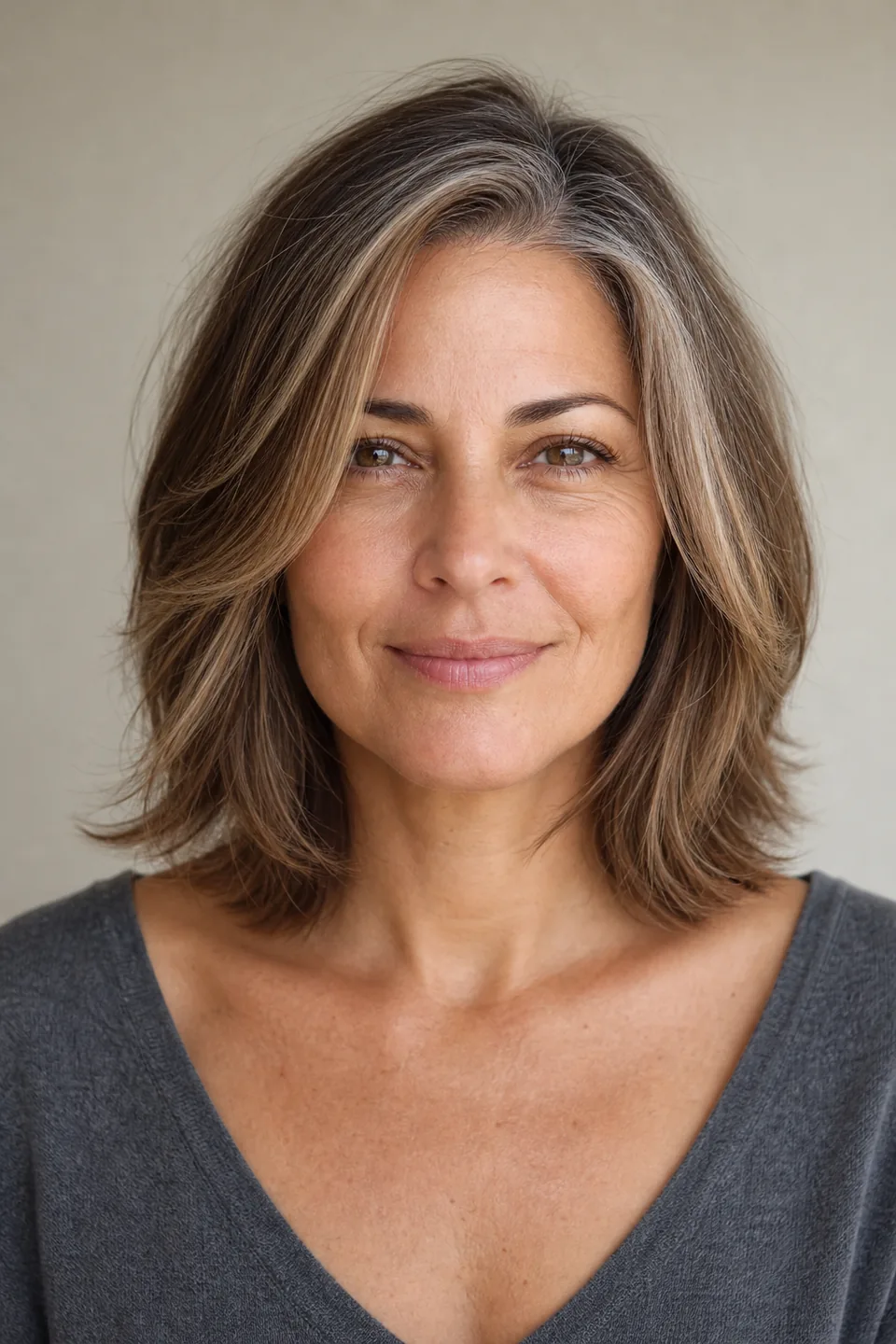
- Base level
- 5 with about 20% gray
- Target
- Level 7 soft beige
- Technique
- Balayage + beige demi gloss over all
- Undertone
- Neutral, warm
- Sessions
- 1
- Touch-up
- Every 3-4 months, gloss every 6-8 weeks
An all-over demi gloss softens early gray to a lighter, translucent tone, and the beige pieces give the eye somewhere else to land. The gloss fades from the grays first, usually around week six.
Ask for: "Soft beige balayage to level 7 on my level 5, with a demi gloss over everything to soften my gray."
27. Level 8 Beige Balayage With Level 5 Lowlights on Level 4 Hair, 30 Percent Gray
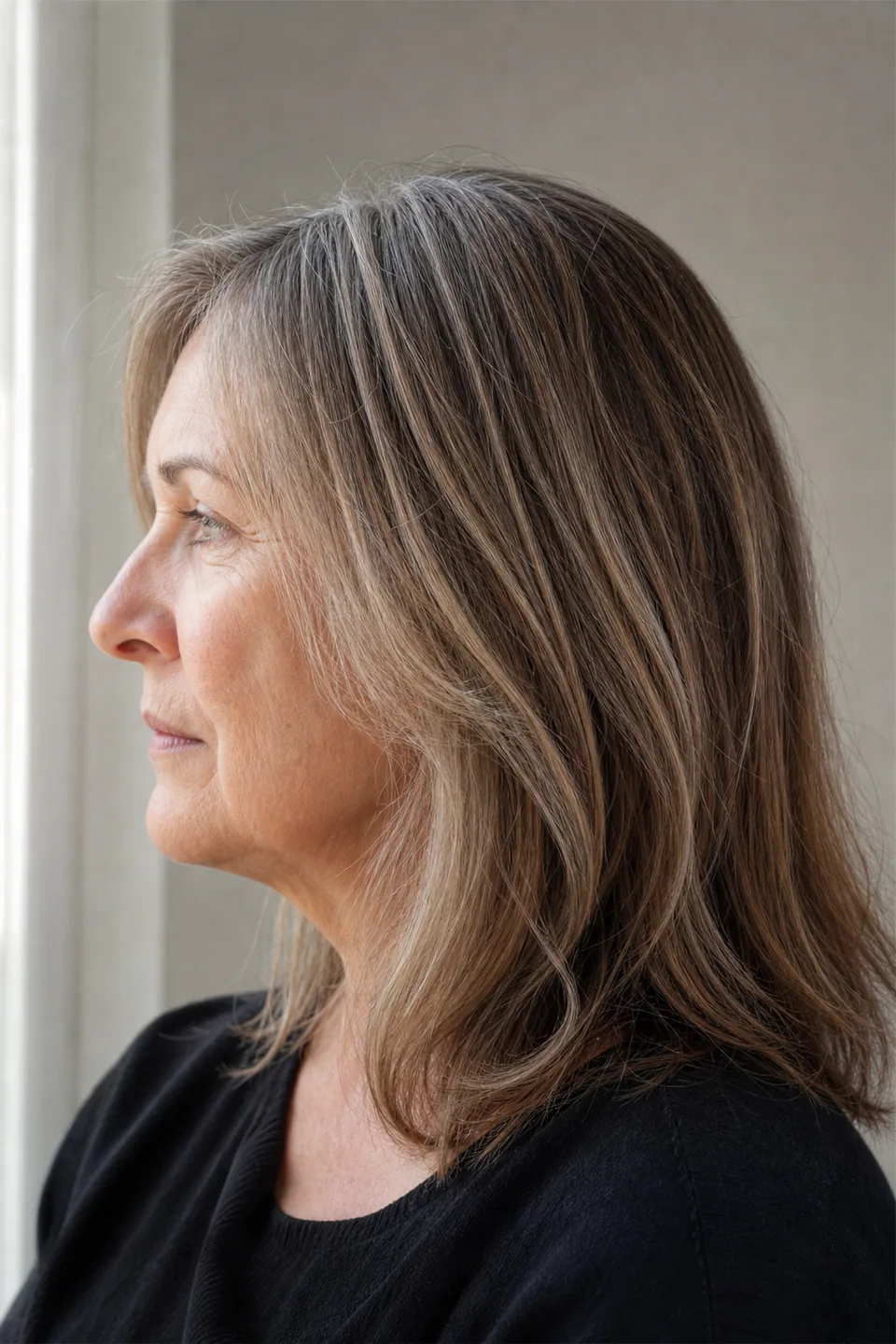
- Base level
- 4 with about 30% gray
- Target
- Level 8 beige + level 5 lowlights
- Technique
- Balayage + demi lowlights
- Undertone
- Neutral
- Sessions
- 1
- Touch-up
- Every 3-4 months
With lighter pieces, a few deeper lowlights and the gray itself, the eye stops reading any one of them as the regrowth.
Ask for: "Beige balayage to level 8 with a few level 5 neutral lowlights to blend my 30 percent gray."
Balayage by Placement, Length and Texture
Where the paint goes matters as much as the shade: a face-frame, a partial top layer or a few lowlights change how much hair is lightened, the price and the grow-out. Length and texture limit which placements read at all.
28. Level 9 Money Piece Balayage on a Level 6 Base
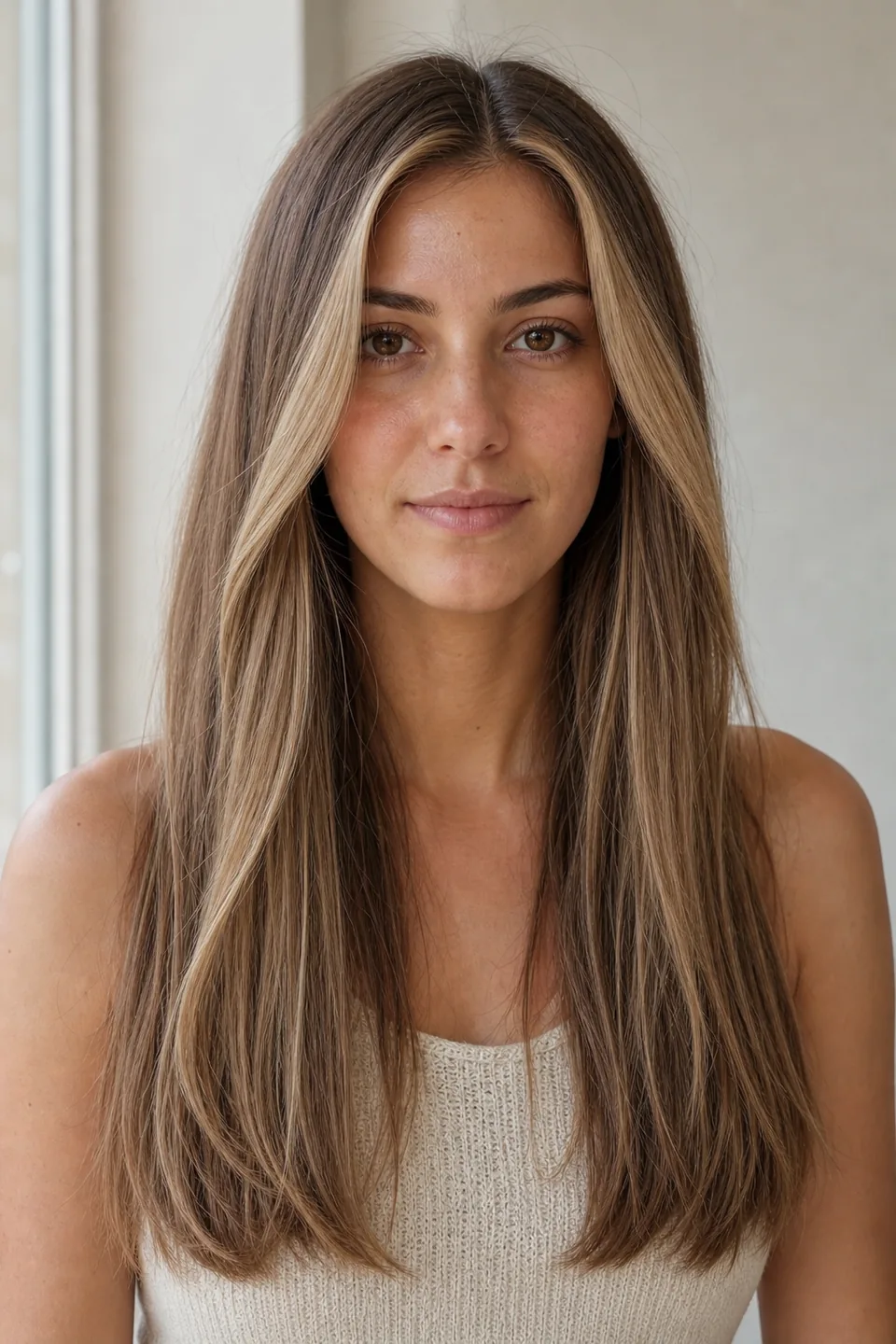
- Base level
- 6
- Target
- Level 9 golden-beige at the face
- Technique
- Face-frame painted closer to the root + light balayage
- Undertone
- Warm, neutral
- Sessions
- 1
- Touch-up
- Face-frame every 8-10 weeks, rest every 4 months
Because the money piece is painted close to the scalp, it grows out like a highlight rather than like balayage.
Ask for: "Two face-framing pieces lifted to 9 near the root, soft balayage behind, golden-beige toner."
29. Partial Balayage: Level 8 Painted Top Layer on a Level 5 Base
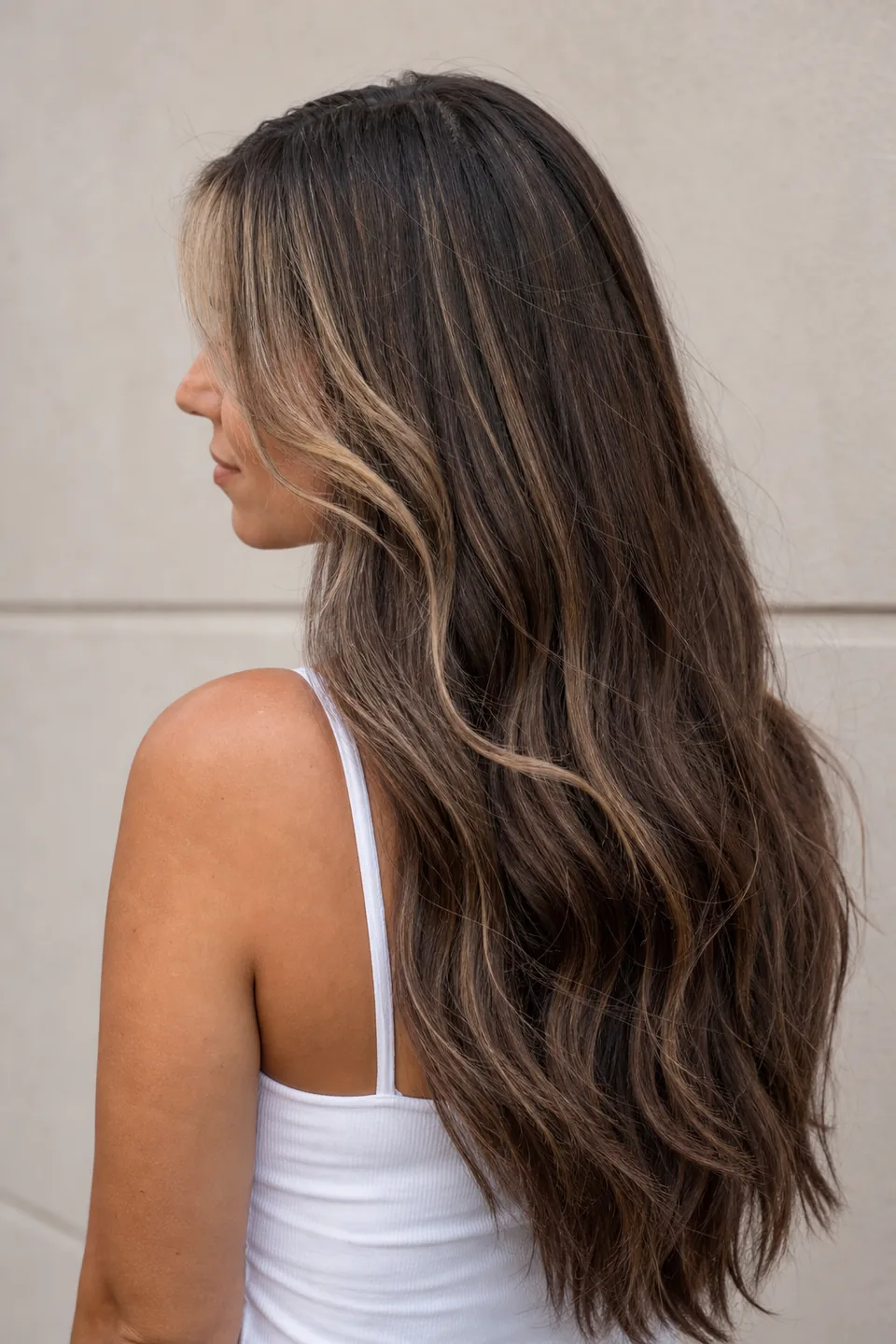
- Base level
- 5
- Target
- Level 8 neutral-golden
- Technique
- Partial balayage, top and front only
- Undertone
- Neutral, warm
- Sessions
- 1
- Touch-up
- Every 4 months
A top-layer-only job costs less and lightens less hair. The catch shows in a ponytail or updo, where the untouched level 5 underneath takes over.
Ask for: "Partial balayage, top layer and face only, to level 8."
30. Level 8 Balayage on a Level 5 Chin-Length Bob
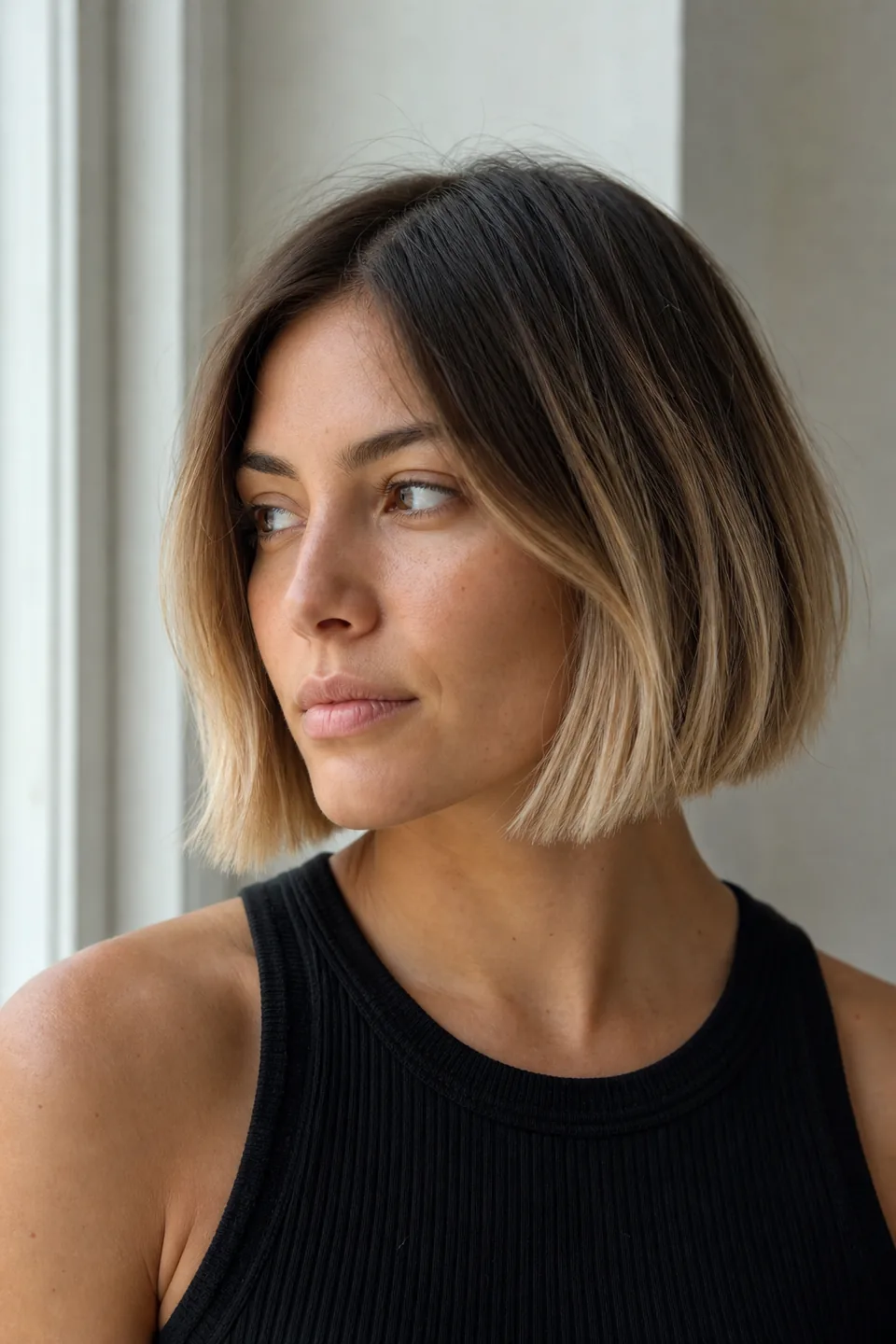
- Base level
- 5
- Target
- Level 8 warm beige
- Technique
- Fine surface painting, short blend
- Undertone
- Neutral, warm
- Sessions
- 1
- Touch-up
- Every 3 months, plus trims
Chin length is about the shortest cut where balayage still reads as a gradient. Each trim takes away lightened ends, so short balayage needs repainting sooner than long.
Ask for: "Fine balayage on my level 5 bob, painted on the surface to level 8 warm beige, blended short."
31. Level 7 Curl-by-Curl Balayage on Level 4 Curly Hair
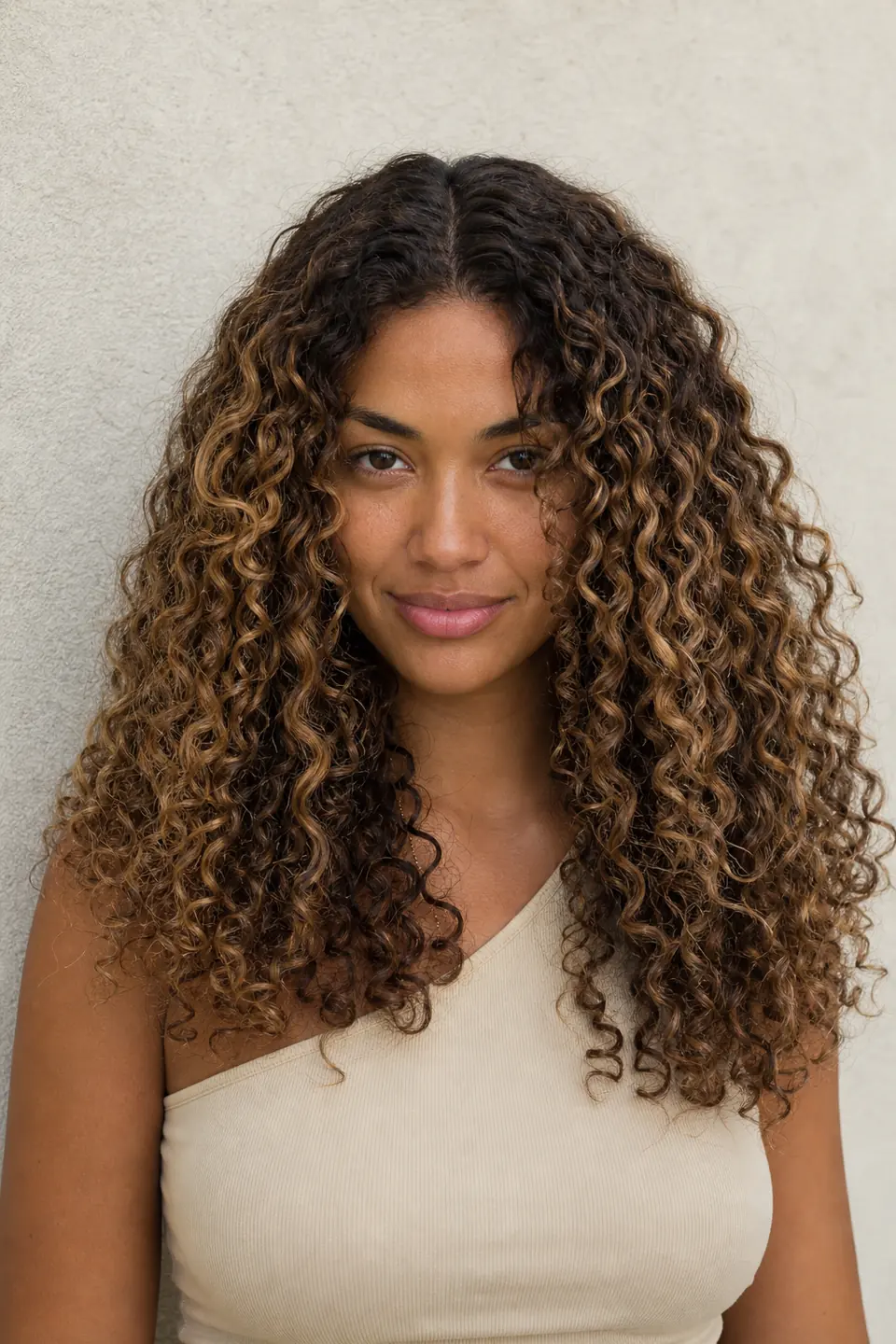
- Base level
- 4
- Target
- Level 7 golden caramel
- Technique
- Painted curl by curl on dry hair
- Undertone
- Warm, olive
- Sessions
- 1
- Touch-up
- Every 4-5 months
Painting each curl as it sits keeps the color from landing in hidden spots once the curls dry. Look for a portfolio that shows dry-painted curls.
Ask for: "Curl-by-curl balayage on dry hair, level 7 golden caramel on my level 4, bond builder in."
32. Reverse Balayage: Level 6 Painted Lowlights Through Grown-Out Level 9 Blonde
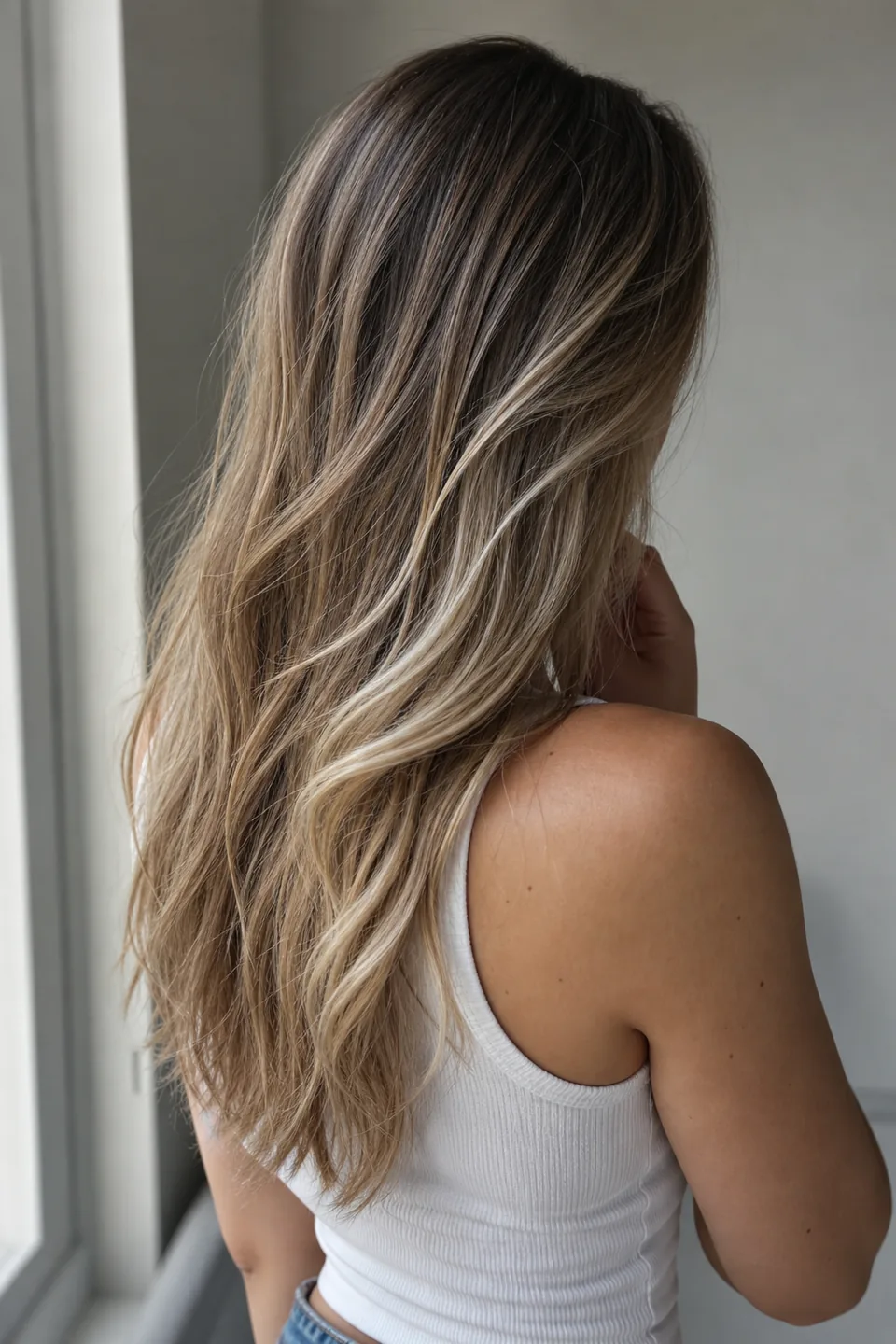
- Base level
- 6 root, level 9 lengths
- Target
- Level 6 lowlights
- Technique
- Warm filler + demi lowlights, painted
- Undertone
- Neutral, warm
- Sessions
- 1
- Touch-up
- Lowlights every 8-12 weeks
Reverse balayage paints depth back into hair that has gone too blonde. On lightened strands, a warm filler goes in first, or the brown turns khaki and fades in a few washes.
Ask for: "Reverse balayage: level 6 neutral lowlights painted through my level 9 lengths, warm filler first."
Balayage Hair Color Shades by Undertone
Undertone narrows the tone family; starting level decides how far you can go within it. Vein and jewelry tests are rough guides at best, so check the shade against your face in daylight before committing.
| Undertone | Shades that tend to work | Shades to test first | Why |
|---|---|---|---|
| Cool (pink, red, blue) | Pale beige, pearl ash, smoky ash, mushroom, red-violet, silver | Copper, caramel, golden | Gold and copper can amplify redness in pink skin |
| Warm (golden, peach) | Golden, honey, caramel, copper, cinnamon, strawberry | Icy, pearl ash | Very cool blonde can look gray or flat next to golden skin |
| Neutral | Beige, bronde, toffee, chestnut, soft caramel | The extremes: icy and bright copper | Middle tones repeat the balance already in the skin |
| Olive | Beige, bronde, caramel, golden bronze, cowboy copper | Pearl ash, yellow-gold | Ash can read sallow and yellow can read green on olive skin |
Upkeep, Appointment Time and Cost by Technique
Balayage costs more per visit than single-process color but needs fewer visits a year, which is where most of its savings come from. Salon prices vary widely by city, length and density, so treat the tiers below as relative, not fixed.
| Service | Typical first appointment | Touch-up | Gloss or toner | Relative cost per visit | Grow-out |
|---|---|---|---|---|---|
| Full balayage | 2.5-4 hours | Every 3-4 months, often longer | Every 4-8 weeks | High | Soft, no hard line |
| Foilayage | 3-4 hours or more | Every 3 months | Every 4-6 weeks | High | Soft, but more contrast on dark bases |
| Partial balayage | 1.5-2.5 hours | Every 3-4 months | Every 6-8 weeks | Medium | Soft on top, untouched underneath |
| Money piece or face-frame only | 1-1.5 hours | Every 8-10 weeks | With the touch-up | Low | Shows at the front first |
| Refresh (root band plus gloss) | 1.5-2.5 hours | Replaces a full repaint | Included | Medium | Resets the blend |
| Gloss only | 45-75 minutes | Not applicable | Every 4-8 weeks | Low | Fades over 20-28 washes |
At home, stick to a demi gloss at your current level, cool water and a color-safe shampoo. Lightener painted on yourself is hard to blend at the back and easy to overlap, which is why home balayage so often turns patchy or orange. If balayage turns out to be more upkeep than you want, single-process shades in the wider range of hair color ideas grow out on a different schedule.
Salon note: Purple shampoo once or twice a week suits painted blonde, but a level 6-7 brown balayage that turns orange answers better to a blue shampoo, and warm shades such as honey, caramel and copper need neither. Using purple on everything is how warm balayage ends up flat and gray-brown.
What to Ask Your Colorist for Balayage
A good balayage consultation agrees on four things: the target level and tone, how close to the root the paint starts, open-air or foilayage, and how many sessions it will take. Bring three photos taken in daylight, including one of something you don't want, and your full color history.
- Classic balayage: "Balayage from my natural level [X] to level [Y], toned [beige/golden/ash], starting about two inches from the root, open-air."
- Dark hair: "Foilayage from my level [1-3]. I'm fine with caramel after the first session if that keeps my hair in good condition."
- Gray hair: "I'm about [X] percent gray and want to blend it, not cover it. Balayage toned [silver/beige] with lowlights if needed."
- Refresh visit: "Lighten the regrowth band only and gloss the lengths. Please don't repaint my ends."
- History: "My last box dye was [shade] [months] ago, no henna, and I've had [highlights/keratin/a perm] in the past year."
Watch out: Painted lightener usually stays off the scalp, but root smudges, glosses and toners touch it. Ask for a patch test 48 hours before any permanent or demi service, especially if you have had a black henna tattoo; hair dye is the most frequent route to sensitization to PPD, a common dye allergen. Burning that doesn't ease after rinsing, blistering, swelling or weeping skin needs a board-certified dermatologist.
Salon note: Hair that has had box dye or henna should be strand-tested before any balayage. Old color often lifts slower and warmer than virgin regrowth, so a few painted strands at the nape show whether the plan needs foil, an extra session or a warmer target.
When Balayage Is Not the Right Choice
Balayage is the wrong tool when the goal needs color at the root or full coverage, or when the hair is too short or too damaged to carry another round of lightener.
- You want bright blonde from the part. Painted lightener starts below the root by design. Foil highlights or all-over blonde reach the scalp, with regrowth every 6-10 weeks.
- You need every gray strand covered. New gray at the root stays visible; permanent color on the regrowth every 4-6 weeks covers it.
- Your hair is pixie length or a short crop. There is no length for the gradient; babylights or a gloss suit it better.
- Your ends are already breaking or gummy when wet. Trim, use a bond-building treatment for a few months, and gloss for tone meanwhile.
- You want icy blonde from black hair in one visit. Plan two or three foilayage sessions, or pick caramel or bronze.
- You have a layer of dark box dye over lighter hair. It lifts unevenly, often in bands; a strand test, and sometimes a color remover, decides whether painting is realistic.
Balayage hair is the right call when you want lighter, softer ends and three or four months between appointments, and your starting level sets how warm the first session will land. Before booking, find your natural level on dry roots in daylight, pick two looks above that start within a level of it, and ask for a strand test if your hair has any box dye or henna in it.
Frequently Asked Questions
What is the difference between balayage and highlights?
Balayage is painted by hand onto the surface of each section and fades out before the root, so it grows out softly. Foil highlights lighten an even strip from the scalp to the ends, which looks brighter at the part but shows regrowth within 6-10 weeks. Many colorists combine the two: painted lengths with a few fine foils at the hairline.
How long does balayage last?
The lightened strands last until they are cut off, but most people book a touch-up every 3-4 months, often longer. Natural blondes with a low-contrast balayage can go six months. The tone fades sooner: a toner or gloss lasts about 4-8 weeks, and red or copper balayage needs a gloss every 4-6 weeks to stay bright.
Is balayage bad for your hair?
Balayage uses lightener, so it does damage the strands it touches, but it usually treats less hair than all-over blonde and stays off the scalp. The damage builds when ends are repainted every visit. Ask for refreshes that lighten only the regrowth band, a bond-building additive, and fewer sessions spaced six to eight weeks apart on dark hair.
Can you do balayage on short hair?
Yes, down to about chin length. A bob has enough length for a short gradient from the root to lighter ends, painted finely on the surface. Pixie cuts and cropped styles don't, so babylights or a gloss suit them better. Short balayage needs repainting sooner, because every trim removes lightened ends.
Does balayage cover gray hair?
No. Balayage blends gray rather than covering it, because the paint starts below the root where new gray grows in. It works well up to about half gray when the painted pieces are toned silver or beige to sit close to the white. For full coverage, permanent color on the regrowth every 4-6 weeks is the option.
Can you get balayage on dark hair without bleach?
Only a slight change. A high-lift permanent tint can lift virgin level 6 and lighter hair a few levels, but dark brown and black hair need lightener for any visible balayage. On previously dyed hair, permanent color can't lighten the old color at all, so lightener or a color remover is the only route.
How long does a balayage appointment take?
A first full balayage usually takes about two and a half to four hours, longer on thick or very long hair or when foilayage is used. Partial balayage takes less time, and a refresh visit is usually shorter than the first. Add time for a toner or gloss, which almost every painted blonde needs at the end.
General information, not medical advice. Patch test 48 hours before any permanent or demi-permanent color. Brand-neutral: we name no products and take no payment for mentions. Disclaimer · How we write our guides