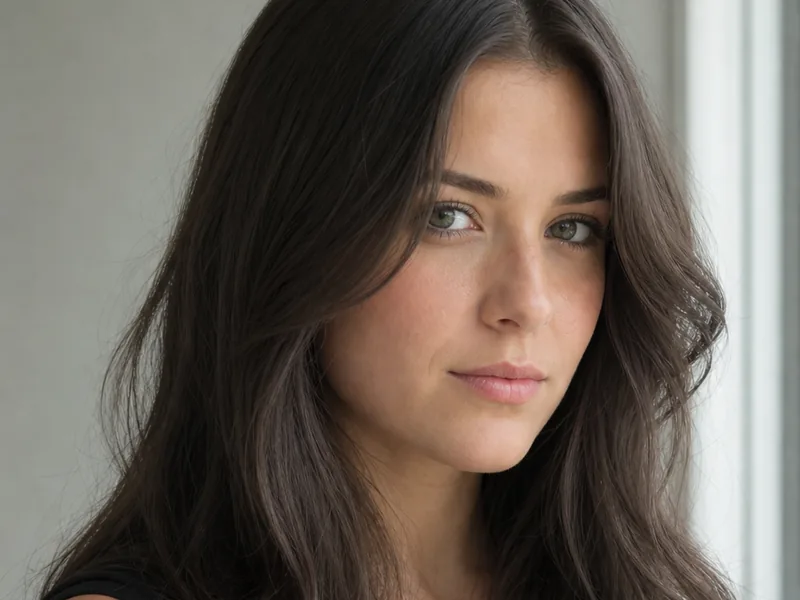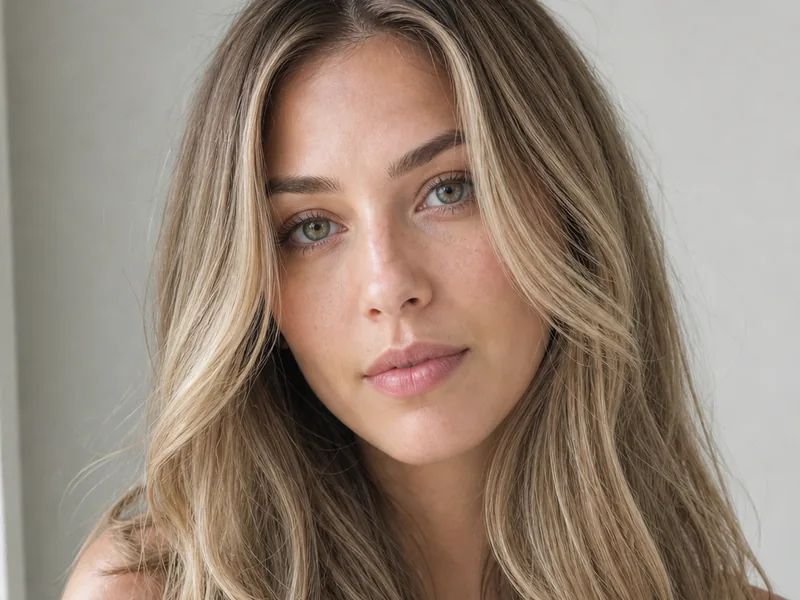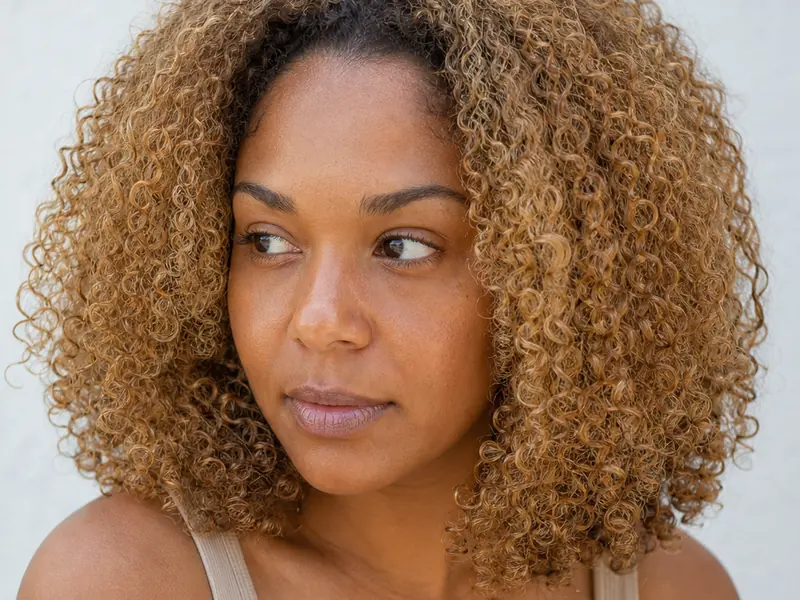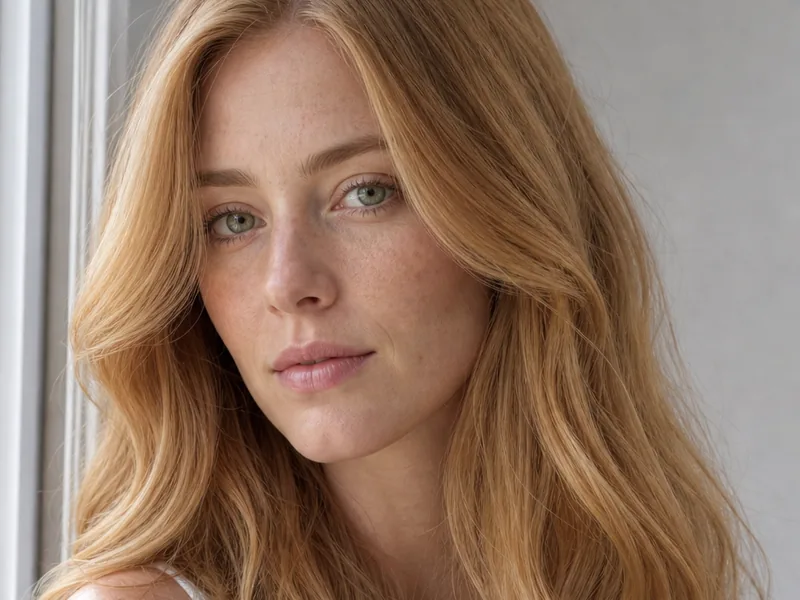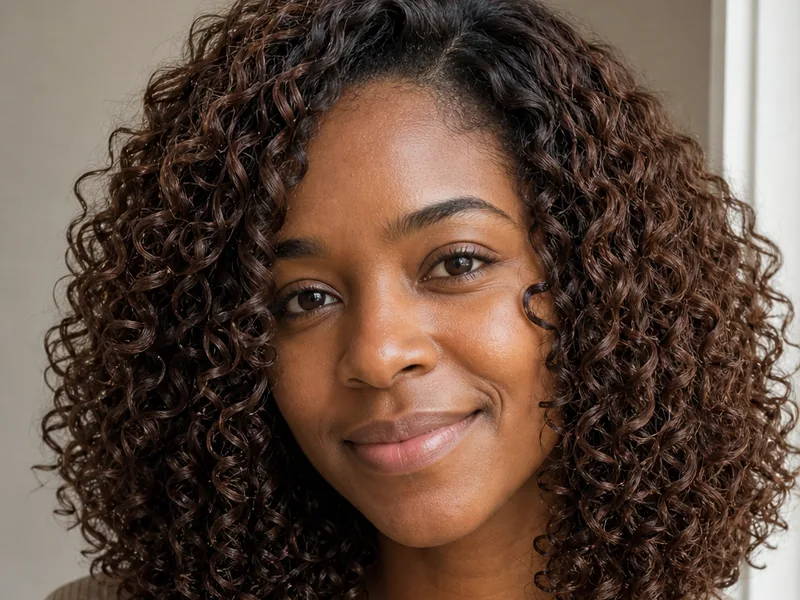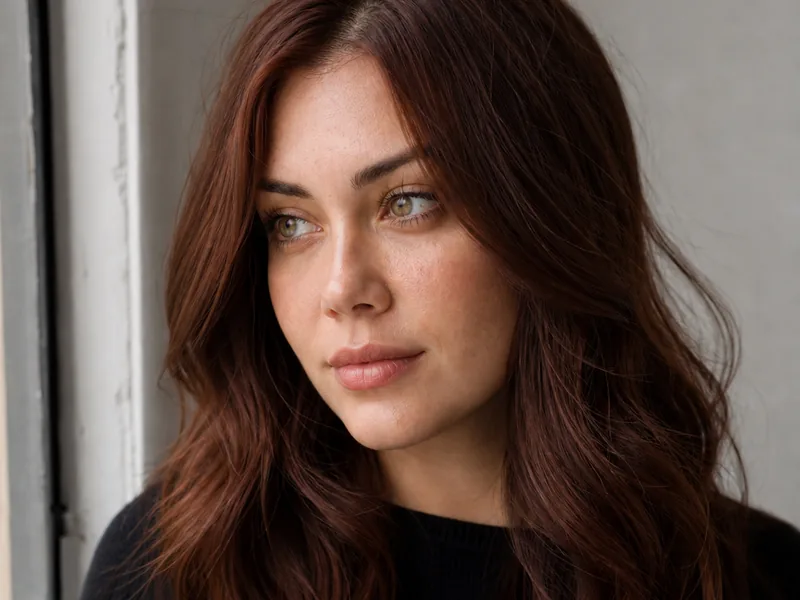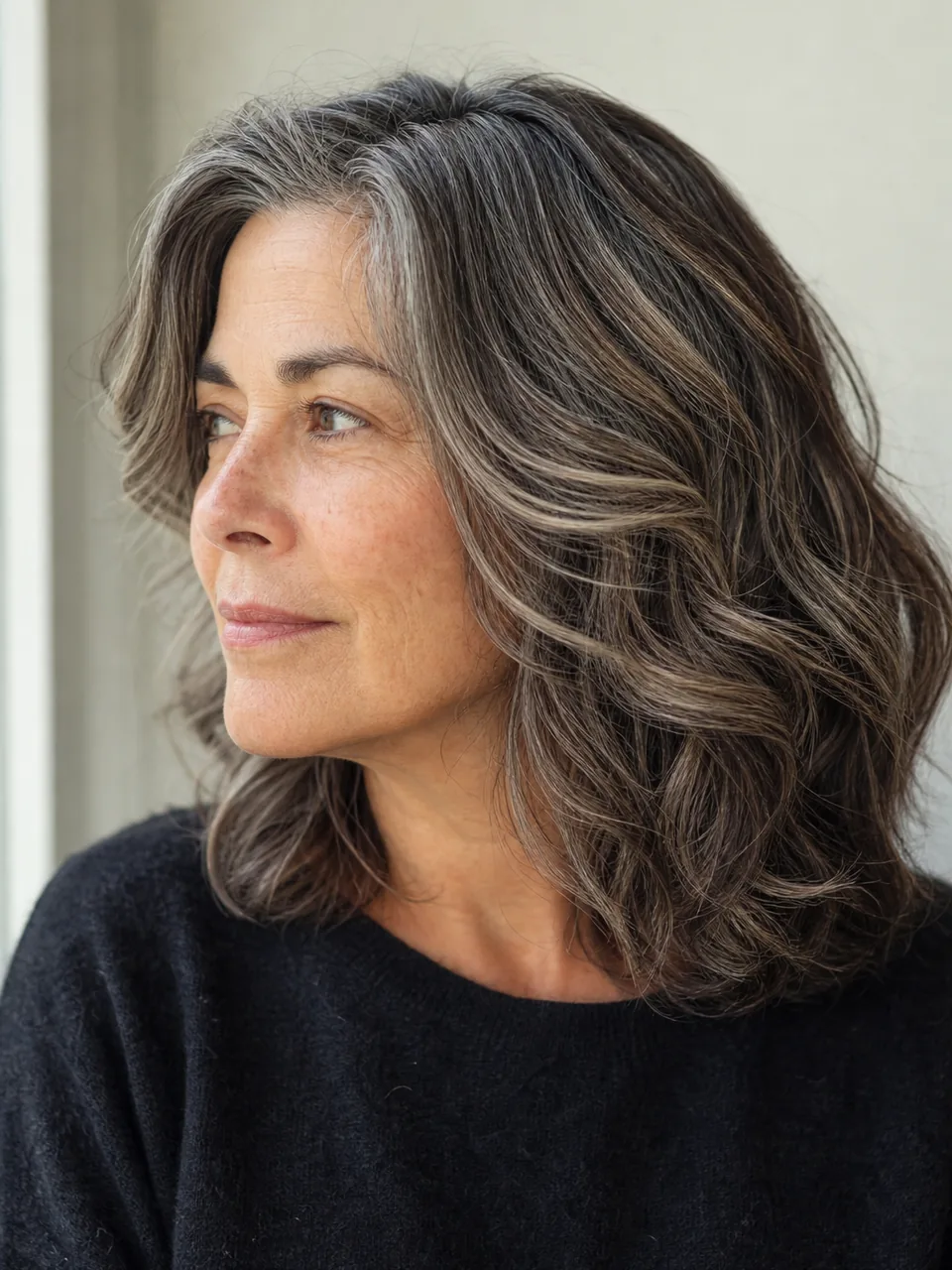
Short version: Gray blending for dark hair uses highlights, lowlights, babylights and a demi-permanent gloss to soften the contrast between gray strands and a level 1-4 base, so roots grow in as a blur instead of a white line. Most dark bases blend best with highlights lifted to level 6-7 and toned beige or ash-beige, not to silver. Expect a gloss every 6-8 weeks and foils every 8-12 weeks, against roots every 4-6 weeks for full coverage. Grey blending hair suits readers who are fine seeing some gray; it is not for anyone who wants none.
What Gray Blending Is, and What It Isn't
Gray blending changes the hair around your gray rather than painting over every gray strand. Highlights lift some brown toward the gray, lowlights put depth back into some gray, and a gloss pulls everything toward one tone. The gray stays; it stops standing apart.
Four tools do the work, usually combined. Highlights and babylights (very fine highlights) lighten pigmented strands; lowlights are strands colored darker than their neighbors. A demi-permanent gloss deposits a sheer tone without lift and lasts about 20-28 washes, and a root smudge is that gloss blurred down from the scalp. Demi vs permanent dye has its own guide.
Full coverage, permanent color from root to end so no gray shows, has its own gray hair color guide.
Gray Blending vs Coverage, Transitioning and Going Silver
The five gray options differ most in what your regrowth looks like at week six, and that sets how often you book. Damage tracks with how much lightener is involved, not with how gray you are.
| Method | How it looks | Regrowth line | Touch-up | Damage | Usually suits |
|---|---|---|---|---|---|
| Demi gloss blend | Gray reads as lighter, softer strands | None; fades evenly | Every 6-8 weeks | Low (no lift) | Under 25% gray, any base |
| Highlights plus lowlights | Multi-tone, gray hidden among light pieces | Soft blur | Foils every 8-12 weeks; balayage 3-4 months | Moderate (lightener on some strands) | 25-60% gray, levels 2-6 |
| Full permanent coverage | Solid, opaque, no gray | Hard; visible in 2-3 weeks on dark hair | Roots every 4-6 weeks | Low to moderate, but repeated | Anyone who wants zero gray |
| Transition to natural gray | Dyed ends bridged to natural roots | The point is to grow it | Every 8-12 weeks for 12-24 months, then trims | Low to moderate | Readers ready to stop coloring |
| Going silver | Even silver or white all over | Soft if mostly gray; harsh if not | Toner every 4-6 weeks; roots 6-8 weeks | High (lightener on all pigmented hair) | 60%+ gray, healthy hair |
Why Gray Blending for Dark Hair Is the Hardest Case
Dark hair is the hardest base to blend because the gap between a level 1-3 strand and a white one is the widest on the chart. On a level 7 blonde gray barely registers; on a level 2, every white hair shows from across a room, and so does every week of regrowth.
Closing that gap means lifting dark strands, and dark hair lifts through warm stages: red at levels 3-4, red-orange at 5, orange at 6, yellow-orange at 7. Stopping at 6-7 and toning to beige is one session at moderate damage. Reaching the pale yellow of level 9-10, the only base silver toner reads true on, usually takes two or three sessions from level 2-3. The underlying pigment at each level is mapped on the hair color chart.
The Target Is the Blend You See From Six Feet Away, Not the White
A head that is 40 percent white over a level 3 reads, from a few feet away, around a level 6. Highlights near that average disappear into it; highlights lifted to match the white read as a third color, and the head looks grayer than it is.
Salon note: Gold next to white makes the white look yellow, and ash next to dark brown can look flat or faintly green. On dark bases, colorists usually split the difference with beige or neutral-cool toners.
Gray Blending by How Much Gray You Have
The percentage of gray, and where it sits, decides the method more than the base color does. Check the part and temples in daylight, then the crown: most heads gray from the front first.
| Gray | What usually works | Why | Watch for |
|---|---|---|---|
| Under 25% | Demi gloss at your natural level or half a level lighter; babylights at the part | Gray is sparse, so a sheer tint turns it into lighter strands | Gloss fades off gray first, around week 5-6 |
| 25-50% | Fine highlights to level 6-7 plus a few lowlights; gloss to tie them together | Enough gray that lightening some brown is cheaper than staining all of it | Too many foils on a dark base gives stripes |
| 50% and over | Lowlights through the gray, toner on the white; or a planned transition | The gray is now the base, and the brown is the accent | Demi lowlights on gray fade fast; permanent ones hold longer |
Concentrated gray splits the plan: a white band at the temples with little elsewhere often gets babylights in front and a gloss behind.
Gray Blending on Dark Brown and Black Hair
On levels 1-3, the useful lift is modest: highlights at level 5-7, toned neither brassy nor flat beside gray.
1. Level 2 Darkest Brown Glossed Smoky Charcoal Over Under 25 Percent Gray
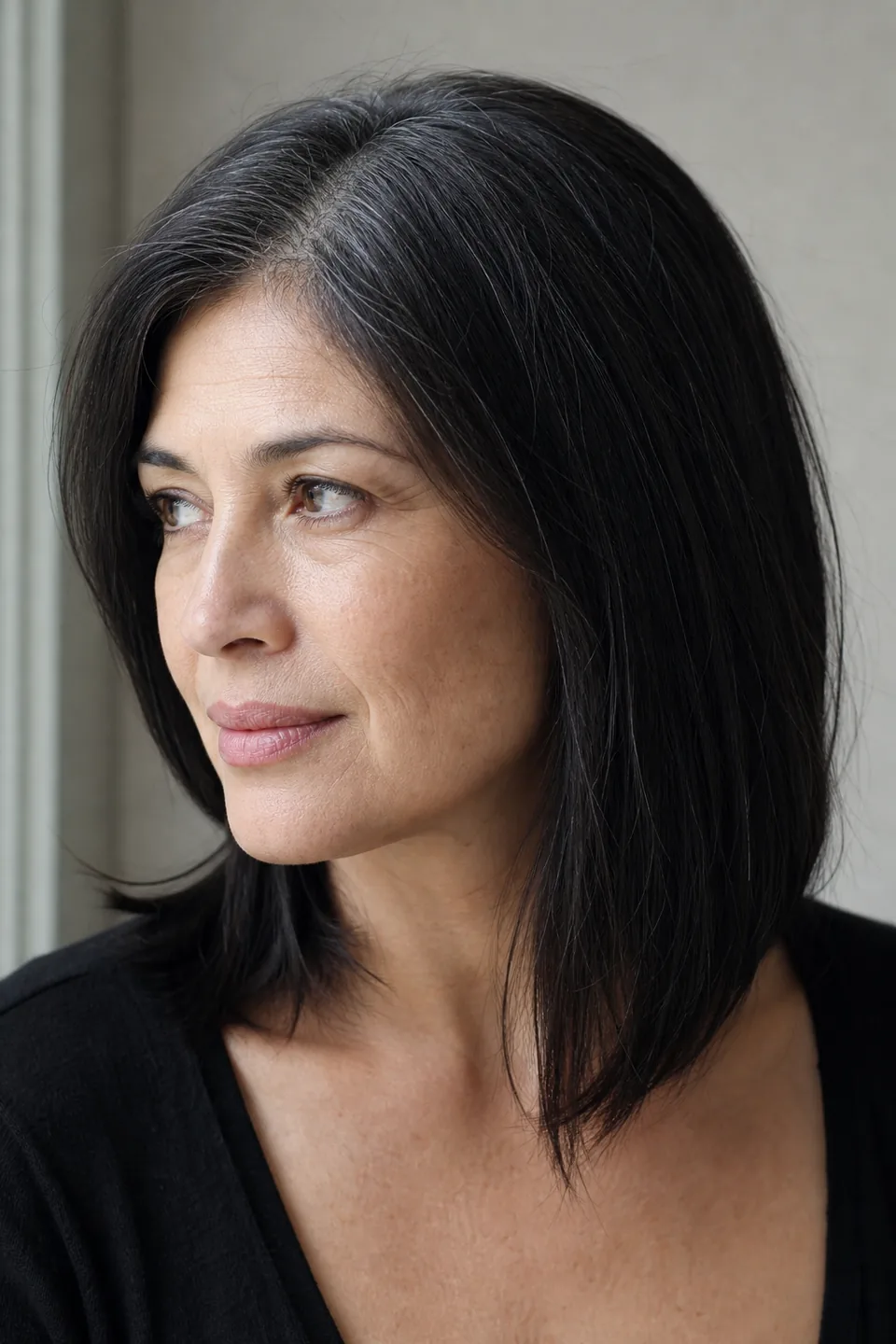
- Base level
- 2 with about 15-20% gray
- Target
- Level 2-3 cool-neutral gloss
- Technique
- Demi-permanent gloss, no lift
- Undertone
- Neutral, olive, cool
- Sessions
- 1
- Touch-up
- Gloss every 6-8 weeks
Highlights on a level 2 with this little gray add more light than the gray ever did. A sheer demi stains each white strand charcoal instead, and fades with no line to grow out.
Ask for: "A demi gloss at level 2-3, neutral to slightly cool, to soften my gray to charcoal. No lift. My hair is natural, never colored."
2. Level 3 Dark Brown With Level 6 Soft Caramel Babylights at the Part
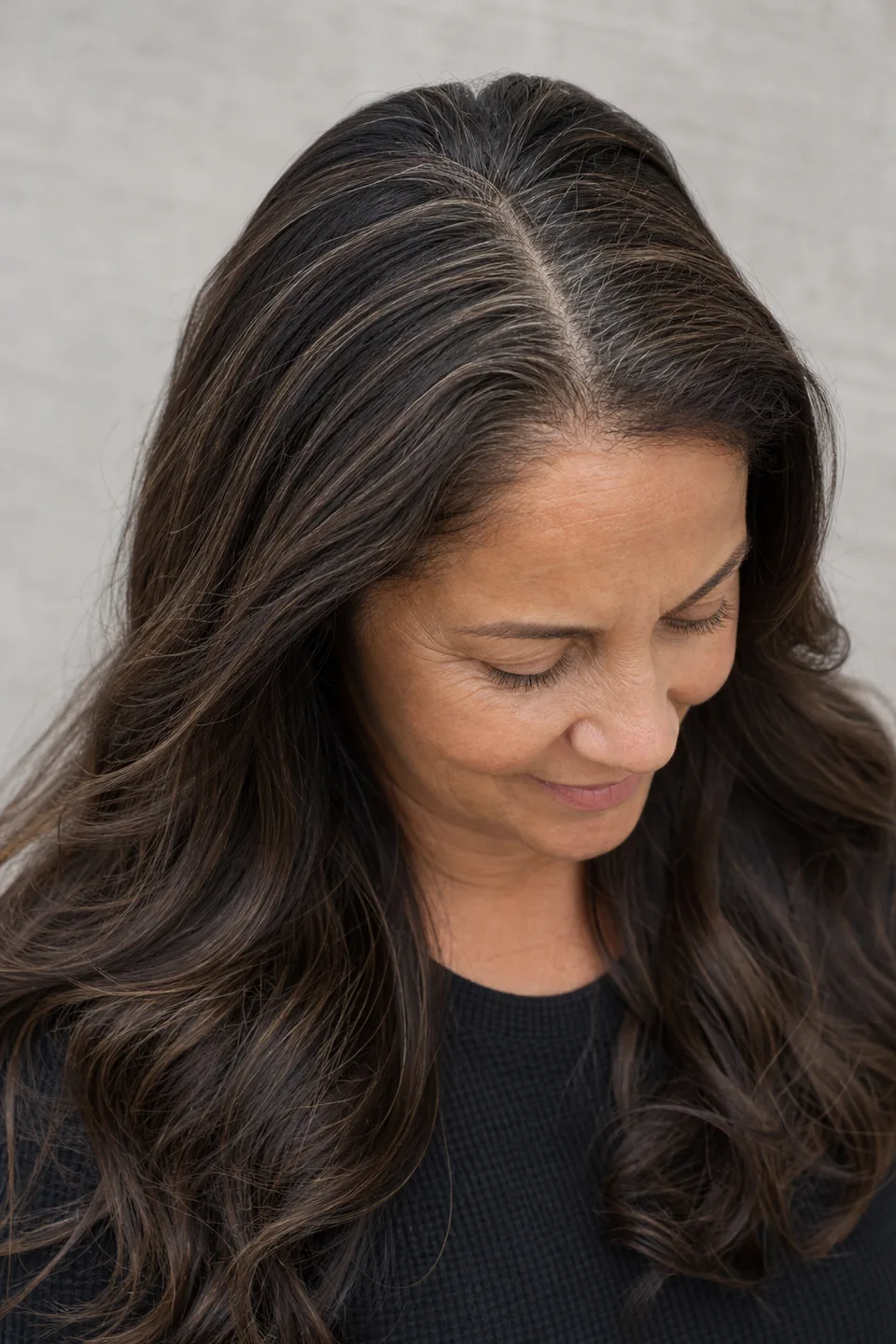
- Base level
- 3 with about 20% gray, mostly at the part
- Target
- Level 6 caramel, toned golden-beige
- Technique
- Fine foils at the part and hairline only
- Undertone
- Warm, neutral
- Sessions
- 1
- Touch-up
- Foils every 10-12 weeks, gloss at 6 weeks
Gray that shows only where the part opens needs light only in that strip, which keeps lightener off most of the head. Golden-beige rather than pure gold keeps the babylights from making nearby white look yellow.
Ask for: "Babylights only at my part and hairline, lifted to level 6 and toned golden-beige, on my natural level 3."
3. Level 3 Dark Brown With Level 7 Ash-Beige Herringbone Highlights
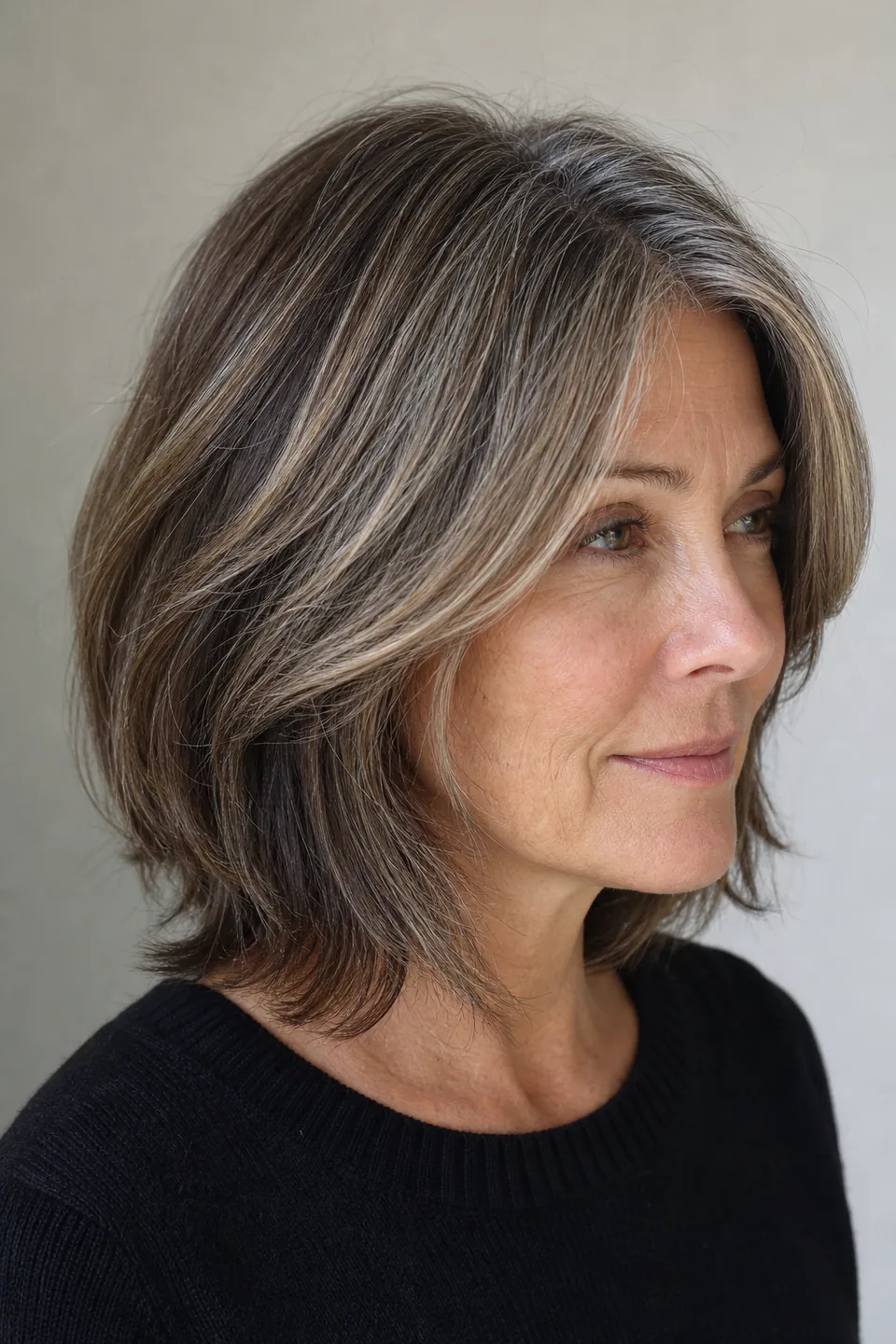
- Base level
- 3 with about 30-40% gray
- Target
- Level 7 ash-beige highlights
- Technique
- Herringbone foils (diagonal sections) plus beige toner
- Undertone
- Neutral, cool
- Sessions
- 1
- Touch-up
- Foils every 10-12 weeks, toner every 6-8 weeks
Herringbone is a placement in which foils follow diagonal sections in the direction the gray naturally grows, so new light pieces sit beside gray strands, not in rows. Regrowth then reads as more highlights, not roots.
Ask for: "Herringbone highlights to level 7, toned ash-beige, placed to follow my gray. Natural level 3, never colored."
4. Level 1-2 Black With Level 5 Bronze Balayage Ribbons
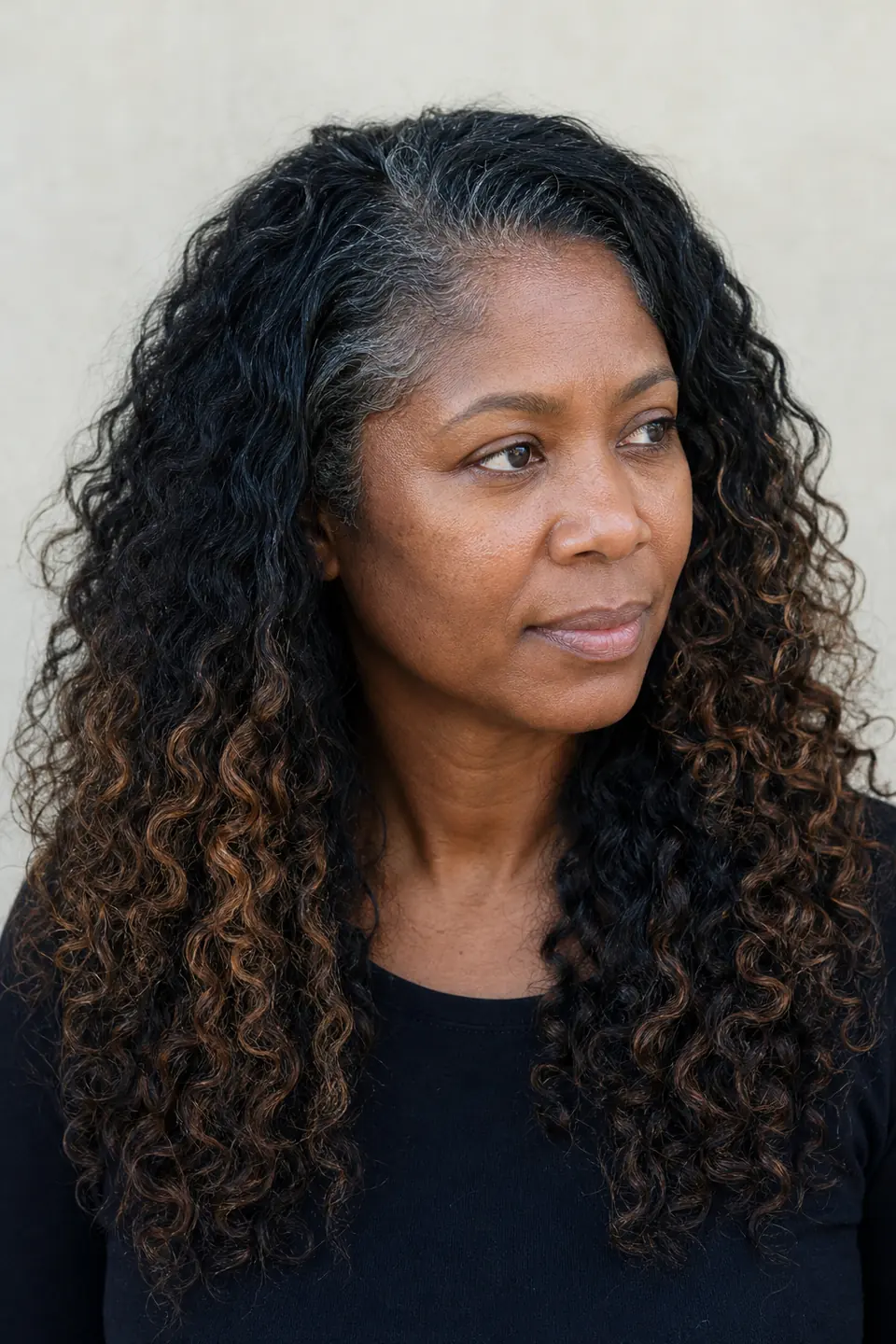
- Base level
- 1-2 with about 20-30% gray
- Target
- Level 5 bronze (warm brown-gold)
- Technique
- Balayage with low-volume lightener, then demi gloss
- Undertone
- Warm, deep
- Sessions
- 1
- Touch-up
- Gloss every 8 weeks, painting every 4-6 months
Black lifted two or three levels shows red, then red-orange, and a bronze tone works with that warmth instead of fighting it. Coily hair is often more fragile under lightener, so colorists keep lift short and developer low.
Ask for: "Hand-painted bronze to level 5 only, low developer, a bond-building additive if you use one. Natural level 1-2, coily, no relaxer."
5. Brown Hair With Silver Highlights: Level 3 Base, Level 9-10 Silver-Toned Pieces
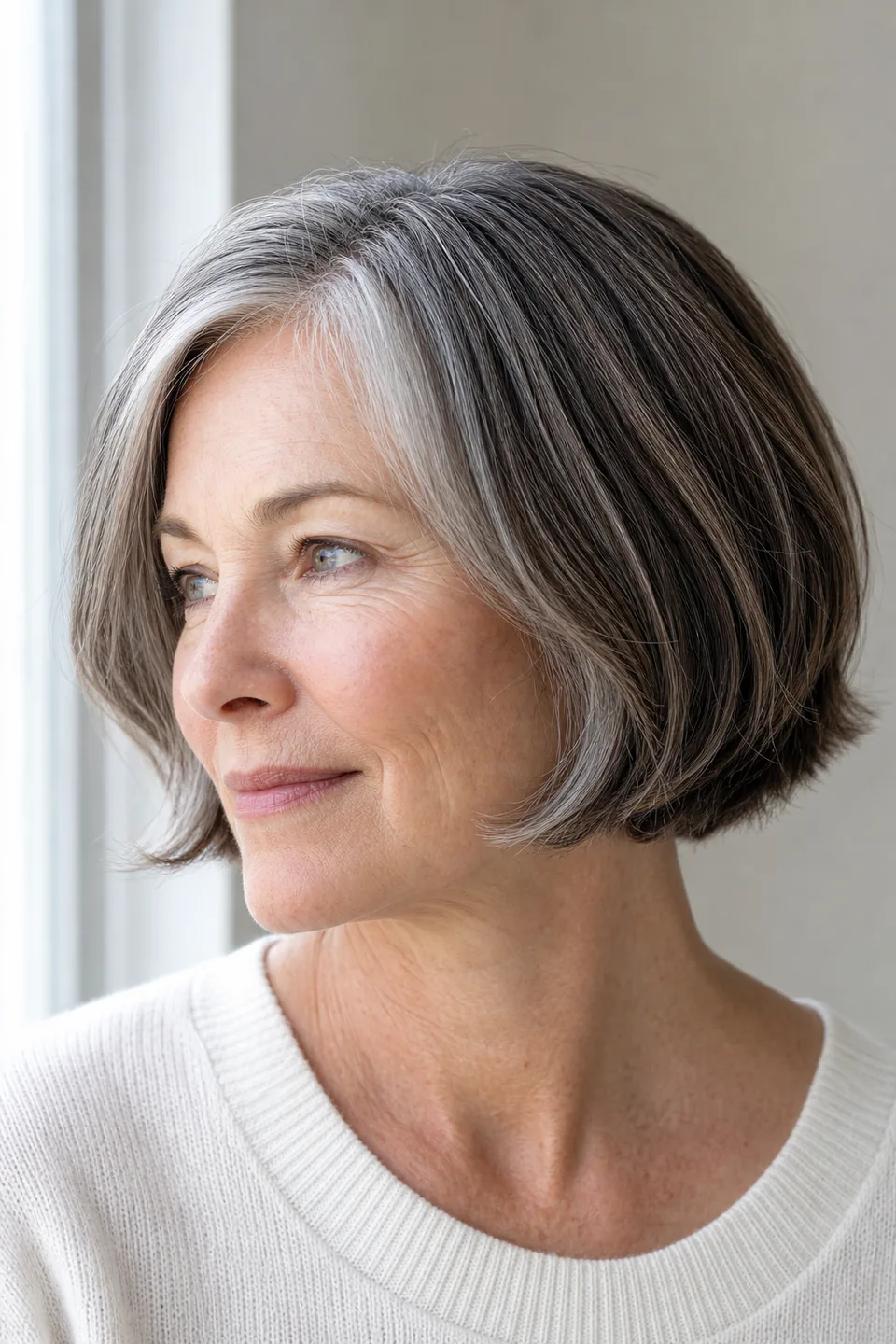
- Base level
- 3 with about 40-50% gray
- Target
- Level 9-10 silver toner on lifted pieces
- Technique
- Fine foils with lightener, silver-violet toner
- Undertone
- Cool
- Sessions
- 2-3
- Touch-up
- Toner every 4-6 weeks, foils every 8-10 weeks
Expect the before-and-after in stages. A first session commonly reaches yellow-orange (level 7), which silver toner turns muddy; true silver arrives in the second or third. The pay-off: lightened pieces match the gray growing in, so the plan heads toward a silver grow-out.
Ask for: "Fine highlights lifted to level 9-10 over two or three visits, toned silver, to match my own gray. Natural level 3, about half gray."
6. Level 3 Dark Brown With a Level 4 Root Smudge Over Gray Temples
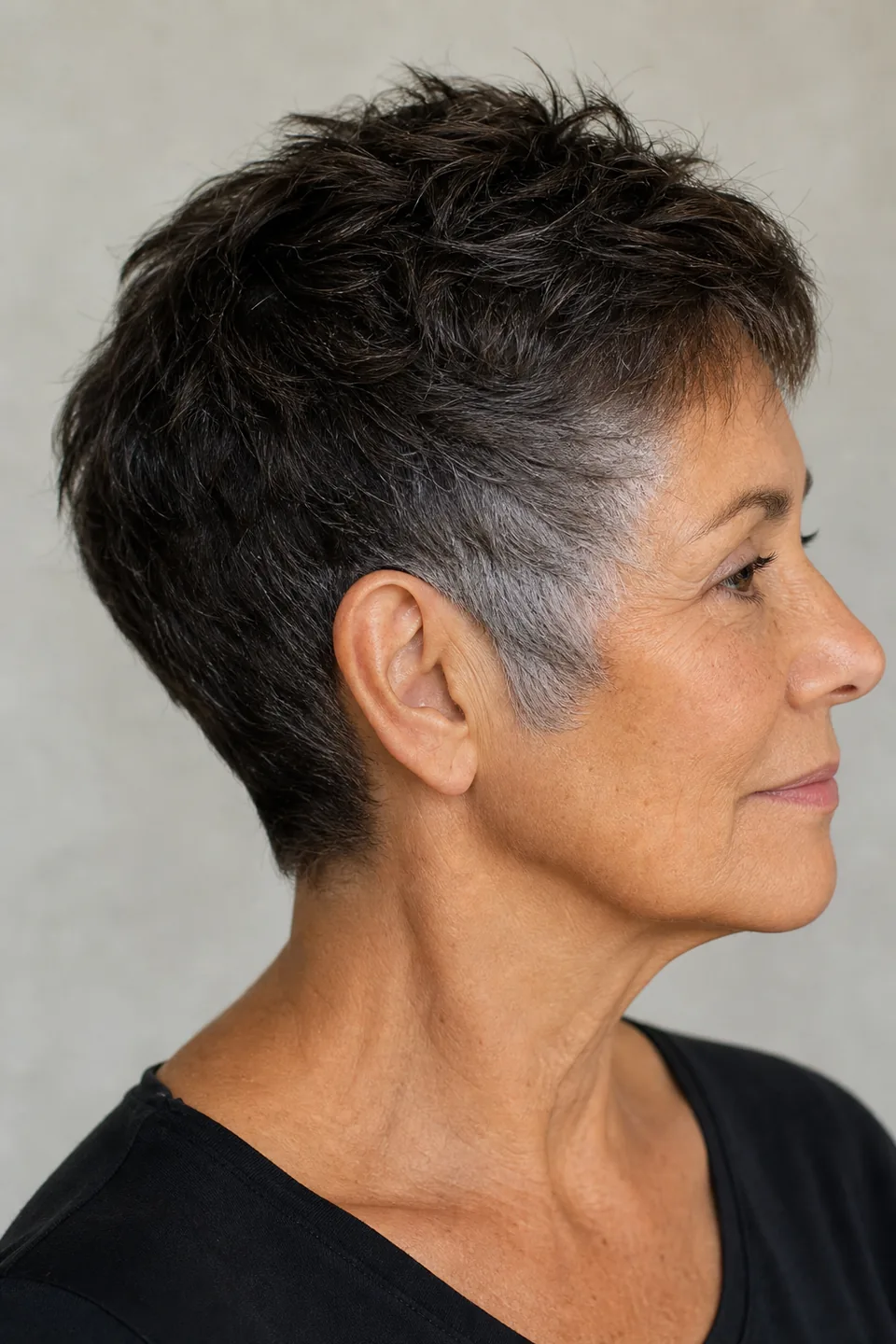
- Base level
- 3 with about 40% gray, concentrated at the temples
- Target
- Level 4 neutral brown, sheer
- Technique
- Demi root smudge at temples and part
- Undertone
- Neutral, olive
- Sessions
- 1
- Touch-up
- Every 4-6 weeks on a pixie
Short hair shrinks the grow-out problem: a pixie loses colored ends within a few trims, so a sheer smudge suits it better than foils. Skip it if visible white at the temple would bother you; demi stains gray, it doesn't cover it.
Ask for: "A level 4 neutral demi smudged on my temples and part, sheer, not full coverage. Natural level 3."
Gray Blending on Medium and Light Brown Hair
A level 4-5 base is the easiest brunette to blend: one level of lift less than dark brown means less orange to tone, and gray sits closer to the highlights.
7. Level 4 Medium Brown With Level 7 Mushroom-Beige Highlights and Level 4 Lowlights
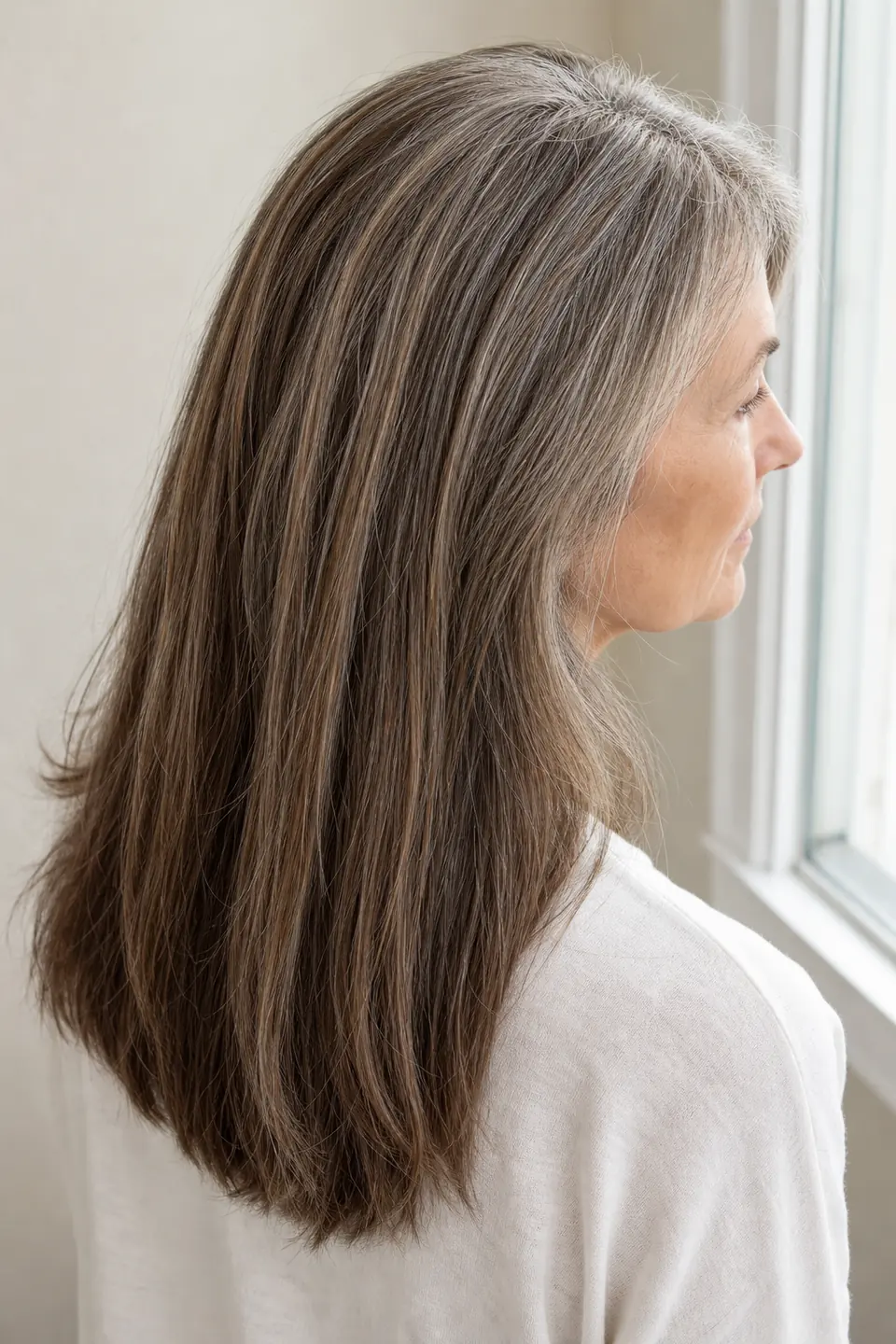
- Base level
- 4 with about 35-45% gray
- Target
- Level 7 mushroom-beige highlights, level 4 lowlights
- Technique
- Alternating foils plus taupe gloss
- Undertone
- Neutral, cool
- Sessions
- 1
- Touch-up
- Foils every 10-12 weeks, gloss every 6-8 weeks
Mushroom is a beige brown with a gray cast, so on part-gray hair it reads as intentional. Without the lowlights, 40 percent white plus light pieces tips the head lighter and flatter than planned.
Ask for: "Alternate highlights at level 7 mushroom-beige with lowlights at my natural level 4, and a taupe gloss over all of it."
8. Level 5 Light Brown With Face-Framing Beige Babylights Where Gray Gathers
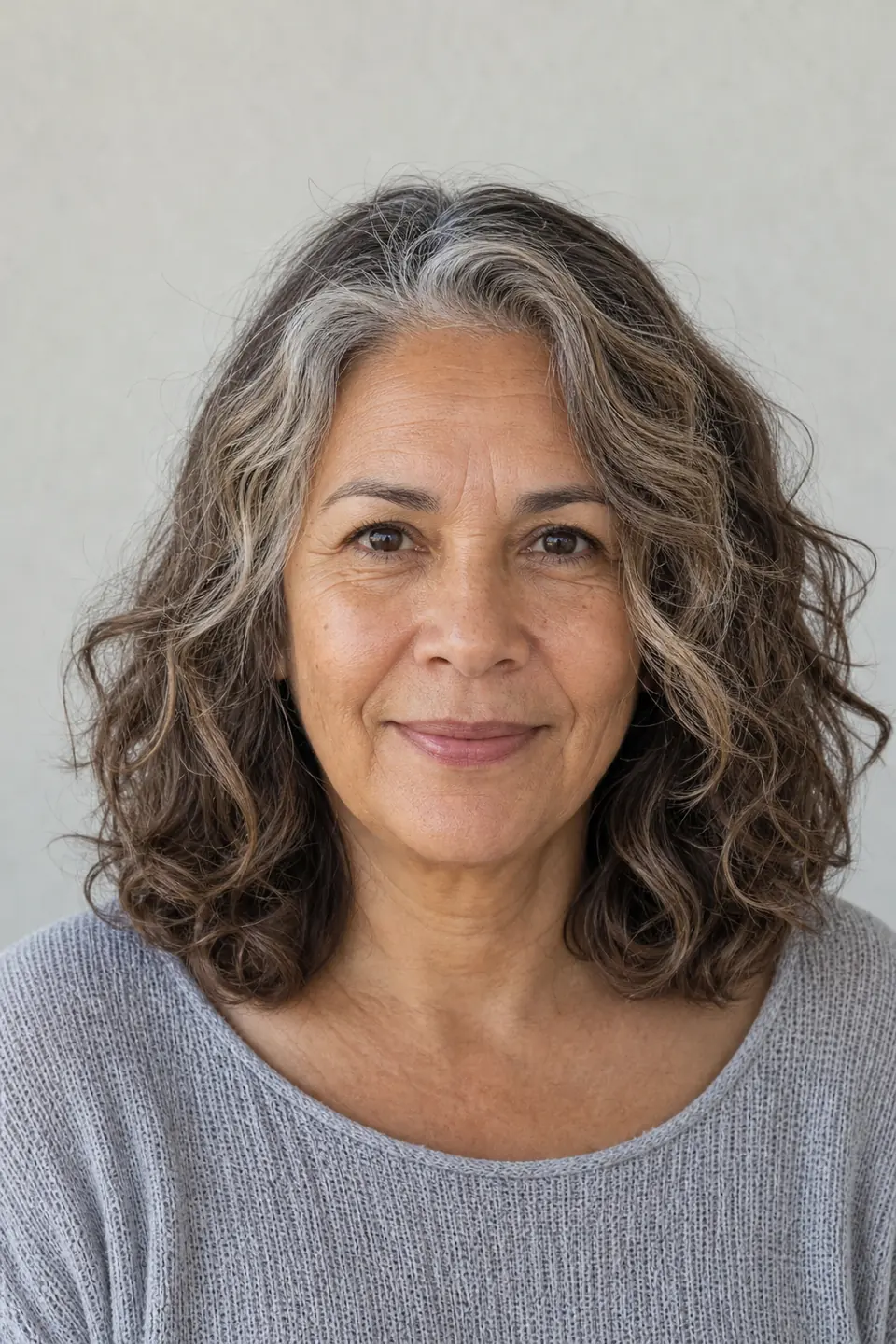
- Base level
- 5 with about 25% gray, mostly at the front
- Target
- Level 7-8 beige babylights in front only
- Technique
- Face-framing foils, gloss on the rest
- Undertone
- Warm, neutral
- Sessions
- 1
- Touch-up
- Front foils every 8-10 weeks
Only the hairline gets foils, so this costs less than a full head. On curls, colorists lighten whole small ringlets rather than fine slices, so each one stays visible once it springs up.
Ask for: "Babylights around my face only, level 7-8 beige, whole small curls, not slices. Natural level 5, curly, never colored."
9. Level 4 Medium Brown With a Golden-Beige Gloss on 20 Percent Gray
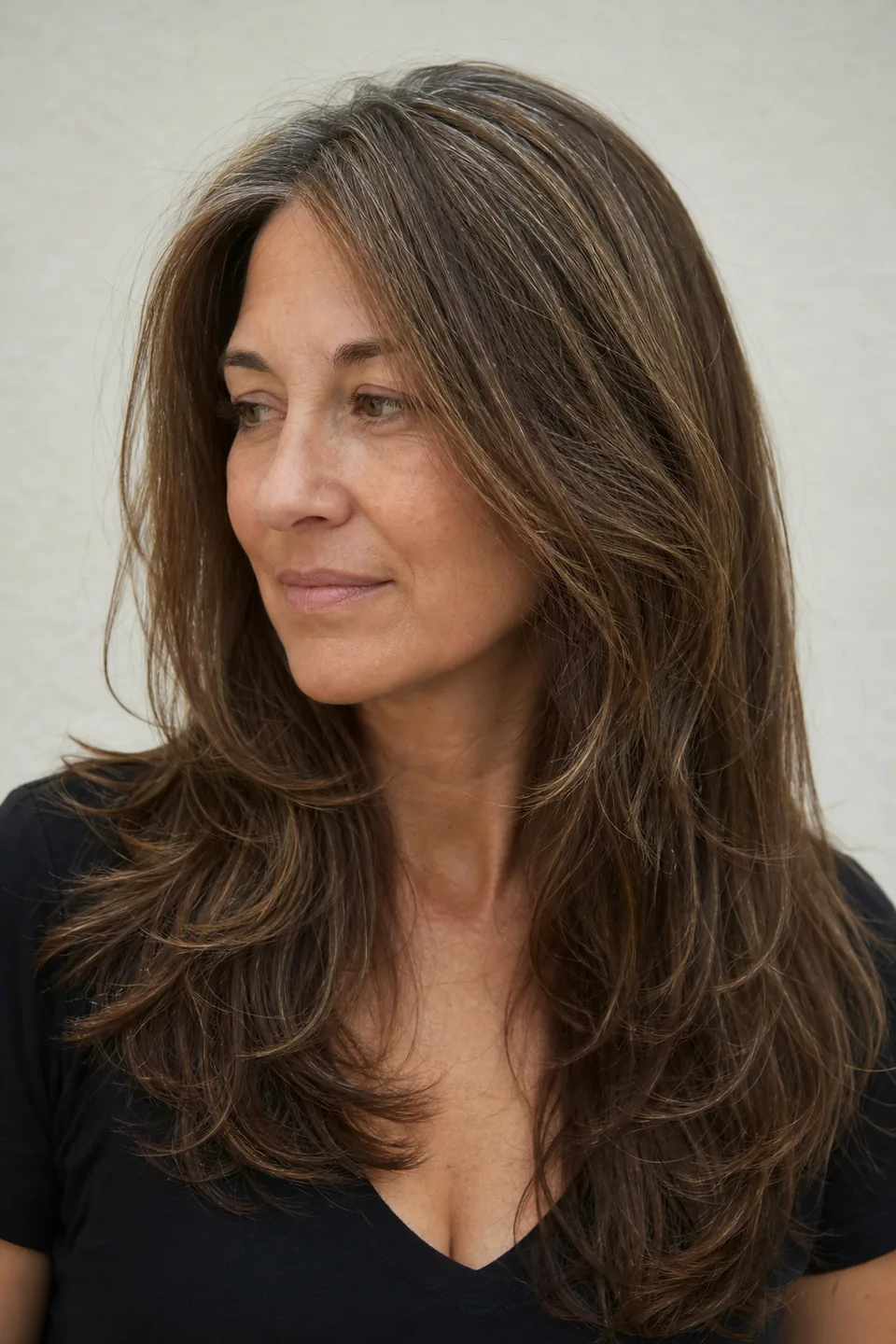
- Base level
- 4 with about 20% gray
- Target
- Level 5 golden-beige demi
- Technique
- All-over demi gloss
- Undertone
- Warm, neutral
- Sessions
- 1
- Touch-up
- Every 6-8 weeks
Compared with look 1, this gloss sits a level lighter than the base, so gray reads as warm glints rather than charcoal. It is one of the few blends reasonable at home, after a patch test.
Ask for: "A golden-beige demi at level 5 over my natural 4, so the gray reads as light gold. No permanent color."
10. Level 4-5 Brown With Fine Level 8 Pearl Babylights on Half-Gray Hair
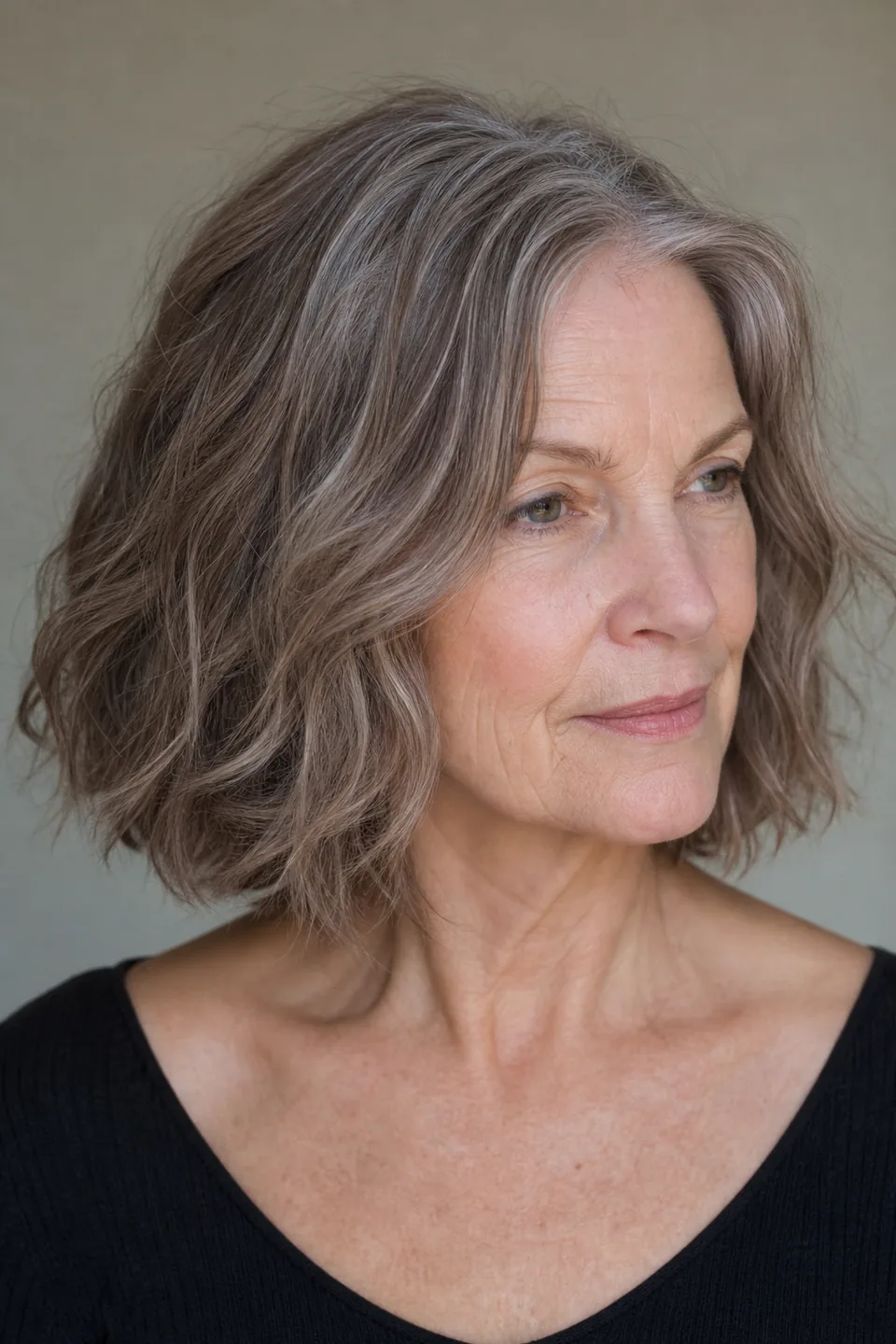
- Base level
- 4-5 with about 50% gray
- Target
- Level 8 pearl (violet-beige)
- Technique
- Very fine foils plus pearl toner
- Undertone
- Cool, pink
- Sessions
- 1-2
- Touch-up
- Toner every 6 weeks, foils every 10-12 weeks
A bridge for anyone who suspects silver is coming. Pearl toner, a violet-leaning beige, cancels yellow on lifted brown and sits close to white; let it lapse and the babylights drift golden while the gray stays cool.
Ask for: "Very fine babylights to level 8, toned pearl, to blend toward my gray. About half gray, natural level 4-5."
Gray Blending on Dark Blonde and Blonde Hair
From level 6 up, gray blends almost on its own, and the risk flips: the head can wash out, so lowlights do most of the work. Full light brown coverage on gray has its own section on the light brown hair page.
11. Level 6-7 Dark Blonde With Level 9 Beige Babylights on 40 Percent Gray
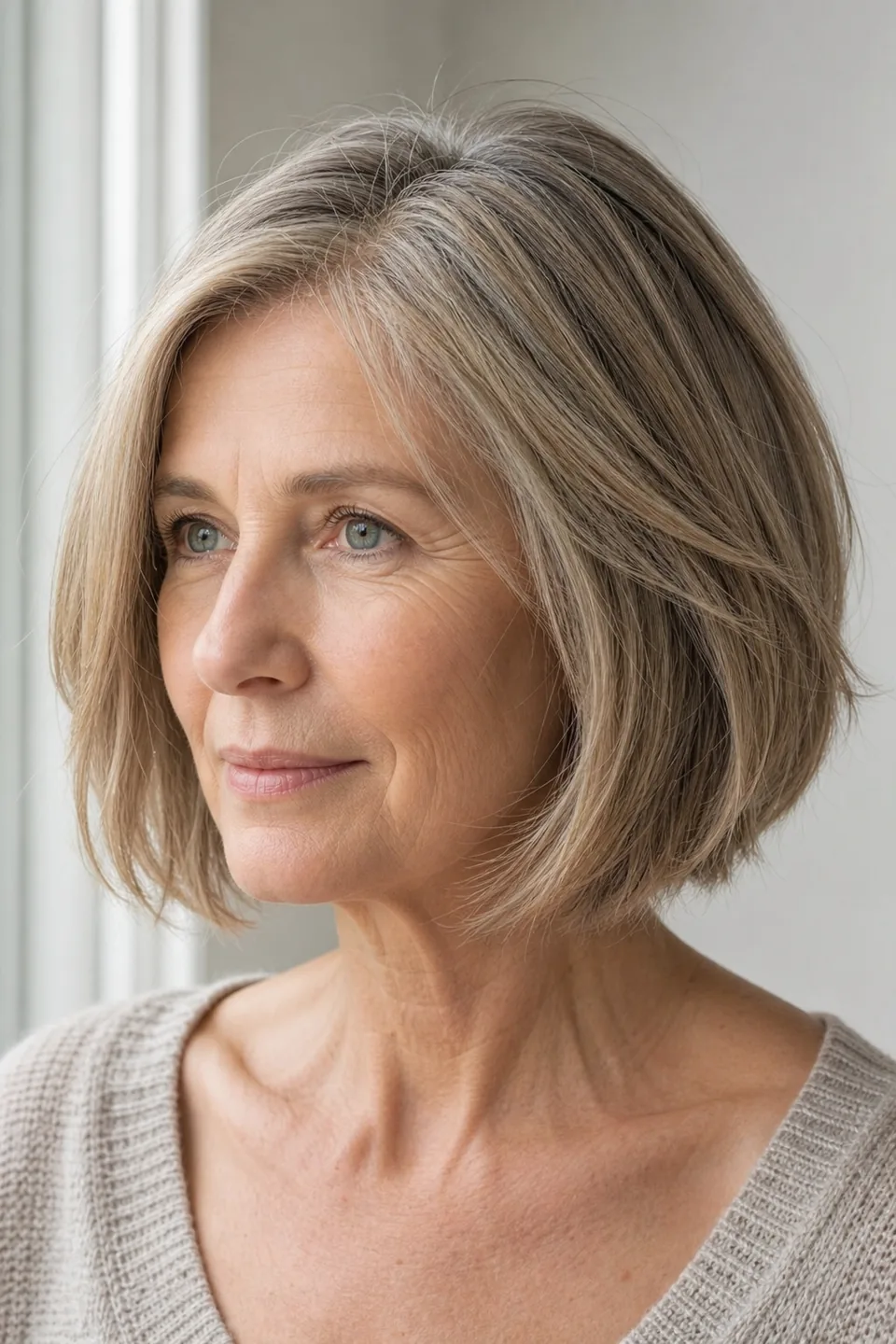
- Base level
- 6-7 with about 40% gray
- Target
- Level 9 beige blonde
- Technique
- Fine foils plus beige toner
- Undertone
- Neutral, warm
- Sessions
- 1
- Touch-up
- Foils every 12-14 weeks
Natural dark blondes get the longest gap between appointments in this gallery. Gray, beige blonde and a level 6-7 root sit close together, so week-12 regrowth reads as a deeper version of the same color.
Ask for: "Fine babylights to level 9, toned beige, to blur my gray into my natural 6-7."
12. Level 8 Blonde With Level 6 Lowlights on 60 Percent Gray
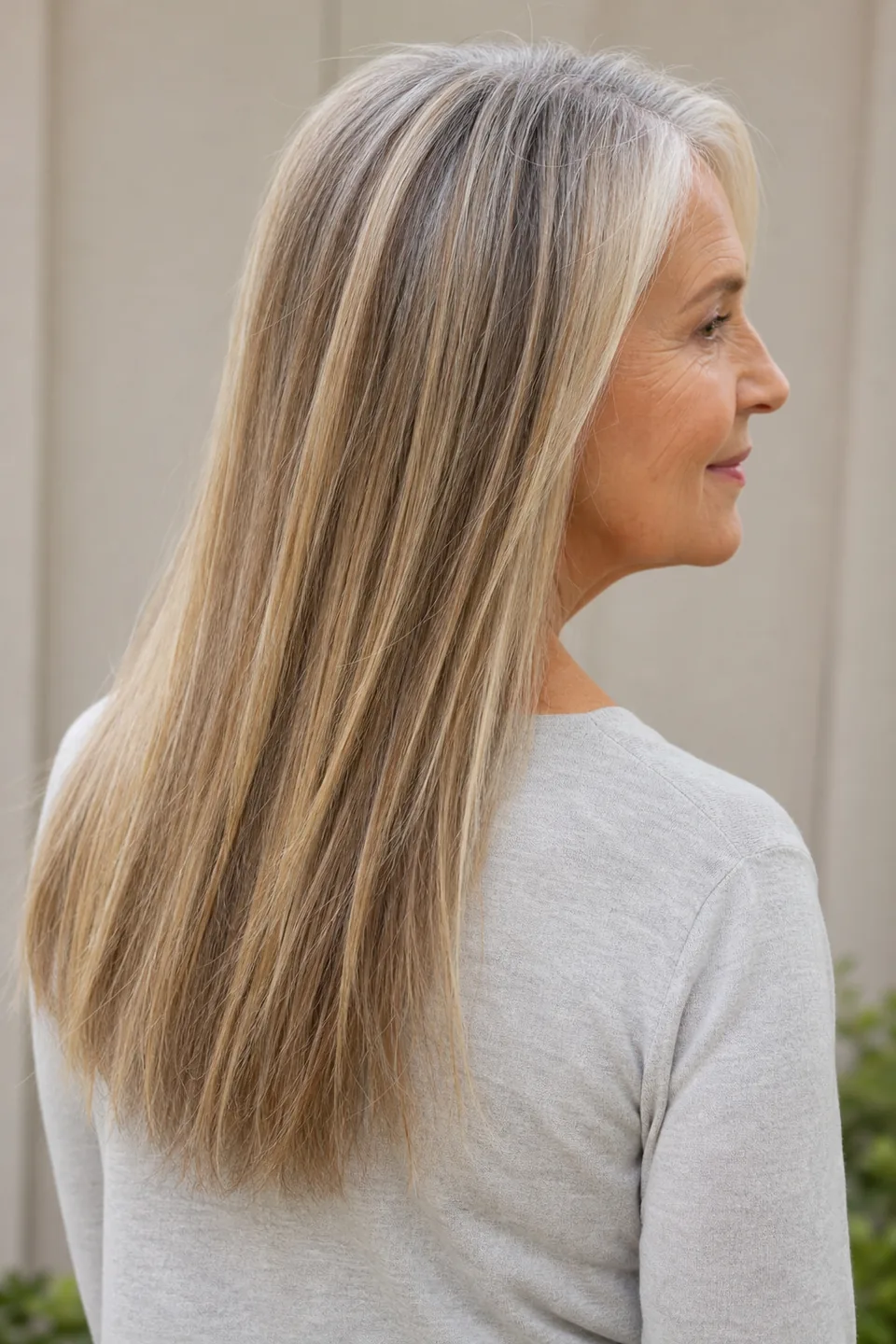
- Base level
- 8 (previously highlighted) with about 60% gray
- Target
- Level 6 soft golden lowlights
- Technique
- Lowlight foils with warm filler, demi
- Undertone
- Warm, neutral
- Sessions
- 1
- Touch-up
- Lowlights every 8-10 weeks
Who should skip it: anyone who wants the lightest result, since lowlights pull the overall level down a step. On years of highlights plus gray, they stop the head reading as one pale sheet.
Ask for: "Lowlights at level 6, soft golden, filled first, woven through my gray. My blonde is highlighted, last done in [month]."
13. Level 6 Dark Blonde With a Sheer Beige Gloss on 25 Percent Gray
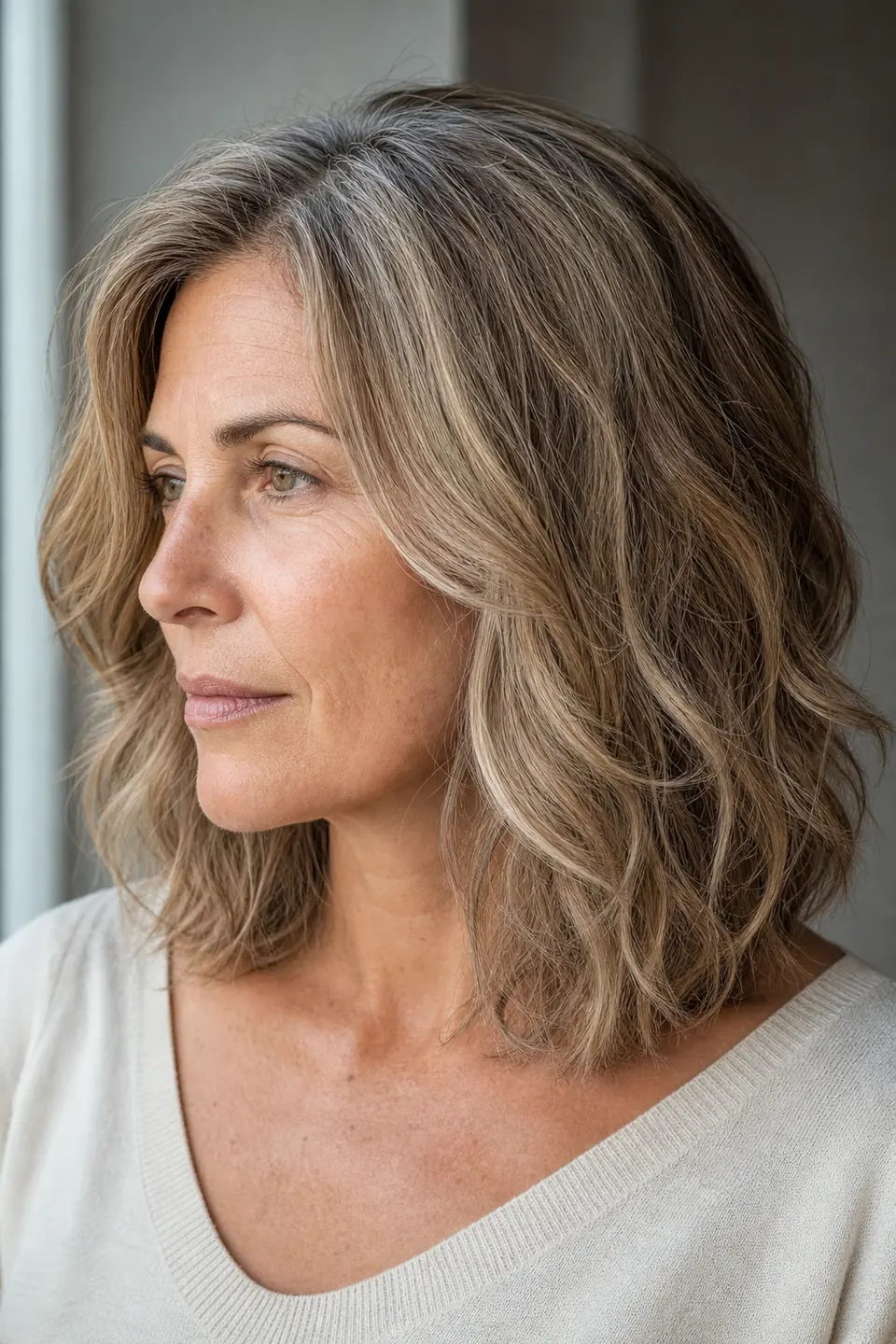
- Base level
- 6 with about 25% gray
- Target
- Level 7 sheer beige demi
- Technique
- Demi gloss, diluted for sheerness
- Undertone
- Neutral
- Sessions
- 1
- Touch-up
- Every 8 weeks, or skip
At home or in the salon, this is the least-commitment option here. A level 7 demi cannot lighten a level 6 base and leaves only a pale sand cast on gray, so a missed appointment changes almost nothing.
Ask for: "A sheer beige demi gloss at level 7 over my natural 6, just to soften the gray. No lift, no foils."
Salt and Pepper Transitions and Reverse Gray Hair
Once gray is half the head or more, blending becomes a choice between keeping some brown and letting it go. Copper and auburn on gray behave differently from beige and silver; each shade page covers its own.
Reverse Gray Hair Means Two Different Things
In salons, reverse gray means working toward silver instead of away from it: lightening and toning the remaining pigmented hair so it matches the gray (look 15). In science news, it refers to gray hairs regaining color. A Columbia-led study that mapped pigment along single hairs found some white hairs regaining pigment as life stress changed, but the effect looked temporary and no treatment was tested.
14. Salt and Pepper Roots Bridged to Dyed Level 3 Ends With Level 5 Lowlights
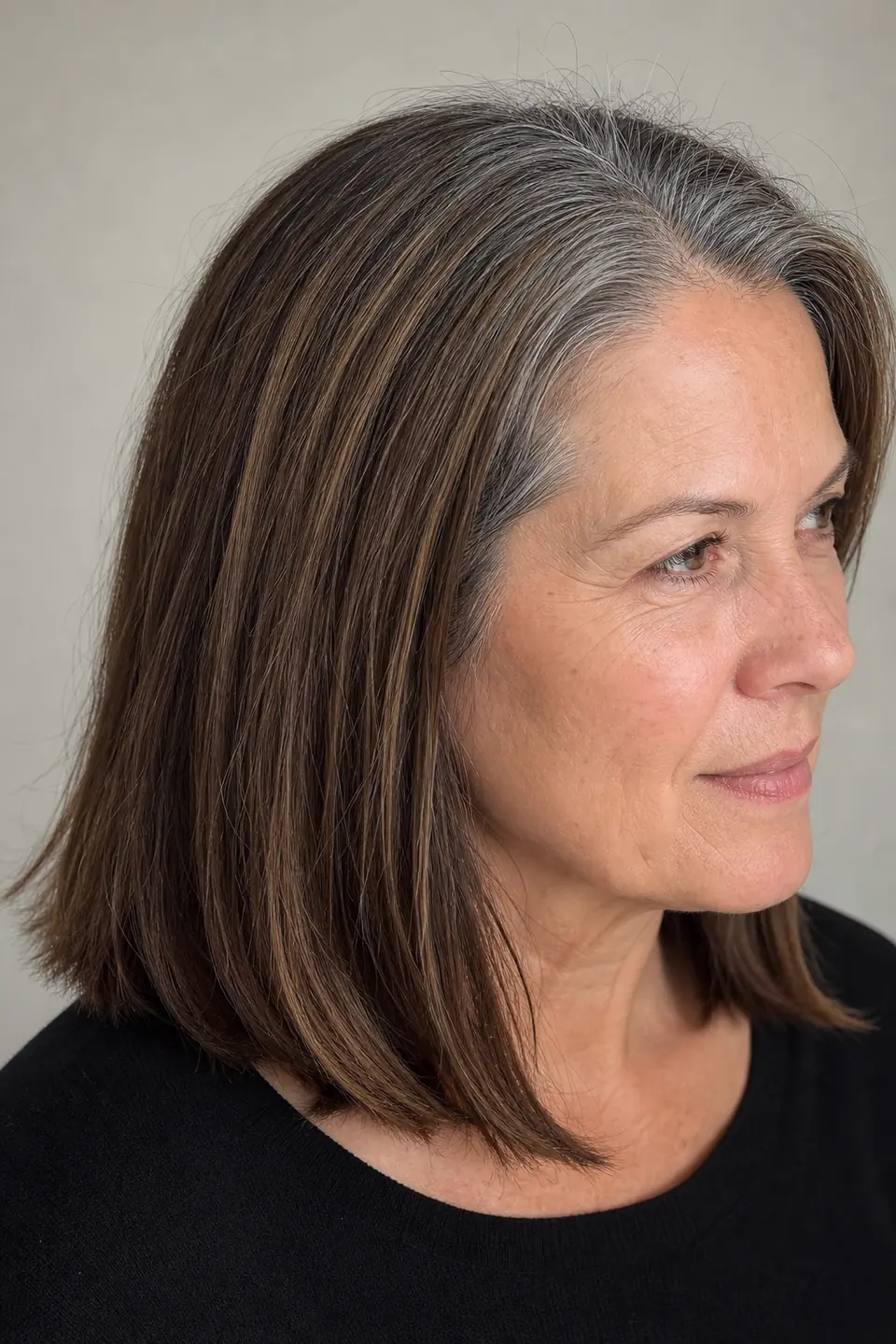
- Base level
- Natural 3 with about 50% gray; dyed level 3 lengths
- Target
- Level 5 neutral lowlights, level 7 beige highlights
- Technique
- Lightener on dyed lengths, demi lowlights at the root
- Undertone
- Neutral
- Sessions
- 2-4 over the transition
- Touch-up
- Every 8-12 weeks for 12-24 months
Color doesn't lift color, so dyed ends need lightener, and box-dyed dark often lifts unevenly; a strand test shows how far they will go. Colorists lighten the dyed lengths a little each visit alongside short trims.
Ask for: "Help me transition: lowlights at the root, highlights through my dyed ends. My lengths are permanent level 3, last dyed in [month]. Please strand test."
15. Reverse Gray: Remaining Level 4 Brown Lifted and Toned Silver on 70 Percent Gray
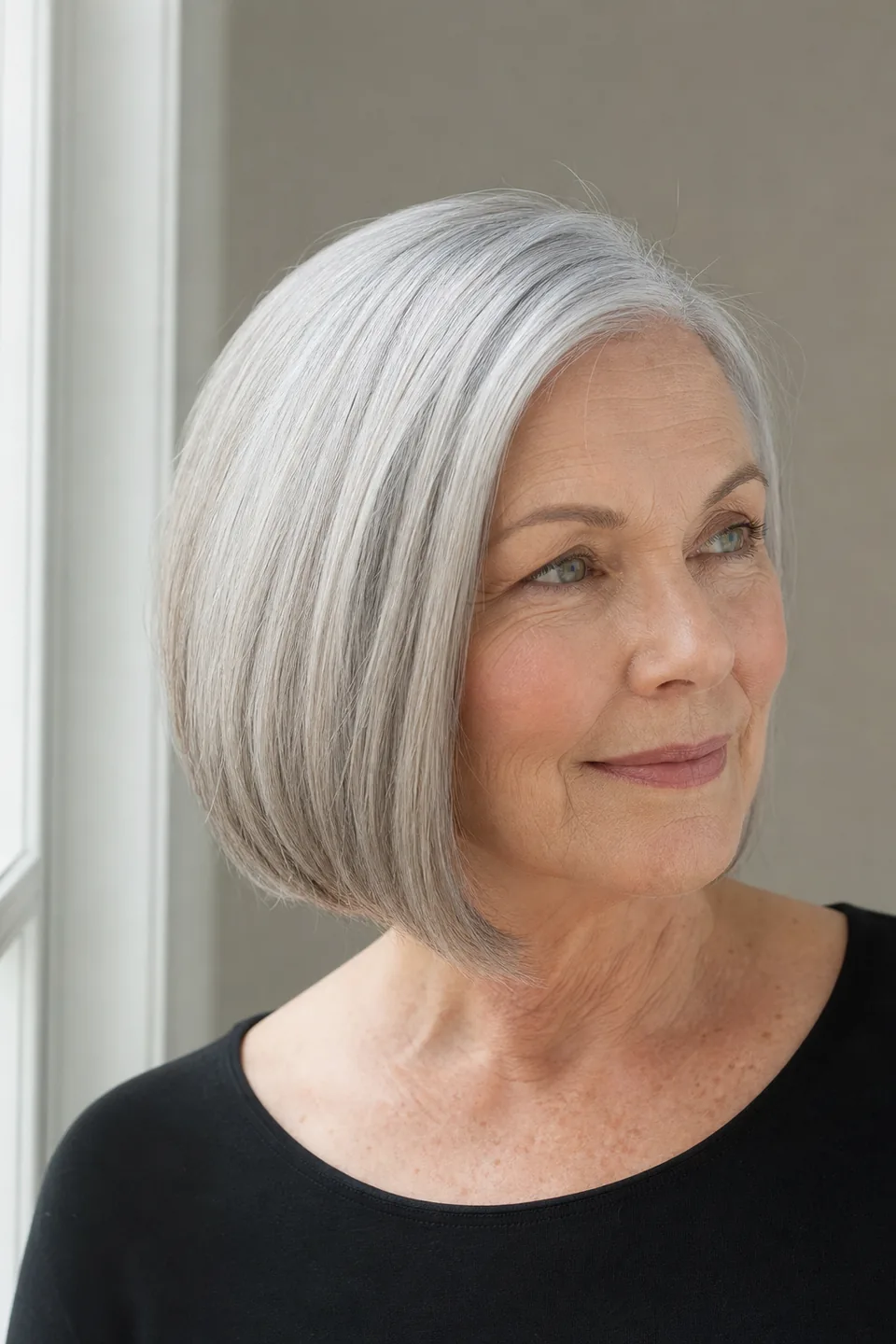
- Base level
- 4 with about 70% gray
- Target
- Level 9-10 silver to match the gray
- Technique
- Fine foils on pigmented strands, silver toner overall
- Undertone
- Cool, neutral
- Sessions
- 2
- Touch-up
- Toner every 4-6 weeks; foils every 10-12 weeks
At 70 percent gray, lifting the last brown strands is less work than covering all that white every four weeks. The trade is damage on those strands: peroxide bleaching oxidizes and leaches protein from the cuticle and cortex, more as lightening gets stronger, so the remaining brown should be in good condition before it starts.
Ask for: "Lift only my remaining brown to level 9-10 and tone everything silver. About 70 percent gray, natural level 4, no box dye."
16. Natural Salt and Pepper on a Level 2 Base With a Violet-Silver Gloss Only
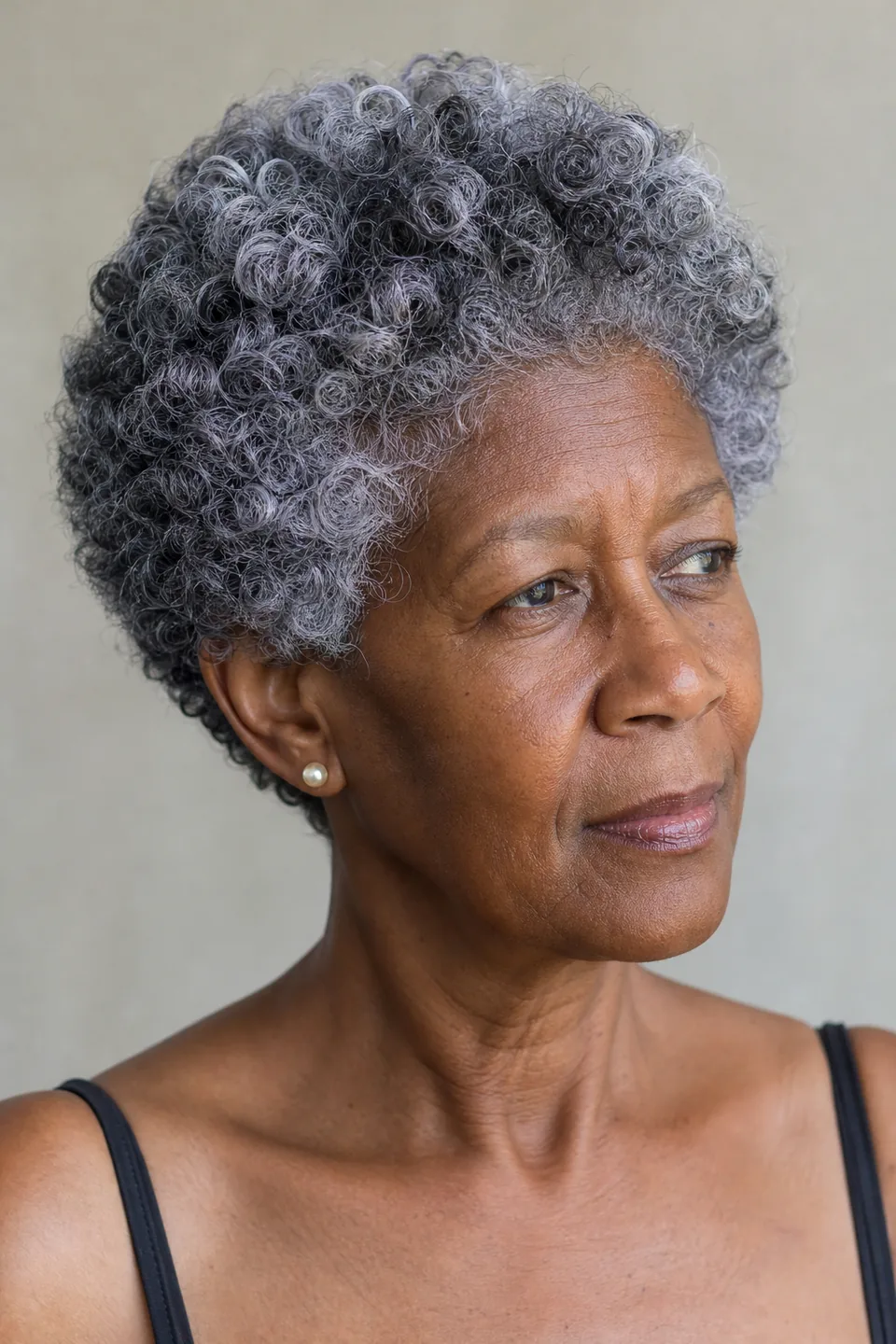
- Base level
- 2 with about 50-60% gray
- Target
- Sheer violet-silver gloss, no change of level
- Technique
- Clear-based demi gloss with violet
- Undertone
- Any
- Sessions
- 1
- Touch-up
- Every 8-10 weeks, or purple shampoo alone
Salt and pepper is already the highest-contrast blend there is. A violet-leaning clear gloss cancels the yellow white hair picks up from sun, smoke and hard water, and adds shine without changing level.
Ask for: "A clear gloss with a little violet to brighten my white and add shine. Natural salt and pepper, never colored."
Who Gray Blending Suits, and Who Should Skip It
Gray blending suits people who are comfortable seeing some gray and want fewer appointments in exchange. It is easiest from level 4 up.
Good candidates are tired of a white line at week three, or halfway to silver. Tone matters more than skin depth: beige and ash-beige suit cool and neutral skin, caramel and bronze warm skin, pearl pink undertones. Skip it if any visible gray bothers you or you have reacted to hair dye.
What to Ask Your Colorist for Gray Blending
A blending consultation needs your percentage, where the gray sits, how much of it you want to keep and how often you can come back. Bring daylight photos of your part and temples.
- "I'm about [15 / 30 / 50 / 70] percent gray, most of it at my [part / temples / front / crown]."
- "My natural level is [2 / 3 / 4]. My lengths are [virgin / box-dyed (shade) / permanent from the salon / henna]."
- "I want to [soften the gray / keep some gray visible / move toward silver over the next year]."
- "Please keep highlights near level [6-7], toned [beige / ash-beige / caramel / pearl], not silver yet."
- "I can come back every [6 / 10 / 16] weeks."
- "I've had [a dye reaction / a black henna tattoo / neither]."
Watch out: Patch test 48 hours before every permanent or demi service, glosses included. Hair dye is the most frequent route to becoming sensitized to PPD, a common dye allergen, and many glosses and toners use the same family of oxidative dye compounds. Strand test before lightener goes on box-dyed or henna-treated hair. See a doctor for scalp blistering, swelling or weeping.
Gray Blending Upkeep and Grow-Out
A blend asks for less frequent visits than coverage but more attention to tone, because gray and lifted strands both pick up yellow.
| When | What you'll see | What to do |
|---|---|---|
| Weeks 1-2 | Tone at its truest; gloss at its deepest | Wait 48-72 hours before the first wash; rinse cool |
| Weeks 4-6 | Gloss fading off gray; highlights warming slightly | Purple shampoo once or twice a week, not every wash |
| Weeks 6-8 | Gray reads whiter; lifted pieces yellow-gold | Gloss or toner appointment |
| Weeks 8-12 | Regrowth is a blur of gray and natural, not a line | Foil refresh for most dark bases |
| Months 3-4 | Balayage and lighter bases still soft | Repaint or stretch further |
Costs vary by city and salon and by foil count. Roughly, a demi gloss runs $50-$150, partial highlights plus lowlights $150-$300, and a full blend on long hair $250-$450 or more.
A Blend Turns Into a Transition When You Stop the Lowlights
Each refresh, colorists place fewer lowlights and let more gray through. Over 12-24 months, depending on length, the colored ends are cut away and the blend becomes your natural salt and pepper, with no month that looked half-finished.
Salon note: When a blend starts to look brassy at week 6, the problem is usually the toner fading on the lifted pieces, not the gray. A beige or pearl gloss fixes it; more highlights would only add more pieces to fade.
When Gray Blending Is Not the Right Choice
Gray blending is the wrong tool when the goal is no gray, when the base hair can't take lightener, or when the gray is already the main color. Each case has a better route.
- You want zero visible gray. A blend hides gray among lighter strands; it never removes it. Permanent coverage, with roots every 4-6 weeks, is the honest answer.
- Your dark lengths are box-dyed or henna-treated. Lightener lifts old dye unevenly, often to orange, and henna can react unpredictably. Strand test, and expect a color remover or several sessions.
- You are 70 percent gray or more and want to look dark. Lowlights fade off gray fast and the white returns within weeks. Full coverage does this job; reverse gray (look 15) suits you if you would rather let the gray lead.
- Your hair is already breaking or fragile. Silver-toned highlights need the most lift on the page. Start with a gloss and let the hair recover.
Gray blending for dark hair works when the lift stays modest, the toner sits between beige and ash, and lowlights carry as much weight as the highlights. Before booking, photograph your part and temples in daylight, estimate your gray percentage, and schedule a patch test 48 hours ahead.
Frequently Asked Questions
Does gray blending work on black hair?
Yes, but it takes more planning than on any other base. On level 1-2 with sparse gray, a demi gloss that stains gray to charcoal usually blends better than highlights. With more gray, colorists lift pieces only to level 5-6 and tone them bronze or mocha, because lifting black further passes through strong red and orange and adds damage.
How long does gray blending last?
A demi gloss lasts about 20-28 washes, so most people refresh it every 6-8 weeks. Foil highlights and lowlights usually stretch to 8-12 weeks before regrowth shows, and balayage on lighter bases to 3-4 months. The gray never washes out, so what fades is the toner on lifted pieces and the stain on gray strands.
Is gray blending less damaging than coloring all over?
Usually per visit, not always overall. A gloss lifts nothing, and highlights touch only some strands, while full coverage reapplies permanent dye to the roots every 4-6 weeks. Silver-toned highlights on dark hair are the exception: they need lightener to level 9-10, which damages those strands more than any deposit-only service does.
Can you do gray blending at home?
Partly. A demi-permanent gloss at your natural level, or half a level lighter, is reasonable at home after a patch test 48 hours before. Highlights, lowlights and anything that needs lightener belong in a salon, because placement decides whether the result blends or stripes, and lifting dark hair evenly takes professional control of developer and timing.
How much does gray blending cost?
Per visit, a blend usually costs more than a root touch-up, but you go less often: roughly four to six blend appointments a year against eight or more for roots every 4-6 weeks. Prices vary by city and salon and by how many foils you need, so ask for a quote that separates highlights, lowlights and gloss.
Will highlights make my gray hair more noticeable?
They can if they are lifted too light or toned too cool for your base. Silver or icy highlights on dark brown read as a third color beside your gray. Highlights close to the blended average, usually level 6-7 in beige on dark hair, blend gray in rather than drawing attention to it.
Should I stop dyeing my hair before starting gray blending?
Not necessarily, but tell your colorist exactly what is on your lengths. Permanent dye cannot be lightened by more dye, so blending into dyed dark brown needs lightener, a strand test, and often two or more sessions. Some people let 2-3 inches of natural regrowth come in first so the colorist can see the true gray pattern.
General information, not medical advice. Patch test 48 hours before any permanent or demi-permanent color. Brand-neutral: we name no products and take no payment for mentions. Disclaimer · How we write our guides