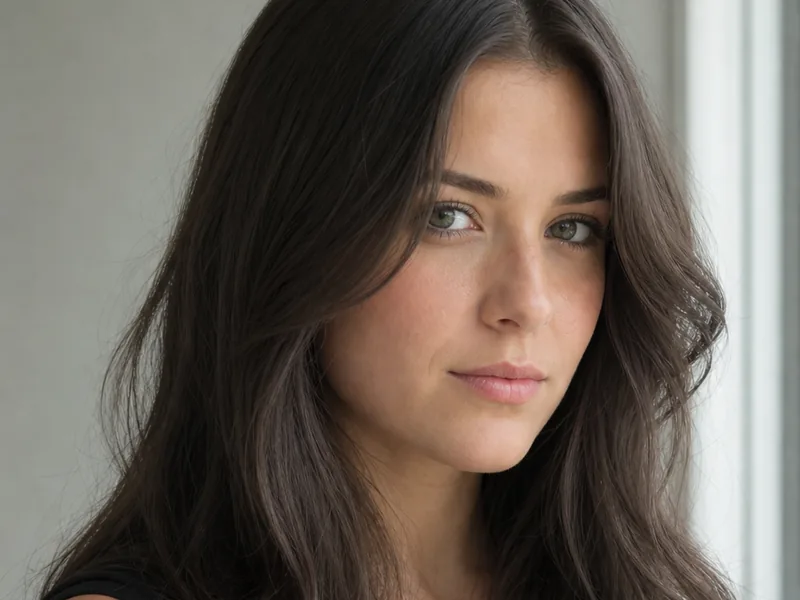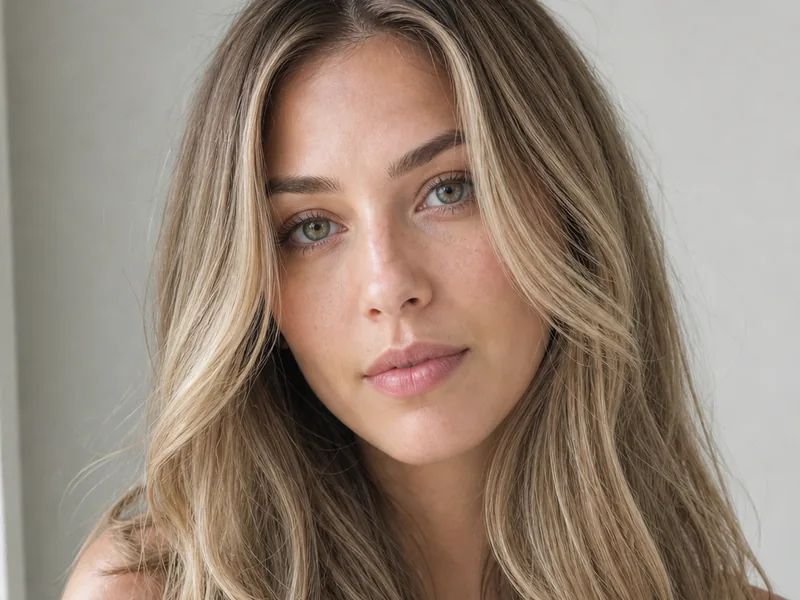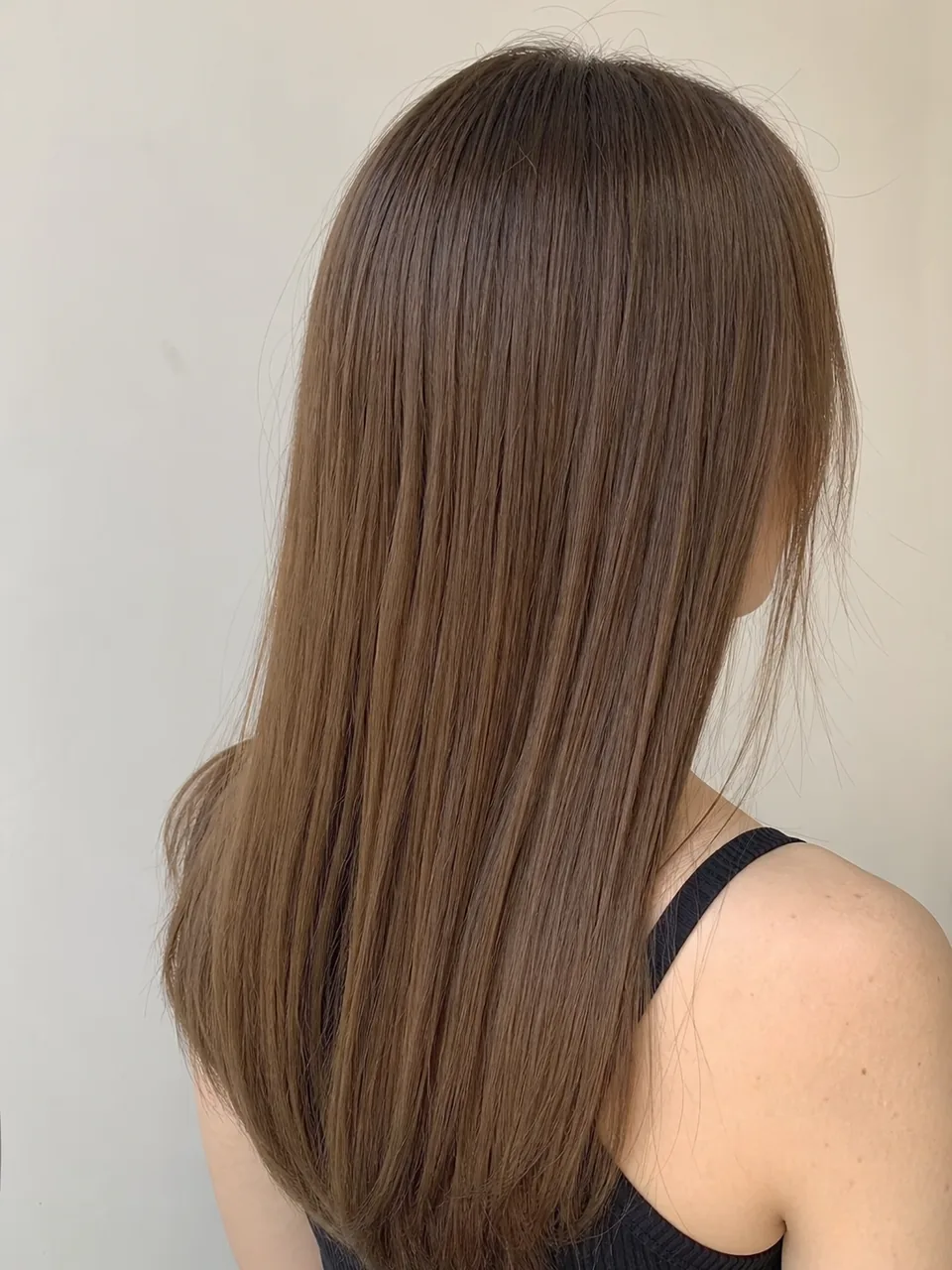
Short version: Demi-permanent hair color is a deposit-only dye mixed with a low-volume developer: it adds tone, shine and depth, blends gray rather than covering it, and lasts about 20-28 washes before fading out with no hard regrowth line. It can't make hair lighter, so it suits glosses, toning, refreshing faded ends and trying a deeper shade. Semi-permanent needs no developer and lasts about 4-8 washes; permanent lifts, covers gray fully and grows out instead of washing out.
Hair Dye Types Compared: Temporary, Semi, Demi, Permanent, Lightener and Henna
Every dye type is defined by two things: whether it can lift natural pigment, and how deep its color sits in the hair. Those two facts decide how long the color lasts, what it does to gray and how much condition it costs.
| Type | How it works | Developer | Lift | How long it lasts | Gray | Damage | Best for |
|---|---|---|---|---|---|---|---|
| Temporary (sprays, chalks, gels) | Large pigment molecules coat the outside of the cuticle | None | None | 1 wash on healthy hair; longer on bleached hair | Masks a few strands at the part between appointments | Negligible | Events, a day of root cover, testing a vivid |
| Semi-permanent (direct dye) | Already-colored molecules sit on and just under the cuticle | None | None | About 4-8 washes | Stains gray a see-through tint | Very low | Vivids on pre-lightened hair, short-lived tone shifts |
| Demi-permanent | Direct dyes plus oxidation precursors that develop inside the hair | Low volume, usually 5-10 vol | None to slight on natural hair; none on dyed hair | About 20-28 washes | Blends; gray comes out lighter than the pigmented hair | Low, not zero | Gloss, toning, gray blending, refreshing ends, going darker |
| Permanent (oxidative) | Precursors swell the cuticle and form large colored molecules trapped in the cortex | 10-40 vol, most often 20 | About 1-2 levels; up to about 4 with high-lift tints from level 6 or lighter | Grows out; doesn't wash out | Full, opaque coverage | Moderate; rises with volume and frequency | Lighter natural shades, full gray coverage, lasting changes |
| Lightener (bleach) | Oxidizes and breaks down melanin | 10-40 vol | Many levels | Permanent; needs toner | No coverage; lifts pigmented hair toward the gray | Highest | Blonde, highlights, balayage, a base for vivids |
| Henna and plant dyes | Lawsone from the henna leaf binds to keratin; indigo and cassia are used in blends | None | None | Grows out; builds deeper with each application | Pure henna turns gray bright orange-red | Low to the hair, but complicates later chemical color | Red-orange to auburn, for anyone staying with it |
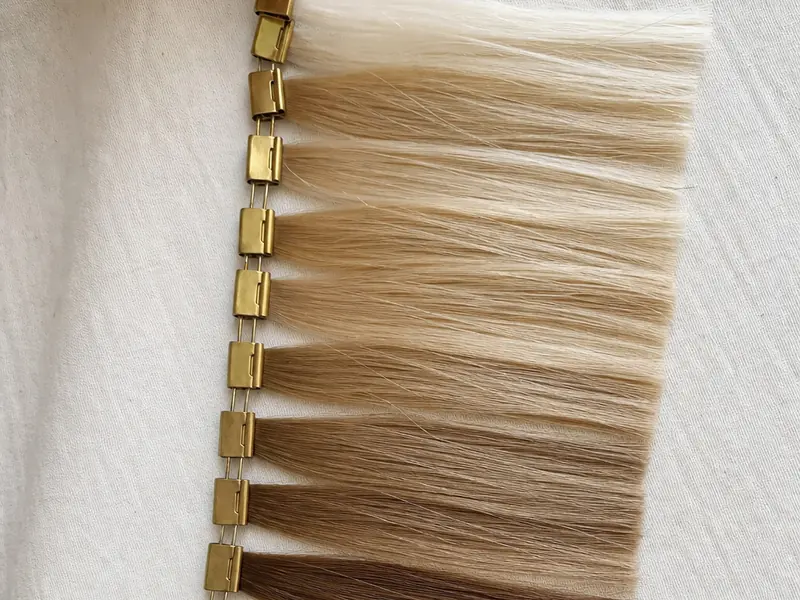
Levels and tones, the vocabulary this table relies on, are laid out on the hair color chart.
Temporary and Semi Color Stay Close to the Surface
A review of dye chemistry describes temporary dyes as high-molecular-weight pigments that deposit on the surface and leave with the first shampoo, while semi-permanent dyes use smaller molecules that penetrate slightly into the cortex and hold for up to about six washes. On bleached hair, the review notes, temporary color can hold for three to six washes.
Permanent Color and Lightener Change the Hair Itself
Permanent dye lifts some natural pigment and deposits new color in one step, so it can go lighter than your natural level, but only on hair that has never been dyed. Lightener goes much further. A study of progressively bleached hair found that peroxide bleaching oxidizes hair protein and damages both cuticle and cortex, with protein loss rising as bleaching gets stronger. That cost is why lifting dark hair to blonde is usually planned over sessions.
Henna Behaves Like Permanent Color
Pure henna stains the hair red-orange and stays until it grows out. Later chemical color, and especially lightener, can react unpredictably over it, and some henna blends contain metallic salts that react with peroxide. Tell any colorist about henna, even old henna, and expect a strand test. So-called black henna is different: it often contains PPD, and a review of black henna tattoos found they can sensitize people to PPD, who may then react to ordinary hair dye.
How Demi-Permanent Hair Color Works
Demi-permanent color is an oxidation dye run at low strength. The same review describes demi as a mix of semi-permanent dyes and oxidation dye precursors applied with hydrogen peroxide, and notes that it differs from permanent dye mainly in its alkalizer: ethanolamine, which has little lightening power, in place of ammonia. The direct dyes give tone straight away; the precursors develop into larger molecules that hold on longer.
Because the peroxide is weak and the mix only mildly alkaline, the cuticle opens a little and very little natural melanin is broken down. On virgin hair, an alkaline demi can soften the natural color by about half a level at most. On anything previously dyed, it lifts nothing: a lighter demi shade only adds its tone to the depth already there.
Most demi lines come with a dedicated developer, usually somewhere between 5 and 10 volume, mixed at the ratio printed for that line. Acidic demis, often sold as glosses, sit below pH 7, deposit with essentially no lift and leave the cuticle smoother. Alkaline demis deposit a little deeper and grip gray better.
Salon note: Many demi lines include a clear shade with no pigment. Colorists mix it into a tinted shade to make the result sheerer, for example half level 8 beige and half clear for a soft tone on highlighted hair, or use clear alone as a shine gloss that changes nothing but the light it reflects.
Demi vs Semi-Permanent Hair Color
Demi uses a developer and lasts about three times as long as semi; semi needs nothing mixed in and is gone within about 4-8 washes. The developer is also why demi blends gray and semi does not.
| Semi-permanent | Demi-permanent | |
|---|---|---|
| Developer | None; used straight from the tube | Low volume, usually 5-10 vol |
| Where the color sits | On and just under the cuticle | Under the cuticle, partly developed inside the hair |
| Lasts | About 4-8 washes | About 20-28 washes |
| Gray | Tints it lightly; no blending | Blends it; gray reads lighter than the rest |
| Shade range | Strongest in vivids and pastels | Strongest in natural levels 1-10, toners and glosses |
| Fades | Quickly, often from bright to pastel | Gradually, tone first, then depth |
| Patch test | Follow the pack | 48 hours before every service |
| Best for | Pink, blue or teal over level 9-10 blonde; a color you want gone fast | A gloss, a toner, a deeper shade you want to keep for a month or two |
Semi suits frequent changers who already have light hair to show it; demi suits a natural shade kept polished for weeks, or gray softened rather than hidden.
Watch out: Box labels don't follow these definitions strictly. If a product called semi-permanent comes with a developer bottle, it behaves like a demi: expect it to last closer to 20-28 washes, and patch test it like one.
Demi-Permanent vs Permanent Hair Color
Permanent dye changes your level and stays until it is cut off; demi changes tone and depth and leaves on its own. Only permanent lightens natural hair or covers a high percentage of gray opaquely; only demi fades without a regrowth line.
| Demi-permanent | Permanent | |
|---|---|---|
| Lift | None to about half a level on virgin hair | About 1-2 levels, more with high-lift tints |
| Gray | Blends, translucent | Covers, opaque |
| Regrowth | Soft; color fades as hair grows | Visible line; root touch-up every 4-6 weeks |
| Developer | 5-10 vol | 10-40 vol, most often 20 |
| Alkalizer | Usually ethanolamine | Ammonia or ethanolamine |
| Allergy risk | Oxidation dye; same patch-test rule | Oxidation dye; same patch-test rule |
| Exit | Washes out over about 20-28 washes on most hair | Needs a color remover or lightener, or a cut |
A standard salon pattern combines them: permanent color on the regrowth every 4-6 weeks and a matching demi on the mid-lengths and ends. Pulling permanent through the ends at every visit stacks pigment and turns them darker and flatter than the root.
What Demi-Permanent Color Is Best For
Demi earns its place on any job that changes tone or adds depth without needing lift. Five uses cover most of its work.
A Gloss for Shine and Tone on Natural Hair
A demi gloss matched to the natural level adds shine and a reflect without changing depth. A neutral level 5 light brown can take a level 5 golden gloss for warmth, or a level 5 matte (green-based) gloss to quiet red, and returns to its own color as it fades.
Toning After Lightening
Most toners are demi-permanent, which is why toner fades on the same 4-8 week cycle; choosing violet or blue by the leftover warmth is covered on the hair toner page.
Blending Gray Instead of Covering It
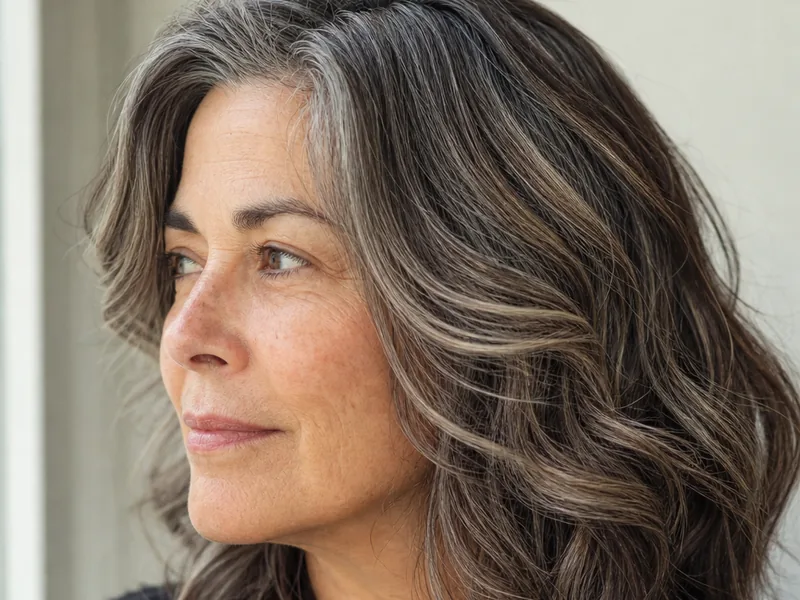
Demi stains gray strands a lighter, softer version of the shade, so a level 6 neutral demi on hair that is about a third gray reads like fine highlights through a dark blonde. It works best when gray is a minority of the hair and suits anyone who wants gray to show softly or plans to stop coloring later; technique choices live on the gray blending page.
Refreshing Faded Ends Between Root Touch-Ups
Lengths that have faded warmer or lighter than freshly colored roots can be matched with a demi in the root shade, applied for the last 10-20 minutes of a root touch-up. On porous ends, colorists often pick a demi half a level lighter than the root, because damaged hair absorbs more.
Trying a Darker Shade With an Exit
Going deeper is where an exit matters most. A natural level 7 medium blonde can wear a level 5 light brown demi for a season and let it fade back, which permanent dye would not allow. Lightened or bleached hair changes the plan: a deeper shade there needs a filler step first, covered on the light brown hair page.
How Demi-Permanent Color Fades
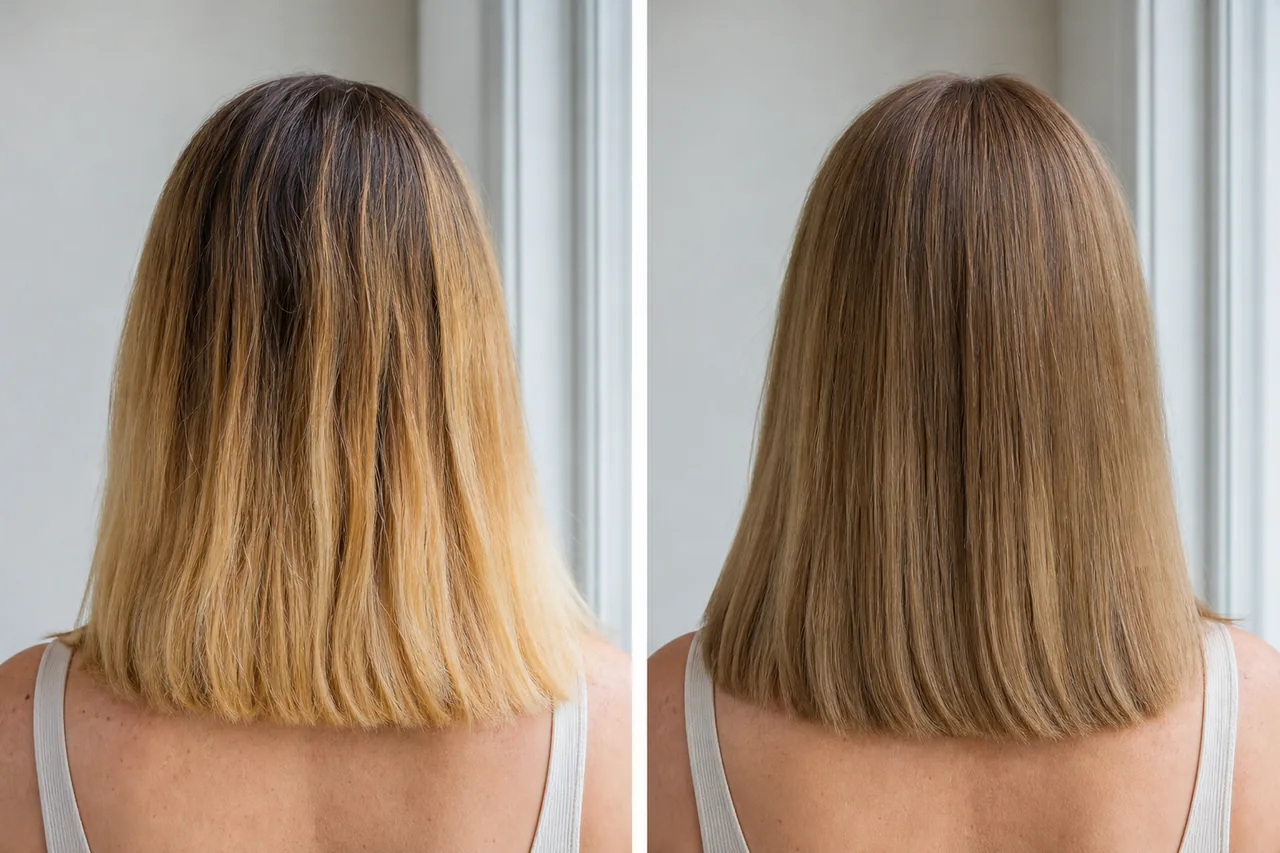
Demi fades in stages: tone leaves first, depth follows, and porous lengths hold on longest. The direct dyes near the surface rinse out first; the developed molecules inside the hair go more slowly, revealing whatever the demi was sitting on.
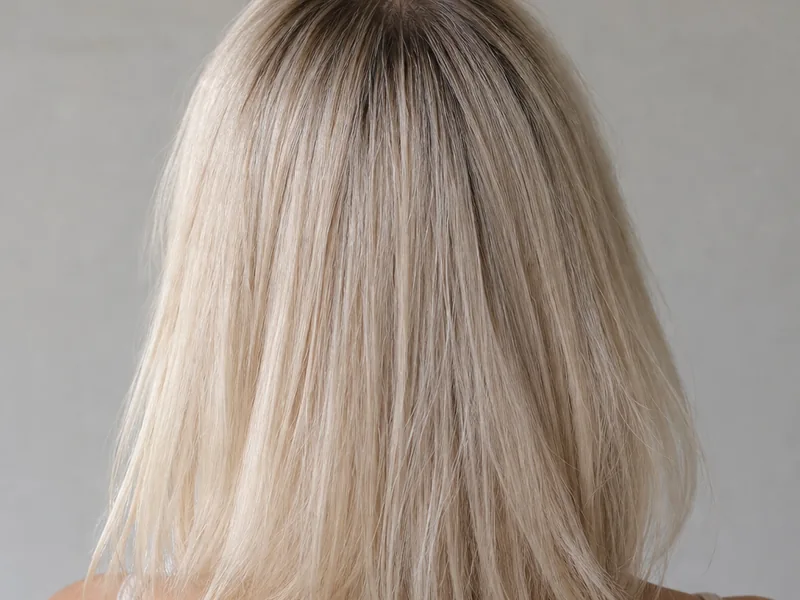
On natural hair, a faded demi returns toward the natural level with a softened trace of the shade. On lightened hair, it fades toward the underlying warmth of that level: yellow at 8-9, yellow-orange at 7. So a cool ash demi on highlights looks warmer each week, even though nothing has gone wrong.
The 20-28 wash figure is a midpoint, and brand pages quote 12 to 28 because the hair changes the number more than the product does.
| Factor | Effect on how long demi lasts |
|---|---|
| High porosity (bleached, sun-worn or heat-damaged ends) | Absorbs more and deeper; deep shades can linger, light or cool tones may fade patchily |
| Shade deeper than the hair underneath | Stays visible longer, because even a trace reads against a light base |
| Washing daily, hot water | Shortens it toward the low end of the range |
| Clarifying or anti-dandruff shampoo | Strips it noticeably faster |
| Sun, chlorine, frequent hot tools | Fade tone, especially cool and red reflects |
Gentle cleansing, cool water and heat protection stretch any demi toward the long end; the full fade-prevention routine has its own guide on color-safe shampoo.
How to Choose the Right Dye Type
Choose by the move you need on the level chart first, then by how long you want the result to last. Most at-home disappointments are a dye type asked to make a move it can't: a demi asked to lighten, a semi asked to cover gray.
- Write down two levels. Your natural root level, and the level of your lengths if they are colored.
- Going lighter means permanent or lightener. Permanent can lift virgin hair about 1-2 levels; anything beyond, or any lift over old dye, needs lightener or a color remover.
- Same level or darker: decide how long. One day, temporary. One to two weeks, semi. One to two months, demi. Until it grows out, permanent.
- Match the gray goal. Soft and see-through with no regrowth stripe points to demi. Opaque, every strand, points to permanent.
- Check the history. Henna, metallic or progressive dyes and repeated box color all need a strand test before anything new.
- Patch test. 48 hours before every permanent or demi service, even with a shade you've used before.
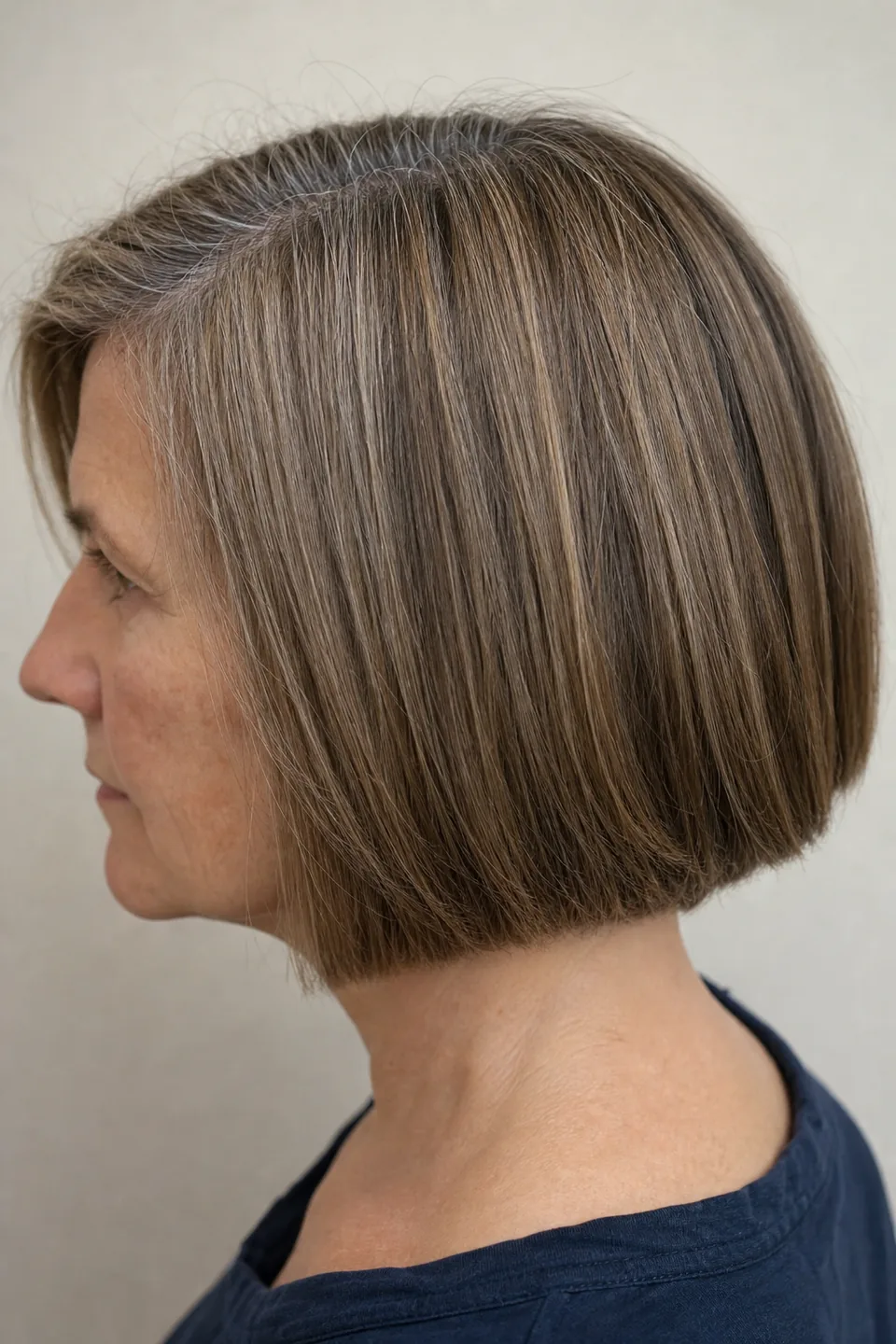
Demi Color at Home vs in a Salon
Demi is one of the more forgiving dye types to use at home, provided the target is at or below your current level and the hair has a simple history. It can't lift, so it can't cause hot roots or orange bands, and a wrong tone fades.
Reasonable at home: an all-over gloss at your natural level, going 1-2 levels deeper on virgin hair, refreshing lengths with the same shade as your roots, and semi vivids on hair that is already level 9-10. Better in a salon: toning freshly lightened hair evenly, demi over hair that varies by several levels from root to end, any darker shade on bleached hair, and anything over henna. A salon gloss is usually one of the shorter services; prices vary by city and salon.
Salon note: Demi glosses are often applied to towel-dried hair right after shampooing, which spreads the color sheer and even over highlights. For gray blending or a deeper result, many colorists apply the same demi to dry hair instead, because water dilutes it at the surface.
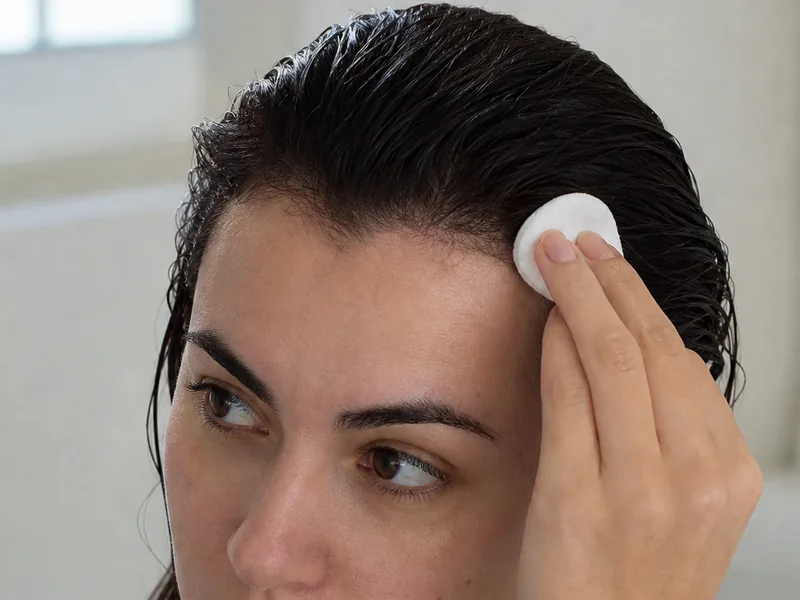
Watch out: Demi is not the allergy-safe option. It relies on the same family of oxidation precursors as permanent dye, and PPD, a common contact allergen, is most often encountered through hair dye. Patch test 48 hours before every permanent or demi service. Swelling, blistering or weeping on the scalp, face or eyelids after coloring needs a doctor, and anyone who has reacted to dye before should see a board-certified dermatologist before any oxidation dye, demi included.
Common Mistakes With Demi and Semi Color
Most demi mistakes come from treating it as a weaker permanent dye instead of a different tool.
A Lighter Demi Shade Only Adds Tone
A level 9 demi on level 6 hair produces a level 6 with a hint of the level 9 tone, not a blonde. Choosing a demi lighter than the hair is useful for sheer toning, never for brightening.
Refreshing the Ends at Every Visit Builds Them Darker
Each demi over already-saturated porous ends leaves a little behind. After several rounds the ends sit a level deeper than the root. Refresh lengths only when they have visibly faded, and drop to a sheerer mix with clear if they hold color well.
Stronger Developer Turns Demi Into Something Else
Mixing a demi with 20 volume developer adds lift and exposes warmth the formula wasn't built to neutralize, and the tone comes out brassier and less predictable. Use the developer and ratio made for that line.
Myths About Demi-Permanent and Semi-Permanent Color
Gentle-sounding labels promise less damage and less commitment than the chemistry always delivers.
Myth: Ammonia-Free Means Damage-Free
Reality: Demi still uses peroxide and an alkalizer; ammonia is usually swapped for ethanolamine (MEA). In a lab comparison of permanent colorants by manufacturer researchers, MEA-based formulas caused more fiber damage than ammonia-based ones, up to 85% more in the most extreme case. Demi is gentler because its peroxide and alkalinity are low, not because the ammonia is missing.
Myth: Demi Always Washes Out Completely
Reality: On porous, lightened or previously dyed hair, a deep demi can leave a stain for months. A level 4 brown demi over level 8 highlights may fade to a muddy level 6 and stop there, and going back to blonde then takes a color remover or lightener. Test a deep shade on a hidden section of the lengths first.
Myth: Temporary Color Is Gone After One Wash
Reality: That holds on healthy, mid-level hair. On bleached level 9-10 hair, sprays and chalks in blue, green or purple can tint the hair for several washes, so test them on a hidden strand before an event.
Demi-permanent hair color is the tool for tone, shine, soft gray blending and darker trial runs, not for going lighter. Find your level at the roots in daylight, decide whether the move needs lift, and book a patch test 48 hours before your first demi, whatever the label says about gentleness.
Frequently Asked Questions
Do you need developer for demi-permanent hair color?
Yes. Demi is an oxidation dye, so it only develops when mixed with a low-volume developer, usually between 5 and 10 volume depending on the line. Use the developer made for that line at its printed ratio. A product that needs nothing mixed in is semi-permanent, and one mixed with 20 volume or higher behaves like permanent color.
Can you put demi-permanent color over permanent color?
Yes, and colorists do it constantly: demi over permanent-colored lengths refreshes faded tone or shifts it warmer or cooler. It can deepen the color or change the tone, but it can't make dyed hair lighter. Choose a demi at the same level as the faded lengths, or slightly lighter on porous ends that grab color.
How long do you leave demi-permanent color on?
Most demi lines process for about 20 minutes, and sheer glosses sometimes less, but timing differs by line, so follow the instructions printed with the product. Leaving it on far longer rarely makes it last longer, because the low-volume developer is mostly spent by then. Gray and resistant hair may need the full time on dry hair.
Can you use demi-permanent color right after bleaching?
Usually yes. Toning with a demi straight after lightening is standard salon practice, because the hair is clean and the leftover warmth is easy to read. Skip it the same day if the scalp is sore, tender or broken, and wait until it settles. Very porous ends may need a sheerer mix so they don't grab too dark.
How can you make demi-permanent color fade faster?
Washing more often with a clarifying shampoo and warm water speeds fading over a week or two, though it also dries the hair, so follow each wash with conditioner. A deep shade on porous hair may not leave fully this way. If it has stalled, a color remover made for oxidation dye is the next step, ideally in a salon.
Does semi-permanent hair dye damage hair?
Semi-permanent dye does very little structural damage, because it uses no developer and lifts nothing; many are conditioner-based. When hair feels damaged after a vivid semi, the cause is almost always the lightener used beforehand to reach level 9 or 10. Still follow the allergy test instructions on the pack, as with any dye.
General information, not medical advice. Patch test 48 hours before any permanent or demi-permanent color. Brand-neutral: we name no products and take no payment for mentions. Disclaimer · How we write our guides